
Last updated November 16, 2026
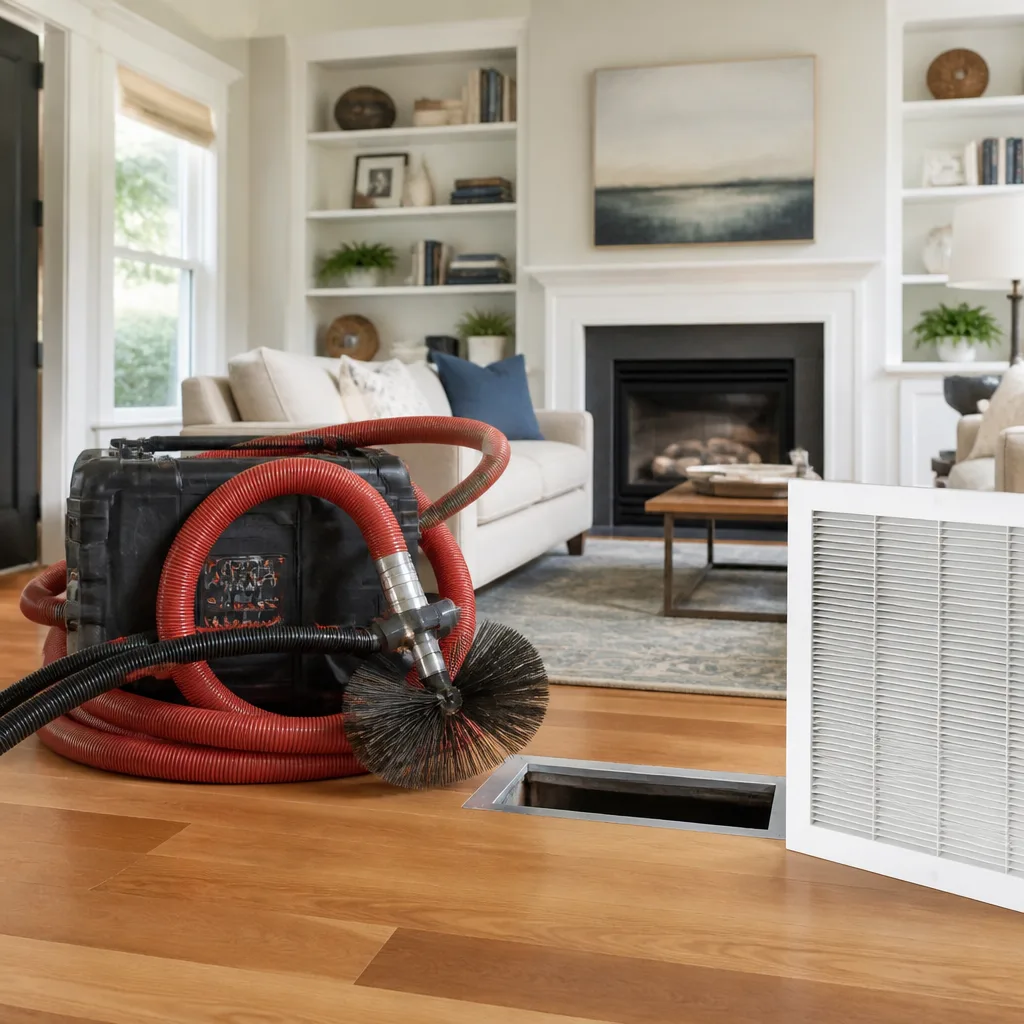 Whole-home duct cleaning
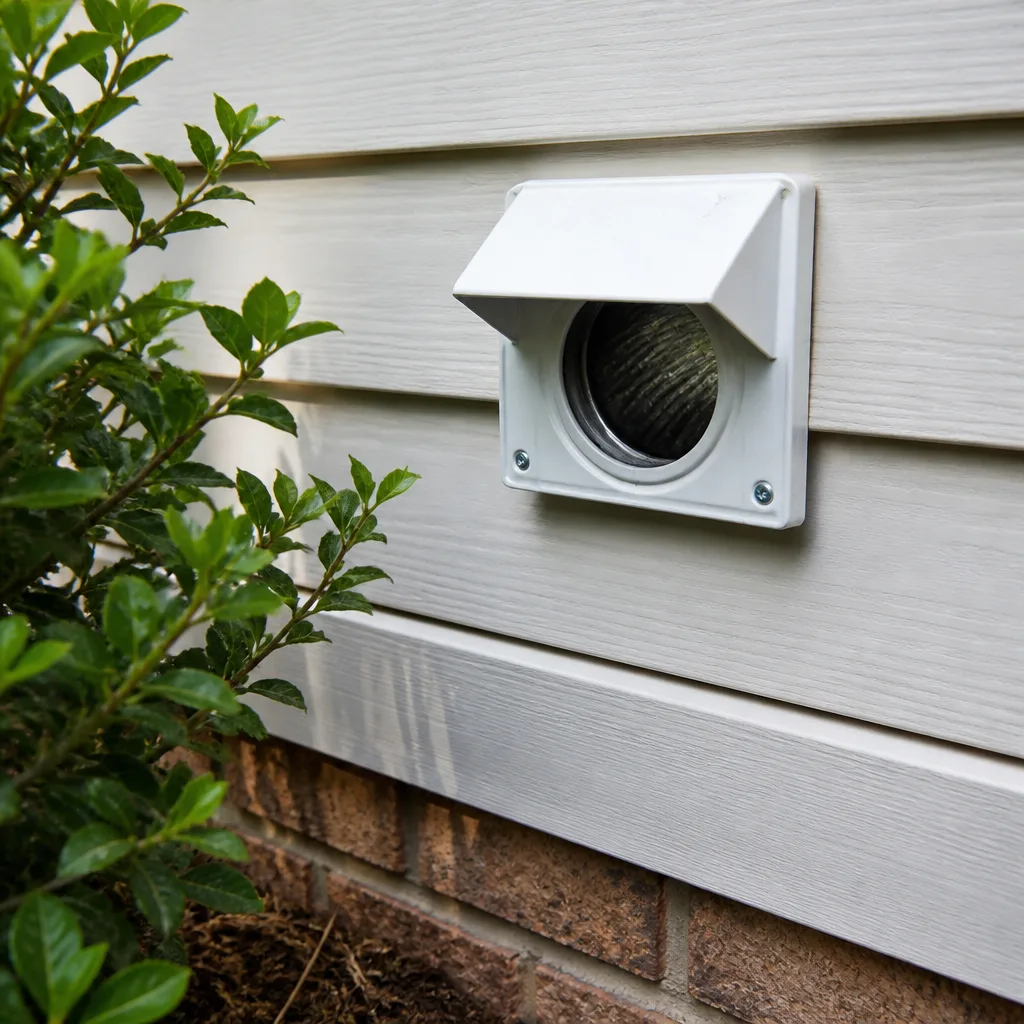 Dryer vent cleaning
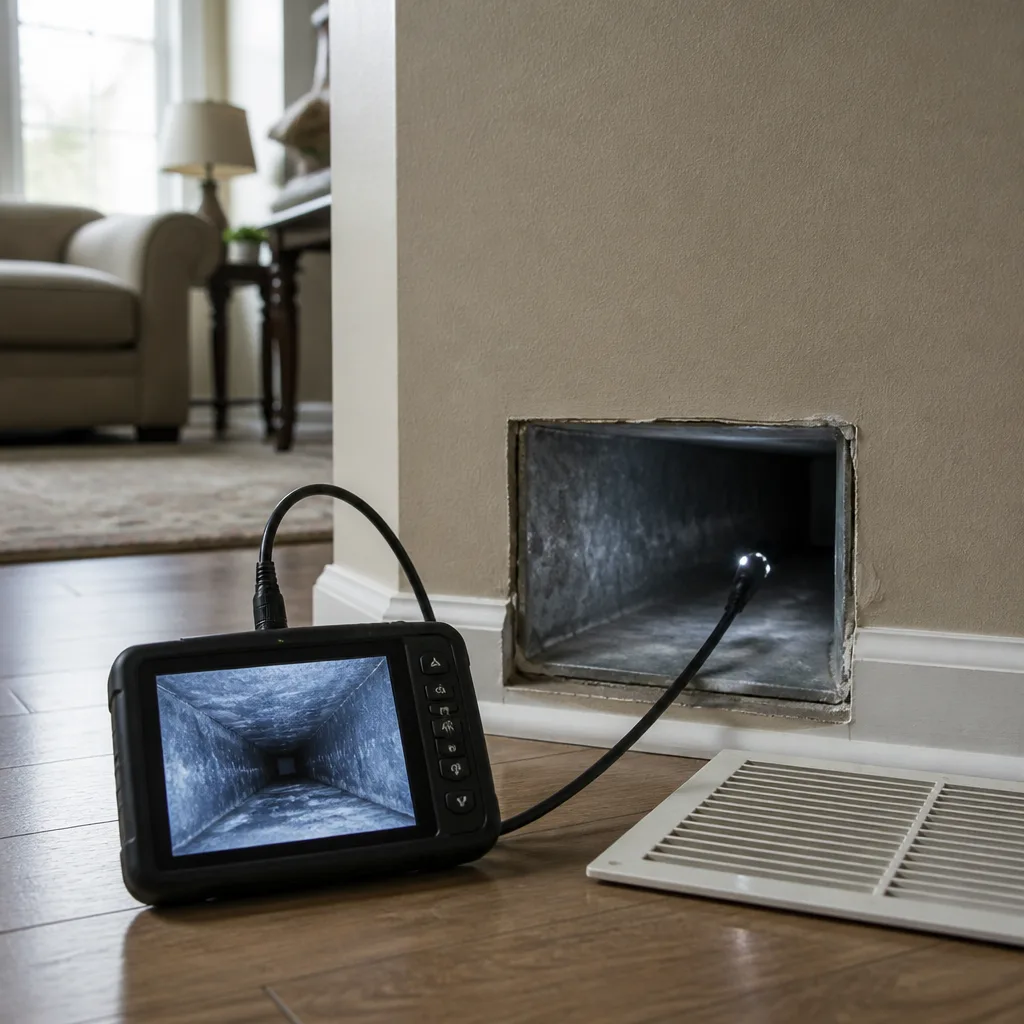 Camera inspection
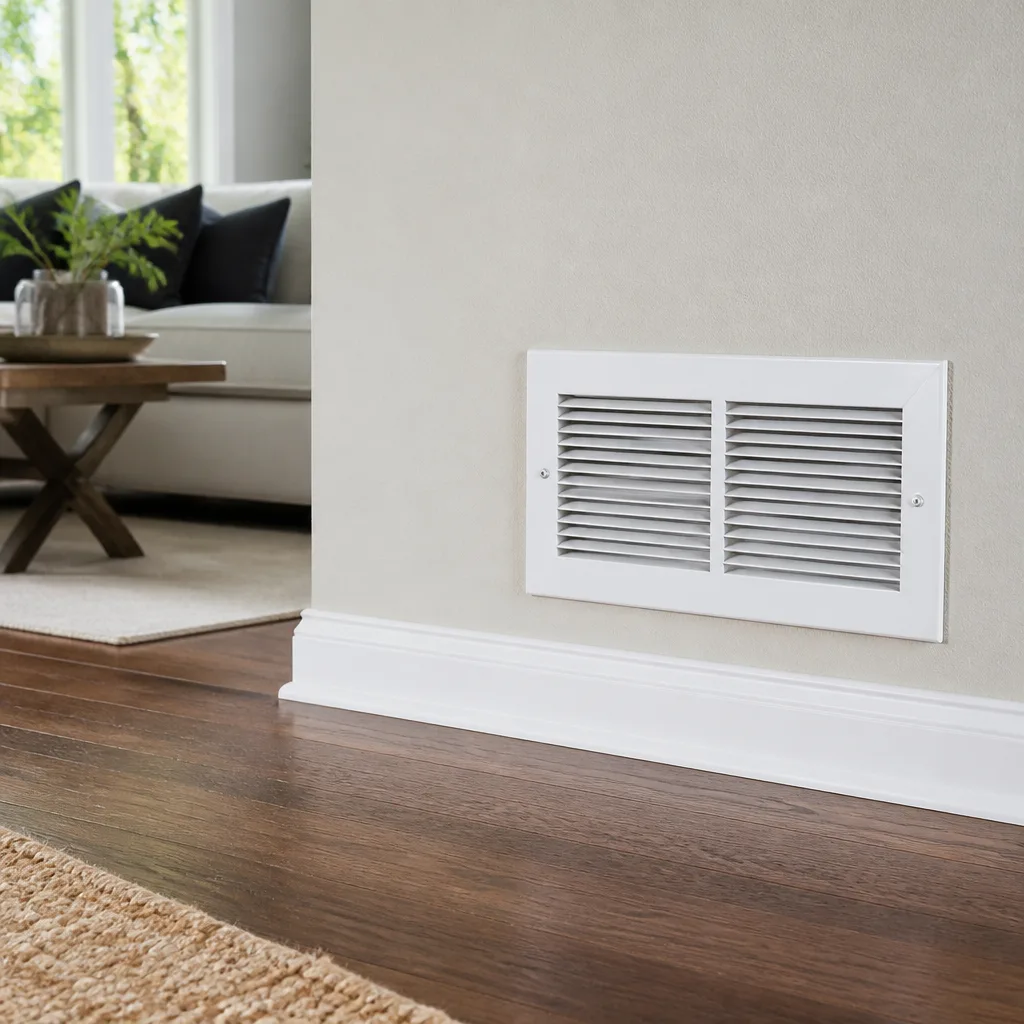 Sanitizing & deodorizing
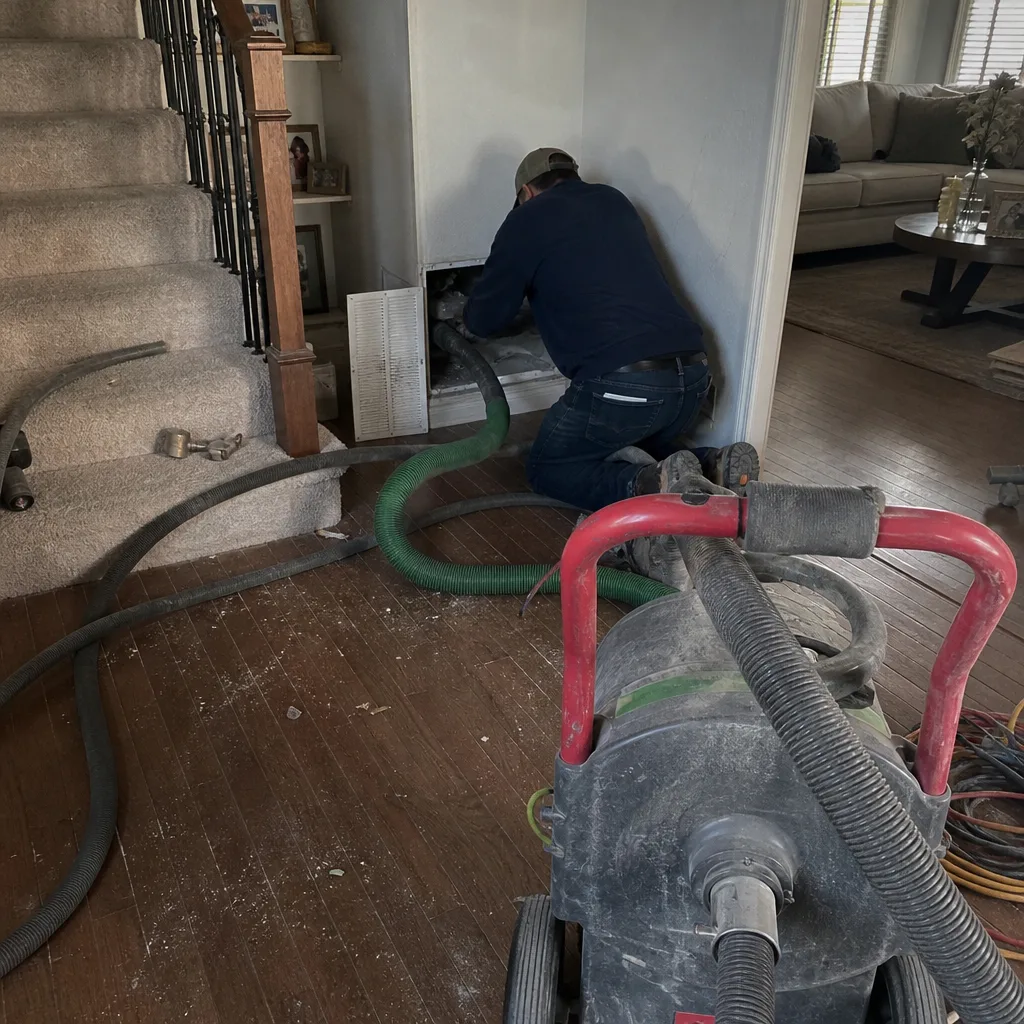
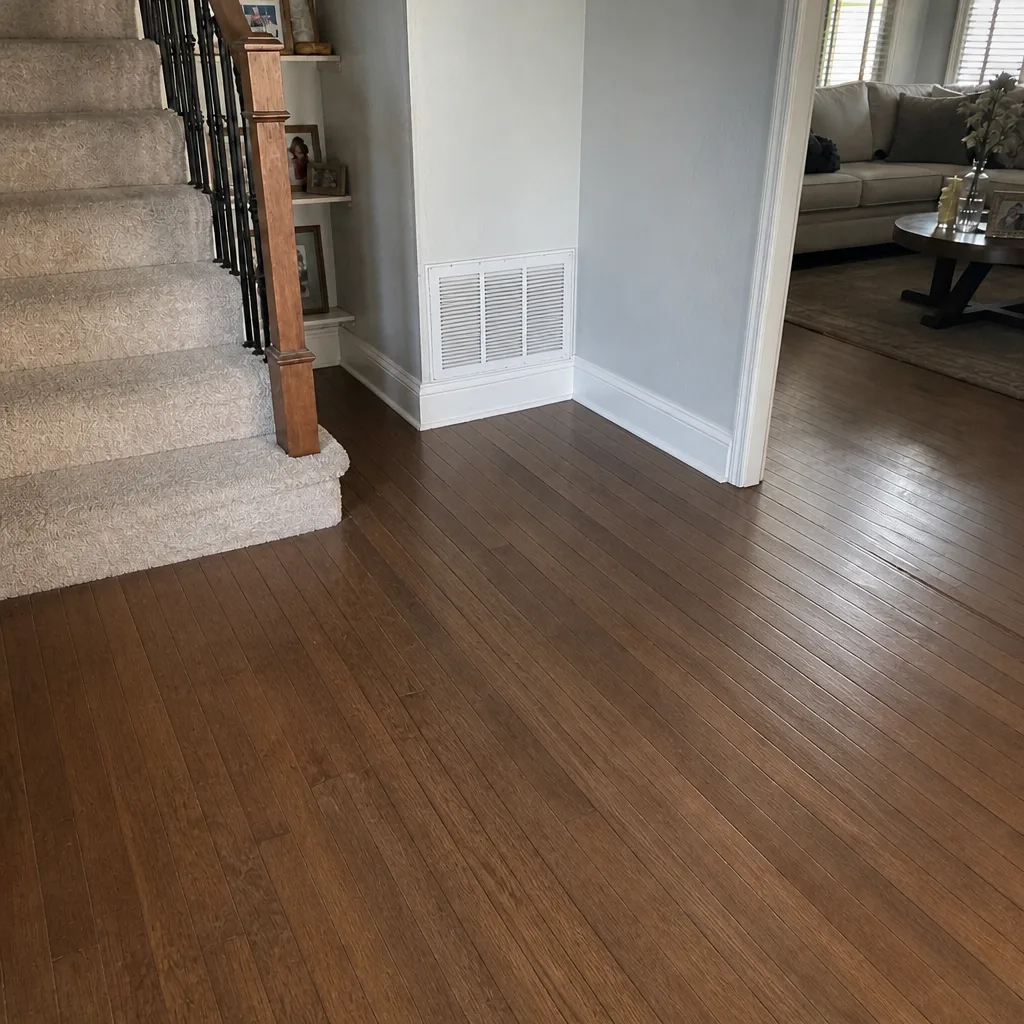
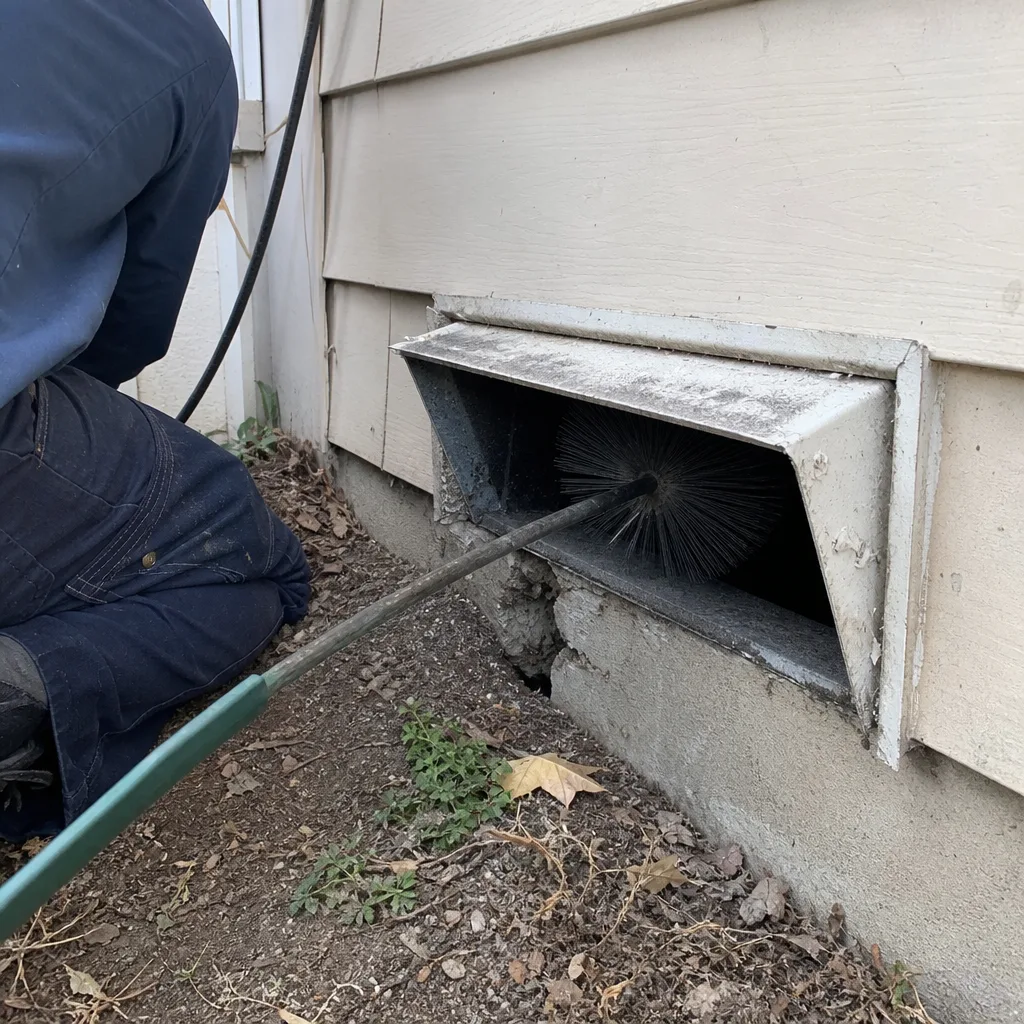
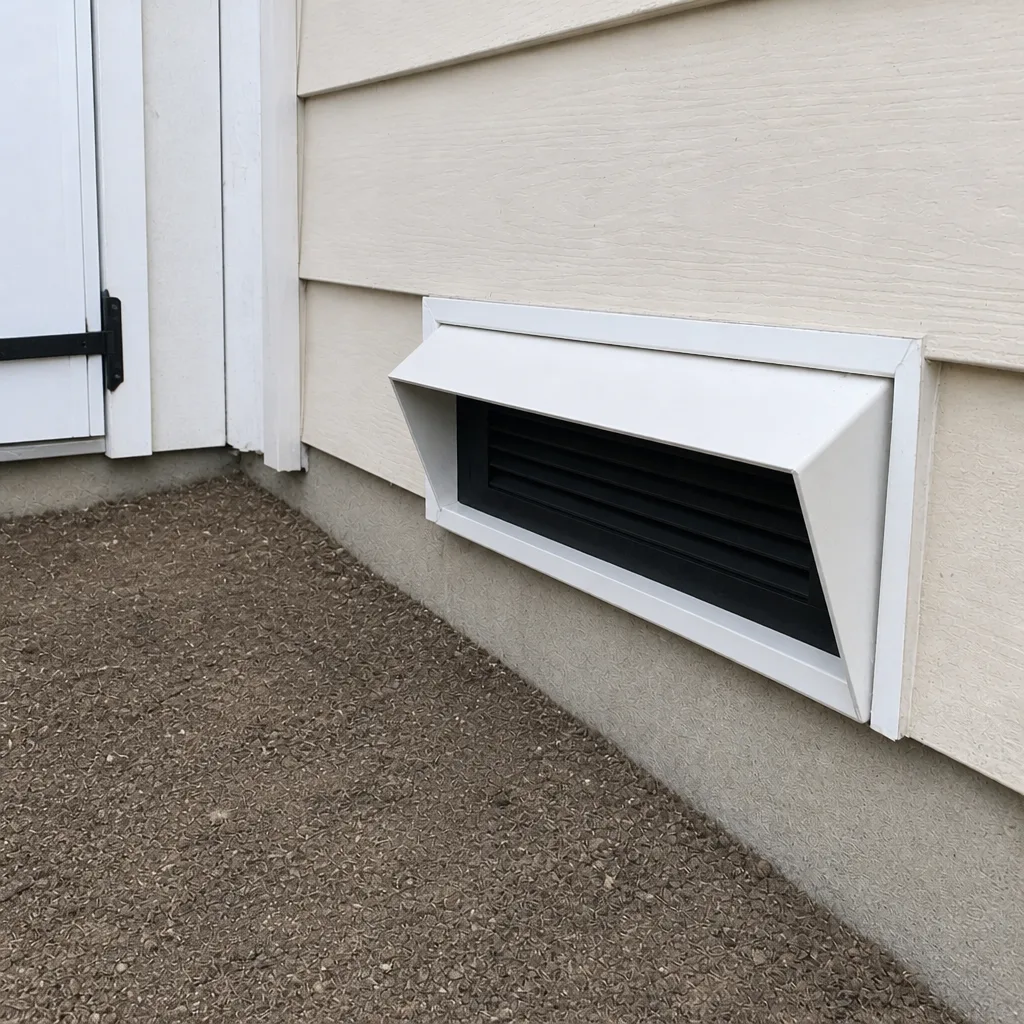
Whole-system duct and dryer vent check with before-and-after photos - you see exactly what came out of your vents
That "$99 whole-house special" is a bait ad - the real number appears once they are in your hallway, or the "clean" is a shop-vac at the register. We photograph the inside of your ducts before and after instead.
Air Duct Cleaning Maintenance Checklist for Boise City Homeowners
Most homeowners treat the furnace filter as the whole maintenance story. It isn’t. The filter gets changed on schedule, but the return plenum it feeds into almost never gets inspected, and that plenum is typically the dirtiest single component in the entire duct system. Whatever settles there sets the contamination baseline for every branch, boot, and register downstream of it. If you’ve been changing filters faithfully and still notice dusty registers or a musty smell when the heat kicks on, the filter isn’t the problem. This guide gives you a dateable, task-by-task maintenance checklist built around how homes in Boise City actually cycle through a year, from spring thaw moisture to summer wildfire smoke to winter heating startup. It separates what you can inspect yourself from what needs a technician’s equipment, shows you how to track filter static pressure as an early warning sign, and gives you a log format that makes every future inspection more useful than the last.
Quick Answer
Air duct maintenance in Boise City is a year-round routine, not a one-time cleaning. Inspect return grilles and filter loading monthly, check accessible flex duct joints each season, and schedule a professional cleaning every two to four years depending on pets, renovations, and wildfire smoke exposure. The single most useful habit is logging filter pressure drop and visual conditions after every check, so you can spot restriction before it strains the blower motor.
Styles & brands we work with
- Whole-home duct cleaning
- Dryer vent cleaning
- Camera inspection
- Sanitizing & deodorizing
Table of Contents
- Why Duct Maintenance Is a System, Not an Event
- The Boise City Seasonal Calendar: Month-by-Month Duct Tasks
- What You Can Inspect Yourself vs. What Needs a Technician
- Tracking Filter Static Pressure Drop as an Early Warning
- Keeping Honeywell and Aprilaire Equipment on the Same Schedule
- Building a Documentation Log for Future Inspections
- What a Professional Cleaning Visit Should Cover
- Dryer Vent Maintenance: The Checklist Item People Skip
Why Duct Maintenance Is a System, Not an Event
A duct cleaning is a single event with a start and an end. Duct maintenance is an ongoing system, and the difference matters more than most people realize. Your ductwork is a closed loop that responds to everything happening around it: how often the blower runs, how well the filter seals, how much dust the outdoor air carries, and whether the home is under renovation. A one-time cleaning resets the system to a cleaner baseline. It does not keep it there. The variables that introduced dust in the first place keep working on the system every day afterward. In our experience, the homes that stay cleanest are the ones where the owner knows the layout of their own mechanical system and checks it on a schedule.
That means knowing where your return plenum is, which registers pull air in versus push it out, and where the filter sits in that path. It means watching the flex duct joints you can actually reach, usually at the air handler and near the plenum, for sagging, disconnected collars, or accumulation at the low points. And it means understanding that a home’s duct condition has a seasonality that tracks the local year. Boise City sits in a high-desert valley where spring runoff moisture, summer smoke events, fall harvest dust, and the first hard freeze all affect the mechanical system in different ways. A maintenance plan that ignores those shifts is a plan built for a generic climate, not this one. The checklist below is built for the actual year your home lives through, so that a professional visit to Duct Cleaning Boise City becomes an informed appointment rather than a guess.
The Boise City Seasonal Calendar: Month-by-Month Duct Tasks
This calendar is organized around the seasonal patterns homeowners in Boise City deal with, not a generic twelve-month template. The tasks are small on purpose. Ten minutes a month of inspection prevents the kind of slow buildup that turns into a full cleaning job and, eventually, a blower motor repair. Adjust the exact weeks to your own household, but keep the sequence and log each check.
Spring (March through May): Thaw Moisture and First Checks
- March: After the spring thaw, inspect the air handler cabinet and any accessible flex duct in unconditioned spaces like the garage or crawlspace for condensation, damp insulation, or musty odor. Moisture is a red flag that needs attention before it becomes a contamination source.
- April: Pull and photograph the return grilles. Note dust buildup depth and any dark staining at the seams. Replace the primary filter and record the date and filter type.
- May: Check every accessible flex duct joint and collar for looseness or separation. Tighten fittings you can reach safely; note anything that looks questionable for a technician to review.
- All spring: If you run a whole-home humidifier, this is typically the season to lower or shut it off for warm months. Note its condition in the log before doing so.
Summer (June through August): Smoke Season and Filtration Load
Wildfire smoke in this valley can push the air handler to run longer with a heavier particulate load. The filter is doing more work, which means it loads faster and its pressure drop climbs sooner. Check filter condition every two to three weeks during heavy smoke events rather than waiting for the calendar, and record each check. If you have a whole-home media filter or an Aprilaire cabinet unit, this is the season it earns its keep, but only if it’s actually clean. A clogged high-efficiency filter is worse for airflow than an open slot.
Fall (September through November): Harvest Dust and Heating Startup
- September: Harvest dust and yard work add particulate load to return air in neighborhoods across Boise City. Check the return grilles again and log buildup.
- October: Before the first sustained heating days, do a visual pass on the visible duct runs near the furnace. Look for gaps at seams, sagging flex, or signs of pest intrusion, any of which need professional attention before the system runs hard.
- November: Heating startup is the moment the whole system gets a full workout. Note any smell on first run. A brief “hot dust” odor on the first few cycles is normal; a musty or persistent burnt smell is not and warrants a call.
Winter (December through February): Deep Cold and Filter Discipline
With the system running its longest hours, the filter is the frontline component. Check it every four weeks, note the pressure reading if you have a gauge, and replace as needed. Cold snaps also stress the home’s envelope, and any drafts near vents can signal a leak in the duct path that has been there unnoticed. If you run a humidifier in winter, follow its filter and pad replacement intervals and log each change. A humidifier that hasn’t been maintained adds mineral dust to the airstream, which conflicts with everything else on this list.
What You Can Inspect Yourself vs. What Needs a Technician
Not every duct component needs a professional, and knowing which is which saves you both time and worry. A few things are safely visible to any homeowner. Others involve components that either require specialized tools or pose a real risk, and those are best left to trained technicians with the right equipment.
Homeowner-Safe Inspection Points
- Return grilles: Remove the faceplate and look at the return boot behind it. Note visible dust depth, staining, and the condition of the filter gasket. Photograph before and after each cleaning.
- Accessible flex duct joints: At the air handler and any visible plenum connections, check the collars and joints for snugness. Note any tear, disconnect, or kink.
- Filter slot and seal: Look at the filter frame and confirm the filter sits flush with no visible bypass gaps where unfiltered air sneaks past.
- Registers throughout the home: Look for dust plumes on the outlets, dark streaks above them, and unbalanced airflow between rooms.
What Needs a Technician
- The return plenum interior: The plenum itself is a large pan or trunk that feeds the entire supply. It’s typically the dirtiest component and requires a vacuum line and agitation tool to clean properly, plus safe access.
- Buried or enclosed duct runs: Any duct inside walls, above ceilings, or under floor assemblies requires cutoff access, camera verification, and negative-air management.
- Anything that touches the air handler internals: The blower wheel, evaporator coil, and heat exchanger are not homeowner inspection points. Repairs here carry real risk.
- Mold-like staining or persistent musty odor in ductwork: This calls for professional assessment and, if warranted, containment and remediation support with proper negative-air equipment.
If a check turns up damaged flex, disconnected joints, or duct that’s been crushed by a remodel, an air duct cleaning visit is also the moment to schedule the repair. The company that cleans the system is best positioned to fix what it uncovers, in the same appointment.
Tracking Filter Static Pressure Drop as an Early Warning
Filter static pressure is the most underused diagnostic tool a homeowner can adopt. When air moves through a dirty filter, it takes more effort to push through, raising the static pressure the blower sees. That added load forces the blower motor to work harder, shortens its life, and reduces the airflow the whole system delivers. By the time most people notice “the house feels stuffy” or “the upstairs is warm,” the pressure has been climbing for weeks. A small, inexpensive manometer or a static pressure port installed at the filter frame gives you a number you can log, and that number tells you when to replace the filter based on data rather than a printed interval. Record the baseline when the filter is new. If it climbs sharply before the next scheduled change, that’s a sign of restriction in the duct path, not just a dirty filter, and it’s worth having a technician look at the whole system. Tracking pressure is how you catch a problem in the duct, not just the filter.
Keeping Honeywell and Aprilaire Equipment on the Same Schedule
Whole-home filtration and humidification equipment only works if it’s on the same maintenance rhythm as the ducts themselves. A Honeywell media filter cabinet, for example, needs its filter replaced on its own interval, and the cabinet seals checked at the same time. An Aprilaire whole-home humidifier needs its pad or canister replaced on the manufacturer’s interval and its water panel inspected for mineral scale, especially in a hard-water valley like Boise City’s. When you schedule a professional duct cleaning, ask that these components be checked in the same visit. Replacing the media filter, checking the humidifier pad, and confirming the bypass or powered connection are all things that fit alongside a duct cleaning and save a second appointment later. Note the model numbers and service intervals in your log so you aren’t guessing the next time you’re at the hardware store.
Building a Documentation Log for Future Inspections
A useful duct log does one thing: it gives the next inspector, whether that’s you or a technician, a baseline to compare against. Without it, every visit starts from zero. The log doesn’t need to be fancy. A notebook or a spreadsheet works. What matters is consistency. Record the same fields after every inspection so the comparisons hold up.
- Date and time. Note whether the system was running, and the outdoor conditions if it was a smoke or dusty day.
- Filter reading. Record filter part number, install date, and any static pressure reading if you have one.
- Visual condition by location. One line per return grille and one per accessible duct joint. Note dust depth, staining, or joint condition.
- Smell and sound notes. Any musty, dusty, or burnt odor on startup, and any unusual noise from the blower.
- Actions taken. Filter changed, joint tightened, humidifier pad replaced, or call scheduled.
- Photographs. One per check point, plus a wide shot of the air handler. Store them with date in the filename.
That log is what turns a future professional visit from a blind assessment into a targeted one. It’s also a useful record if you sell the home, and it’s the kind of detail a serious indoor-air-quality contractor will appreciate.
What a Professional Cleaning Visit Should Cover
A proper duct cleaning visit in Boise City starts with an assessment and a written scope before any work begins. In our experience, the right visit uses professional-grade equipment, not consumer tools. The two systems we rely on tell you a lot about the process. Rotobrush provides agitation inside the duct plus vacuum extraction at the source, so the buildup gets loosened and pulled out, not just knocked around. Nikro brings HEPA-rated extraction for capturing fine particulate, which matters for contamination scenarios that a shop vac can’t touch. For heavy contamination, such as after water intrusion or a long-deferred cleaning, Abatement Technologies equipment supports negative-air containment so disturbed particulate stays contained instead of drifting into living space. A worthwhile visit also includes before-and-after photos of the actual ducts, so you have visual proof of what was cleaned. And because the same visit can uncover repair needs, a professional who handles duct repair is worth choosing, since you won’t need a second company to fix what the cleaning turns up.
Dryer Vent Maintenance: The Checklist Item People Skip
Dryer vent cleaning belongs on the same maintenance calendar as the duct system, and it’s usually the item that gets skipped. The U.S. Fire Administration cites dryer vents as a leading cause of residential house fires, and the mechanism is simple: lint accumulates in the vent run, reducing airflow, raising exhaust temperature, and creating ignition conditions. The checklist doesn’t need to be complicated. Pull the lint trap after every load. Every month, look behind the dryer and check the vent connection for kinks or crushing. Every six to twelve months, or whenever drying times start to climb, have the full run cleaned with proper equipment. A professional dryer vent cleaning clears the entire run, not just the section near the lint trap, and confirms the exhaust path is unobstructed. Schedule it alongside your duct cleaning and both systems stay on the same calendar.
Common Mistakes to Avoid
- Assuming a filter change is the whole maintenance story. The return plenum is usually the dirtiest component and gets overlooked because it isn’t visible from the register face.
- Using a shop vac to “clean” ductwork yourself. A consumer-grade vacuum can’t extract fine particulate and often just disturbs dust into the living space instead of removing it.
- Skipping seasonal checks because the system “seems fine.” A duct problem is silent until airflow drops or the blower starts straining, which is long after the pressure was already climbing.
- Ignoring the humidifier pad in a hard-water area. Mineral scale on an Aprilaire or Honeywell humidifier panel adds dust to the airstream and reduces performance.
- Waiting for a musty smell to call. Odor means contamination is already present. Visual inspection and pressure readings catch problems earlier.
- Treating the dryer vent as a separate job. It’s part of the same exhaust and airflow system in your home and deserves a spot on the same calendar.
- Not keeping a log. Without a written baseline, every subsequent inspection starts from scratch and problems go unnoticed.
See the difference
 Before
 After
 Before
 After
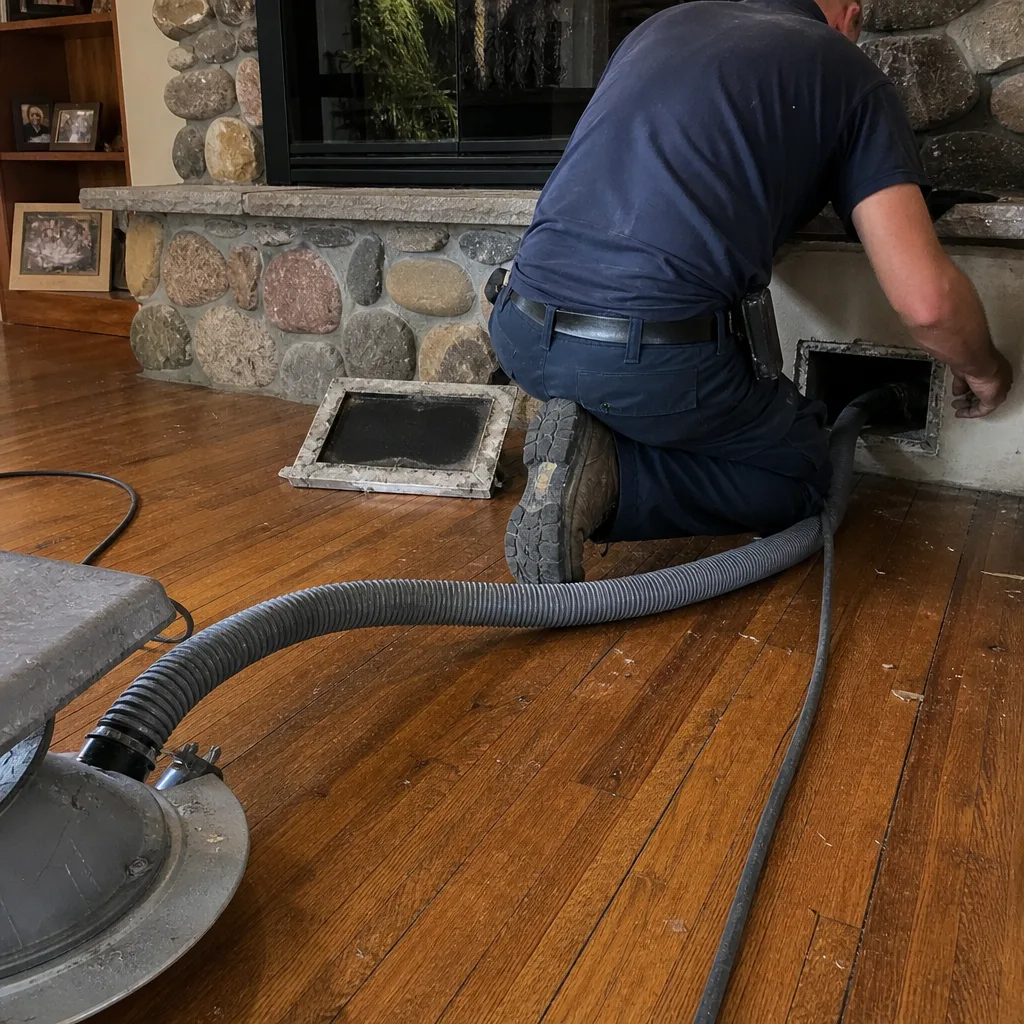 Before
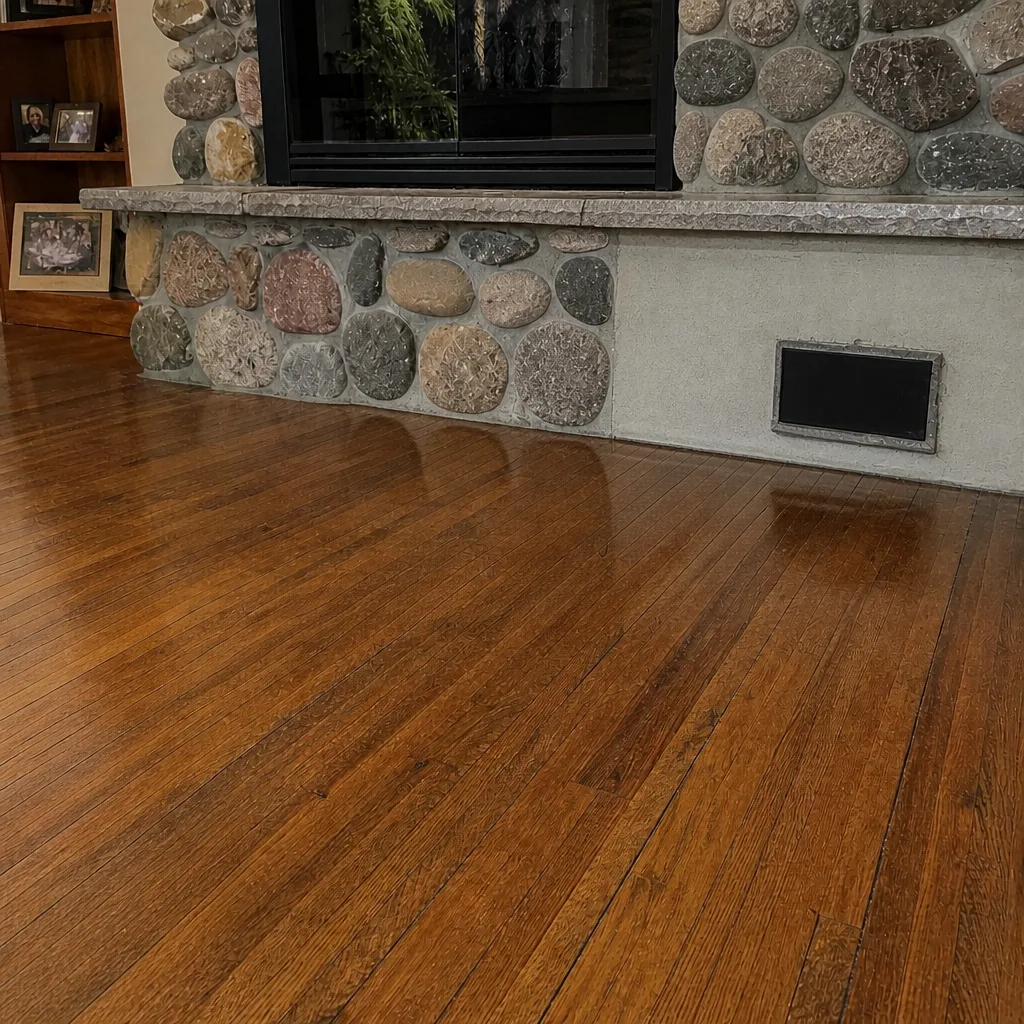 After
When to Call a Professional
Some maintenance work is genuinely a homeowner job. The line between that and a professional call is clearer than most people think. Call a professional if you notice a persistent musty or burnt odor when the system starts, if you find visible mold-like staining inside the duct or at the plenum, or if a return grille has heavy buildup you can’t reach. Call if you’ve had recent water intrusion, a renovation that generated a lot of drywall dust, or a pest problem. Call if the blower is noisy or the static pressure reading is elevated. Call if a flex joint looks disconnected, sagging, or crushed. Call if the dryer is taking longer to dry or the vent behind the appliance is crushed. Duct Cleaning Boise City offers free estimates in Boise City and works across all three of these categories – air duct cleaning, dryer vent cleaning, and air duct repair. Call (866) 552-6419. We answer 24/7. Fast dispatch from 7am to 7pm, Sunday through Friday.
Frequently Asked Questions
Every two to four years is a reasonable starting interval for a typical Boise City home, but the real answer depends on your household. Homes with pets, anyone with allergies, recent renovations, or heavy wildfire smoke exposure benefit from an inspection more often, sometimes every year. The maintenance log helps you know when it’s actually due rather than guessing.
A duct cleaning is a single professional event that resets the system to a cleaner baseline. Duct maintenance is the ongoing routine of checking filters, inspecting grilles and joints, tracking pressure, and scheduling cleanings on a calendar. Maintenance is what keeps the system from drifting back to a bad state between cleanings. Both are necessary.
No, and it’s not just a question of equipment. Consumer vacuums can’t extract fine particulate the way a HEPA-rated system like Nikro can, and they often blow loose dust into the living space instead of capturing it. Professional-grade equipment (Rotobrush for agitation and extraction, Nikro for HEPA capture) exists precisely because a shop vac isn’t up to the job. Leave the actual cleaning to trained technicians.
Whole-home media filters from Honeywell and Aprilaire have their own replacement intervals tied to their filter media and cabinet design. Humidifier pads and water panels from Aprilaire need periodic replacement, particularly in hard-water areas here. Check the manufacturer’s interval for your model, record it in your log, and time it to line up with your duct cleaning visits.
A legitimate duct cleaning includes before-and-after photos of the actual ducts being cleaned, which you should receive as part of the visit. Ask for them up front. If a provider won’t document the work visually, that’s a red flag. Before-and-after photos are standard with professional-grade cleaning, not an add-on.
Yes. The dryer vent is a separate exhaust path from your HVAC ducts, but it’s part of the same airflow and fire-safety picture. The U.S. Fire Administration cites dryer vents as a leading cause of residential house fires. Add a full-run cleaning every six to twelve months, or whenever drying times rise, to the same maintenance calendar.
The Bottom Line
Duct maintenance works because it’s small and recurring. Change the filter, inspect the grilles, watch the pressure, check the joints, and log what you find. Do that on the rhythm of a Boise City year – thaw checks in spring, smoke-season filter discipline in summer, a heating-startup inspection in fall, and cold-weather filter checks in winter – and you’ll catch restriction before it costs you. A professional cleaning every couple of years, plus a dryer vent cleaning on the same calendar, plus the documentation to prove what was done, is the full system. The checklist is the difference between a clean house and a house that stays clean.
For a free estimate and a scoped plan for your home, call Duct Cleaning Boise City at (866) 552-6419. We answer 24/7. Fast dispatch from 7am to 7pm, Sunday through Friday. We work across Boise City and the surrounding valley, with professional-grade equipment and a same-appointment repair option when cleaning uncovers a problem.
Written by the team at Duct Cleaning Boise City.