
Last updated November 16, 2026
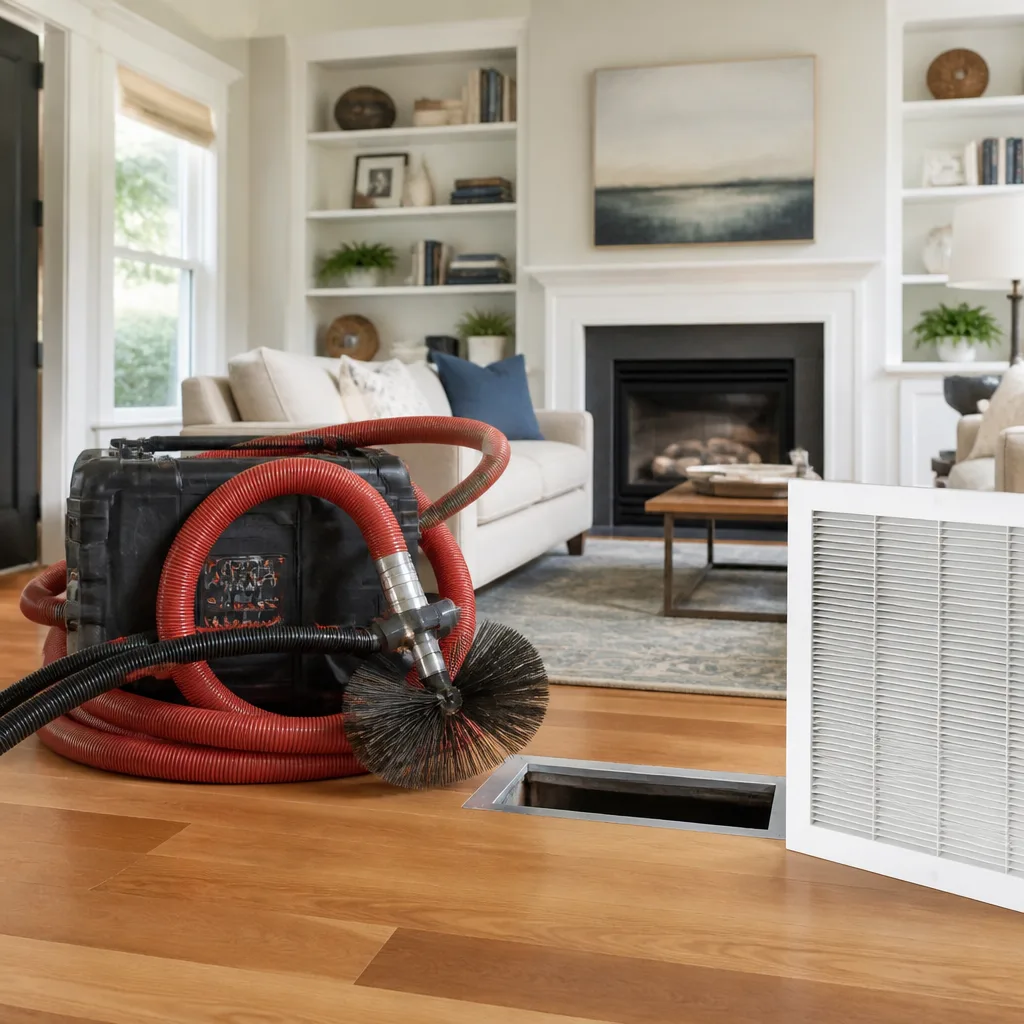 Whole-home duct cleaning
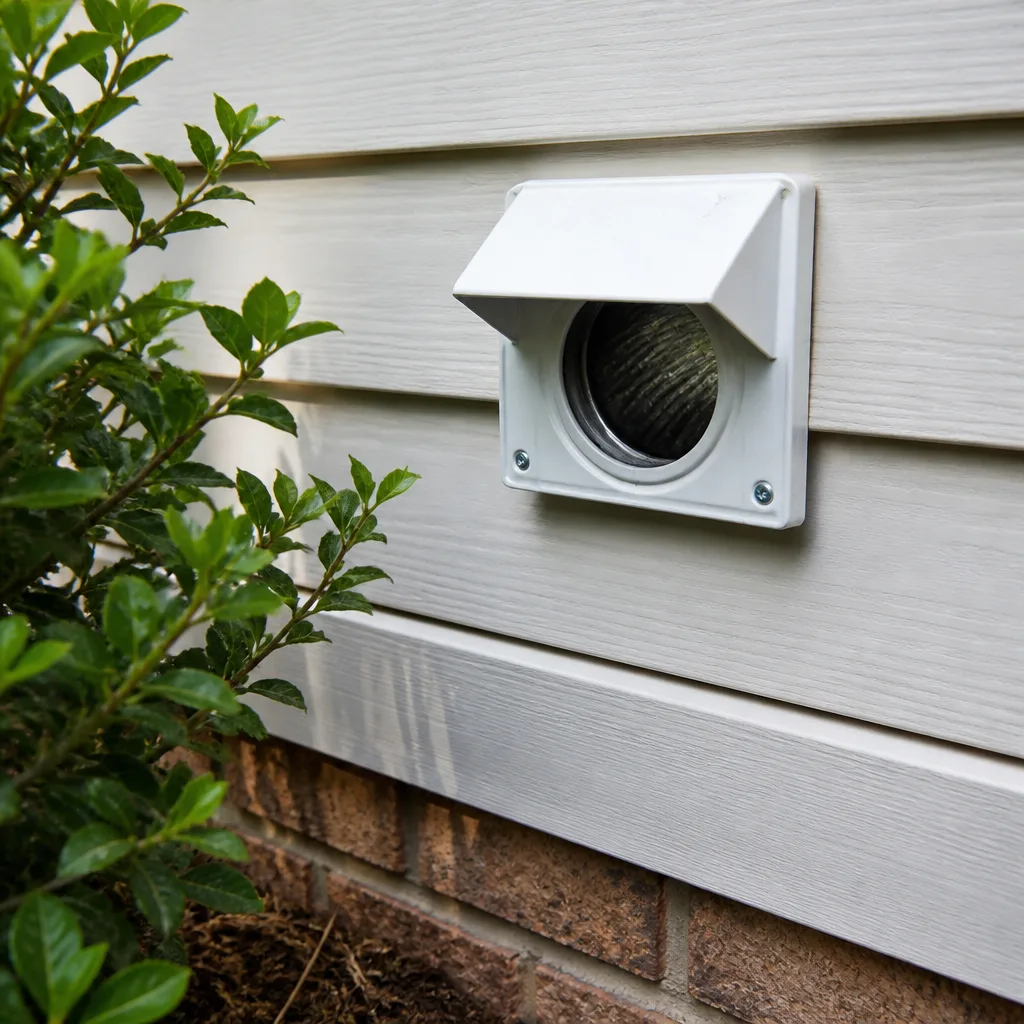 Dryer vent cleaning
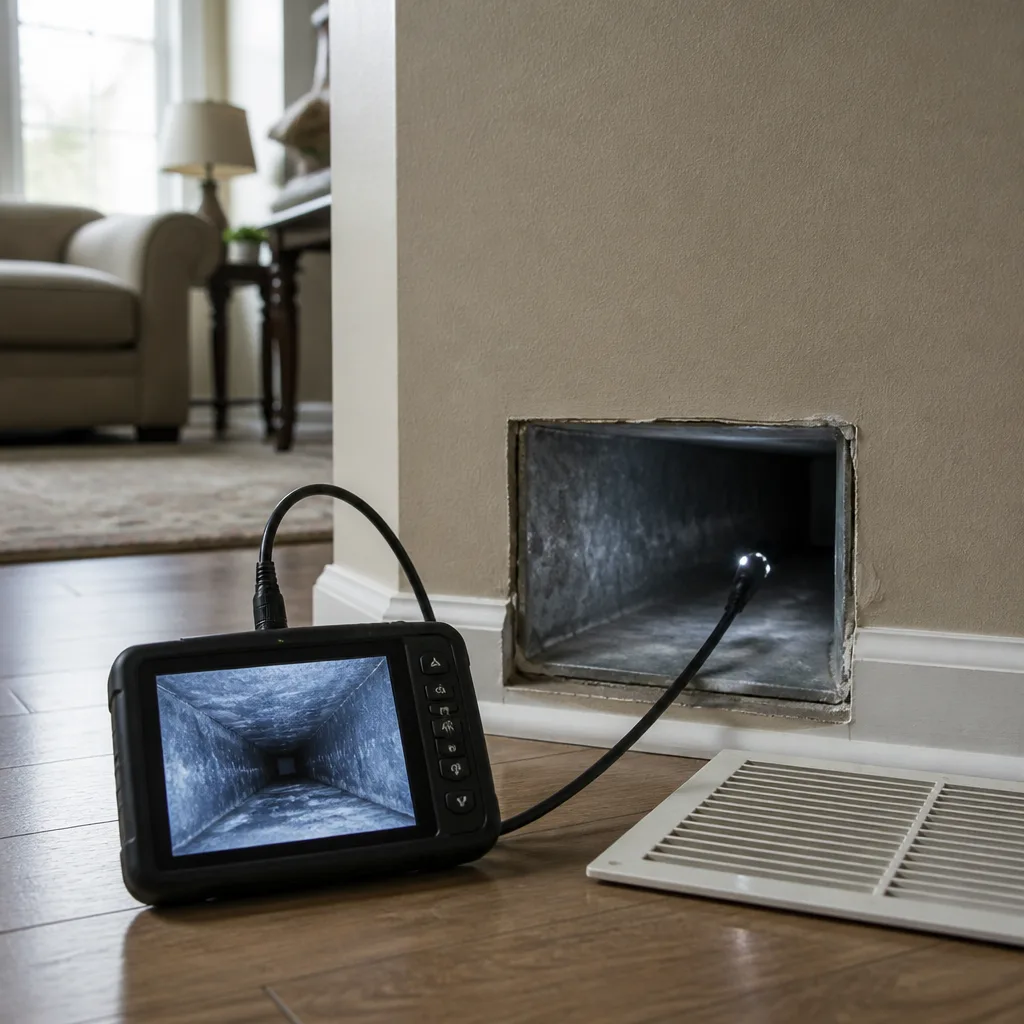 Camera inspection
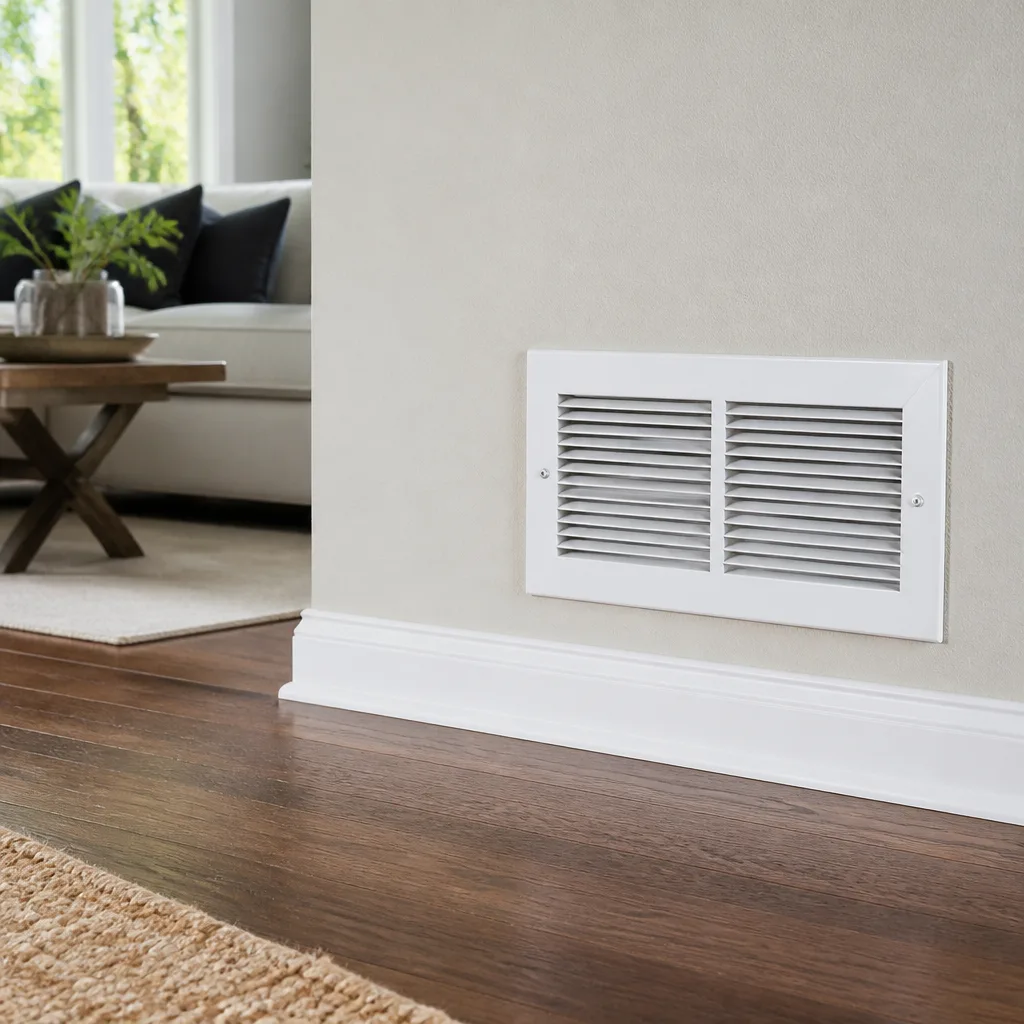 Sanitizing & deodorizing
Whole-system duct and dryer vent check with before-and-after photos - you see exactly what came out of your vents
That "$99 whole-house special" is a bait ad - the real number appears once they are in your hallway, or the "clean" is a shop-vac at the register. We photograph the inside of your ducts before and after instead.
Choosing the Right Air Duct Cleaning Brand: A Buyer’s Guide for Boise City
Plenty of companies advertise “professional equipment.” Very few can tell you which system they’ll actually run in your home, what it’s engineered to remove, and why it beats the alternative on your specific ductwork. That gap is where buyers get fooled. In Boise City, where homes range from older bungalows with retrofitted rigid duct to newer builds with long flexible runs, the equipment a contractor owns says more about their capability than any badge or slogan. This guide breaks down the tools and IAQ brands worth asking about – Nikro, Rotobrush, Honeywell, Aprilaire, and Abatement Technologies – so you can read a quote the way a technician would.
Quick Answer
The right air duct cleaning brand in Boise City is the one that owns and maintains professional-grade equipment, carries recognized IAQ product lines like Honeywell and Aprilaire, and can explain their cleaning process without vague claims. Ask for the specific equipment model, the filtration rating, and how they handle contamination beyond routine dust. A company that answers those plainly is showing its technical depth; one that deflects is telling you something too.
Styles & brands we work with
- Whole-home duct cleaning
- Dryer vent cleaning
- Camera inspection
- Sanitizing & deodorizing
Table of Contents
- Why the Brands a Contractor Carries Matter More Than the Star Rating
- Rotobrush vs. Nikro: What Each System Is Built to Do
- Honeywell vs. Aprilaire: Whole-Home Filtration and Humidification
- Abatement Technologies and What It Signals About Training
- How to Verify a Contractor Actually Uses the Equipment They Advertise
- Add-On Seller vs. System-Level Diagnosis: How to Tell in Five Minutes
- What Boise City’s Housing Stock Demands From a Duct Cleaner
- The Questions to Ask Before You Book
Why the Brands a Contractor Carries Matter More Than the Star Rating
Reviews tell you whether a crew showed up on time and left the place tidy. They rarely tell you whether the cleaning actually worked. What a contractor chooses to buy, maintain, and carry into homes is a harder signal. Equipment purchases are capital decisions. A shop that invests in a Nikro HEPA-rated negative-pressure unit and a Rotobrush agitation system is committing to a certain standard of work, and that commitment is auditable in a way that a five-star comment isn’t.
Here’s the practical logic. Consumer shop vacuums and rented gear can knock dust off a few accessible vents, but they can’t create the airflow or containment needed to clear a full duct system, and they can’t protect your living space while doing it. Professional systems do both. When a company carries recognizable IAQ brands, it’s not an accident of marketing – it’s a reflection of how their technicians are trained to think about a duct system as a whole: supply and return, filtration, humidity, and air movement together.
In our experience across Boise City, the clearest differentiator between a serious duct cleaner and a “blow-and-go” operation is whether they own equipment outright and can explain its role. A company that owns both a Rotobrush and a Nikro isn’t improvising. They’ve built their process around what each tool does best, and they’ll run the right one for your job. That’s the first thing to look for.
Key takeaways so far:
- Reviews measure customer service; equipment measures technical capability. Look at both.
- Capital equipment choices reveal whether a company can handle real contamination, not just surface dust.
- Owning two distinct systems signals a process, not a one-tool approach.
Rotobrush vs. Nikro: What Each System Is Built to Do
These two systems are engineered for different jobs, and understanding the split is the fastest way to tell whether a contractor knows their craft. When you call Duct Cleaning Boise City or any other company, listen for whether they can explain this difference. If they can’t, that’s your answer.
Rotobrush: agitation plus vacuum
Rotobrush is a source-removal system. It works by mechanically agitating the duct interior while suction pulls loosened debris downstream. Think of it as scrubbing inside the duct. It’s especially effective on:
- Rigid and semi-rigid ductwork where the tool can travel the run.
- Dust, dander, and lint that cling to the duct wall rather than fill the volume.
- Short-to-medium runs inside residential systems, which is the common geometry in most Boise City homes.
The agitation is what does the work. Passive suction alone releases surface dust but leaves the bonded layer that has built up over years. Rotobrush is the tool that addresses that layer.
Nikro: HEPA-rated negative-pressure extraction
Nikro is a collection source. The portable negative-pressure units pull the whole system into a HEPA-rated filtration stage while maintaining containment, so debris doesn’t escape into your living space. It’s the right tool when:
- Contamination volume is high, such as after a renovation or years of neglect.
- Air quality concerns are elevated, or someone in the home has respiratory sensitivity.
- You’re working in tight spaces where a truck-mount can’t reach the connection point.
A truck-mount system creates massive suction at the source, which is great when the truck can park at the right connection. Nikro’s portability wins in homes where access is awkward or where HEPA containment is needed at the point of work. Owning both means the technician picks the right tool onsite, not the only tool they have. That’s why carrying both matters for a full-service operation.
Honeywell vs. Aprilaire: Whole-Home Filtration and Humidification
Once ducts are clean, the next question is what happens to the air moving through them. That’s where Honeywell and Aprilaire come in. Both are trusted names in whole-home filtration and humidification, and both are recommended by HVAC contractors and indoor-air specialists because their product systems are built to integrate with standard residential HVAC layouts. But they aren’t interchangeable, and a contractor who recommends one should be able to tell you why – based on your system’s compatibility, not their margins.
What distinguishes each line
- Honeywell is strong across media air cleaners, electronic air cleaners, and a broad line of humidification controls. Their filtration products are built to drop into most standard return-air configurations, which makes them a common fit for homes with conventional HVAC setups.
- Aprilaire is particularly known for whole-home humidification and dehumidification, plus a solid line of high-efficiency media filters. Their systems often suit homes where humidity control is the priority – a real consideration in Boise City’s dry high-desert climate, where winter air is very dry and summer air is hot and arid.
In Boise City, humidity matters more than coastal-focused guides let on. Dry winter air, forced-air heat, and continuous air movement through a duct system combine to aggravate skin, respiratory, and static issues in a lot of homes. A contractor who recommends Aprilaire over Honeywell, or vice versa, should be able to explain it in terms of your current system – return plenum size, existing humidifier compatibility, or filtration media slot. If the reasoning is vague, you’re hearing a sales pitch, not a diagnosis.
If you want filtration as part of the broader work, that fits naturally into air duct cleaning as a system-level upgrade rather than a bolt-on.
Abatement Technologies and What It Signals About Training
Abatement Technologies makes containment and filtration equipment for the serious end of the market: negative-air machines, HEPA air scrubbers, and vacuum systems designed for environments where regular dust is not the concern. This brand appears almost exclusively in certified remediation contexts – mold remediation support, post-renovation cleanup, and situations where contamination is elevated enough that ordinary duct cleaning isn’t enough.
When a duct cleaner carries Abatement gear, here’s what it tells you:
- The company has trained for elevated-contamination scenarios, not just routine dust removal.
- They understand negative-air containment – keeping contamination from spreading into the indoor living space.
- They can handle a job that reaches into remediation-level territory and coordinate appropriately rather than oversell.
What it does not automatically mean is that they perform standalone mold remediation. That’s a separate discipline, and a responsible contractor will say so. What it does mean is that a technician showing up with Abatement equipment in the truck knows what “serious contamination” actually looks like and what to do about it. That’s a rare capability, especially around Boise City where general handymen and HVAC companies rarely stock this level of equipment. Capability is often the difference between a genuine solution and a phone call to a second company.
How to Verify a Contractor Actually Uses the Equipment They Advertise
Photos on a website prove nothing. Cameras are borrowed, rented, and staged for marketing all the time. The real question is whether the equipment you see in an ad is the equipment actually coming to your home – and whether it’s in working order. Here’s how to verify, in numbered order:
- Ask for specific model numbers. A real operation can name their machines – a Rotobrush model, a Nikro unit, or an Abatement air scrubber. Someone reading off a generic “professional equipment” script cannot.
- Ask about filter stock. HEPA filters, replacement media, and pre-filters are consumables. A company that maintains real equipment has a stock of filters on hand. Ask what happens if the filter needs replacing mid-job.
- Ask about equipment maintenance. Professional machines require scheduled service, calibration, and inspection. A contractor who tracks this will answer instantly. One who rents doesn’t.
- Ask them to walk you through the process step by step. Not “what you’ll see,” but “what I’ll do.” The person who can’t walk through their own process hasn’t done it enough times.
- Ask why they chose that equipment. Every legitimate professional has a reason – reliability, containment quality, integration with how they work. If the answer is “it’s the best,” that’s marketing.
One more: ask what they do if they discover contamination levels beyond routine cleaning. A serious contractor has a plan – Abatement gear, containment, or a referral to a specialist. One who says “we handle everything” and can’t explain how is overselling.
Add-On Seller vs. System-Level Diagnosis: How to Tell in Five Minutes
There are two kinds of duct cleaning companies. One treats the visit as a transaction and tries to upsell filtration, humidification, and services you may not need. The other treats it as a diagnosis and tells you what you actually need to fix the problem. You can usually tell which you’re talking to inside five minutes of the first conversation or the on-site walkthrough.
Add-on sellers
- Lead with a long list of products before they’ve seen your system.
- Recommend specific brands consistently, regardless of what they find in the ducts.
- Can’t explain why one filtration system over another, except “it’s the best.”
- Pivot from cleaning into humidity control, air purification, or duct replacement almost immediately.
- Price aggressively low to get in the door and add items on site.
System-level diagnosticians
- Look at your system first – duct type, layout, existing filtration, return configurations, humidity source.
- Explain what they find and what it means, before recommending any product.
- Recommend a filtration or humidification system based on your home’s compatibility, not on a single brand’s margin.
- Can walk back a recommendation if it doesn’t fit your system.
- Distinguish clearly between cleaning (what they do) and additional work (what might come next).
The difference matters because a system-level diagnosis protects your money. A clean duct system and the right filtration upstream work together. An add-on filtration system that doesn’t match your HVAC plenum is money wasted. In Boise City’s dry climate, humidification handled well is meaningful; handled as an upsell, it’s noise. Ask the diagnostic questions and you’ll know which conversation you’re having.
What Boise City’s Housing Stock Demands From a Duct Cleaner
Boise City sits in the high desert, surrounded by open range, farmland, and wind-blown soil. Homes here contend with seasonally heavy dust intrusion, dry wintertime air, and significant temperature swings between seasons. Older homes often have retrofitted rigid duct systems with accessible joints; newer construction tends toward long flexible runs through attics and crawlspaces. Each layout calls for a slightly different approach.
Here’s what the housing stock means in practice:
- Rigid duct homes benefit from the mechanical agitation of Rotobrush, which can travel through straight runs and knock bonded dust from duct walls.
- Flexible duct and long runs are often better served by Nikro’s HEPA extraction under negative pressure, especially when joints are difficult to access or the run length exceeds what a rotary tool can reach comfortably.
- Attic and crawlspace runs are common in Boise City homes, which is why portability matters. A portable negative-pressure unit reaches where a truck-mount can’t.
- Renovation dust and wildfire-season intrusion raise contamination levels above routine levels, making containment and HEPA filtration essential rather than optional.
Boise City homes also benefit from a look at the dryer vent. Lint accumulation in a dryer vent is a leading cause of residential house fires according to the U.S. Fire Administration, and dryer vent cleaning directly clears that risk. If the ducts and the dryer vent are both overdue, the same visit can address both, which is a reason to choose a company that offers both rather than a single-service operation.
The Questions to Ask Before You Book
Use these questions as a screen. The answers will separate the serious duct cleaner from the rest.
- What specific equipment will you use, and will it be in the truck that comes to my home?
- Are your vacuum systems HEPA-rated? Routine dust control isn’t enough; HEPA matters.
- Do you carry both agitation and extraction systems? Owning one means compromises. Owning both allows the right tool for the job.
- What brands of filtration and humidification products do you work with? Honeywell and Aprilaire are both legitimate; the answer should match your system.
- What do you do if you find contamination beyond routine cleaning? The answer should reference containment or Abatement gear, not a shrug.
- Can you clean the dryer vent in the same visit? This saves a second trip and closes an ignored fire-risk gap.
- Do you offer air duct repair? Cleaning can surface cracks or disconnected runs. A company that can fix those is saving you a second call, which is why we offer both – we clean it, and we can fix it.
For the Boise City area, a free estimate is the sensible next step. We offer one for every job, and it costs you nothing to ask. Call Boise City at (866) 552-6419 to schedule. We answer 24/7. Fast dispatch from 7am to 7pm, Sunday through Friday.
Common Mistakes to Avoid
- Choosing on price alone. A cheap quote often means rented or consumer-grade equipment, which can stir up dust instead of removing it. Compare based on capability, not just cost.
- Trusting photos over questions. A website photo of a Nikro unit proves nothing. Ask for the model and the maintenance schedule, and listen for how easily the answers come.
- Assuming a large HVAC company carries IAQ gear. Many don’t. In Boise City, most HVAC contractors service systems but don’t run duct-specific equipment. Specialization matters here.
- Ignoring the dryer vent. Dryer vents are cited by the U.S. Fire Administration as a leading cause of residential fires. If a contractor quotes duct cleaning and skips the vent, ask why.
- Skipping the follow-up on discovered problems. Duct cleaning often reveals a disconnected run or a cracked joint. If your contractor can’t repair what they find, you’ll be making a second call within weeks.
- Letting a company sell humidification without a system check. Boise City’s dry climate makes humidifiers useful, but only if they fit your HVAC. A diagnosis-first contractor checks compatibility before recommending.
- Believing “guaranteed” with no policy to read. Complaints about duct cleaning often involve a low initial price and a big final invoice. Ask for a written estimate that spells out what’s included before work starts, and expect a company that agrees one flat price before the job begins.
See the difference
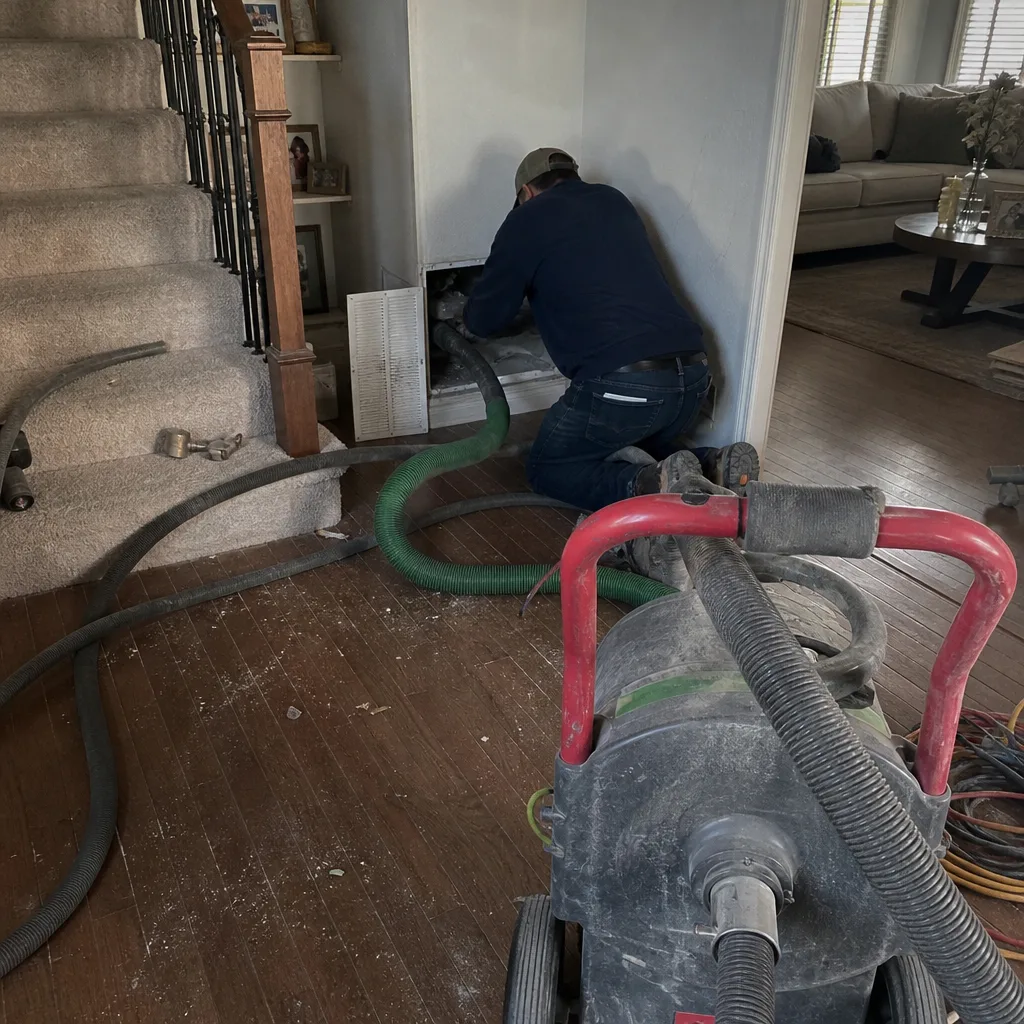 Before
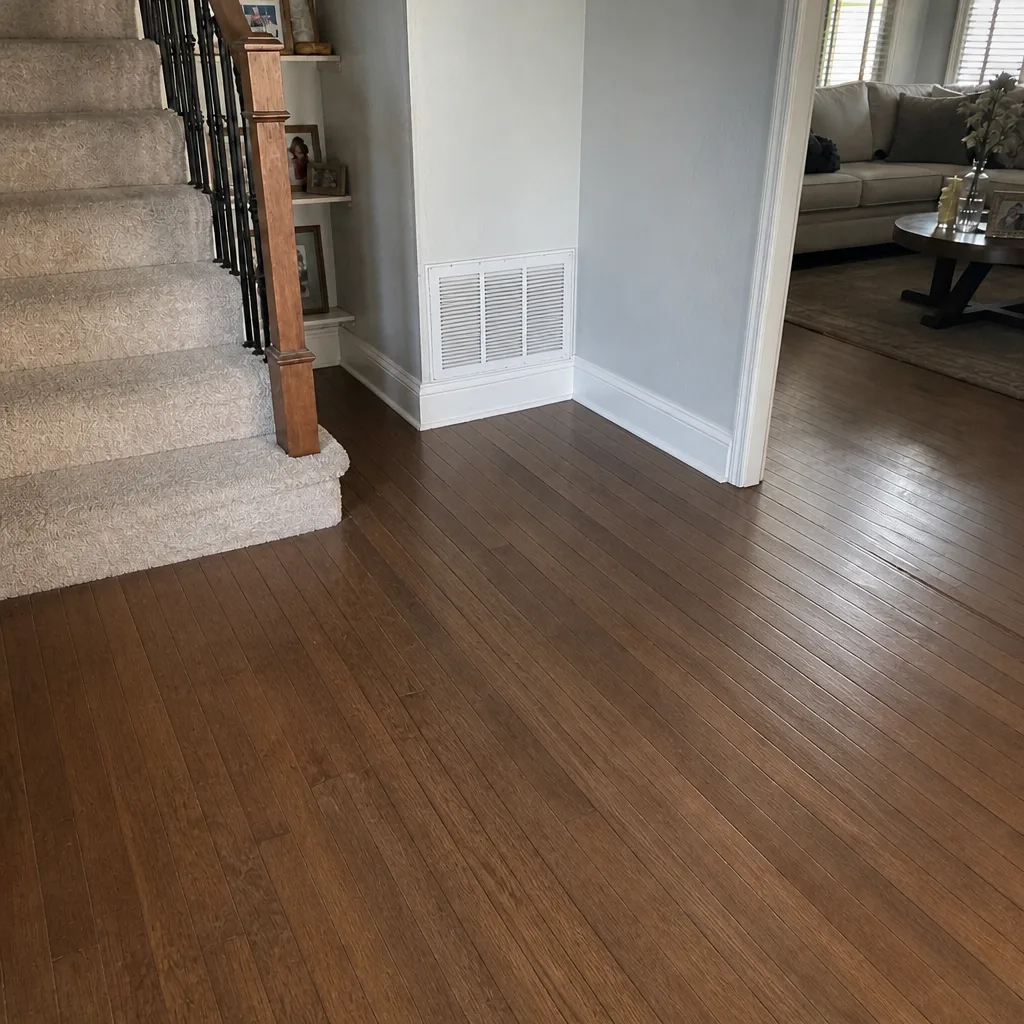 After
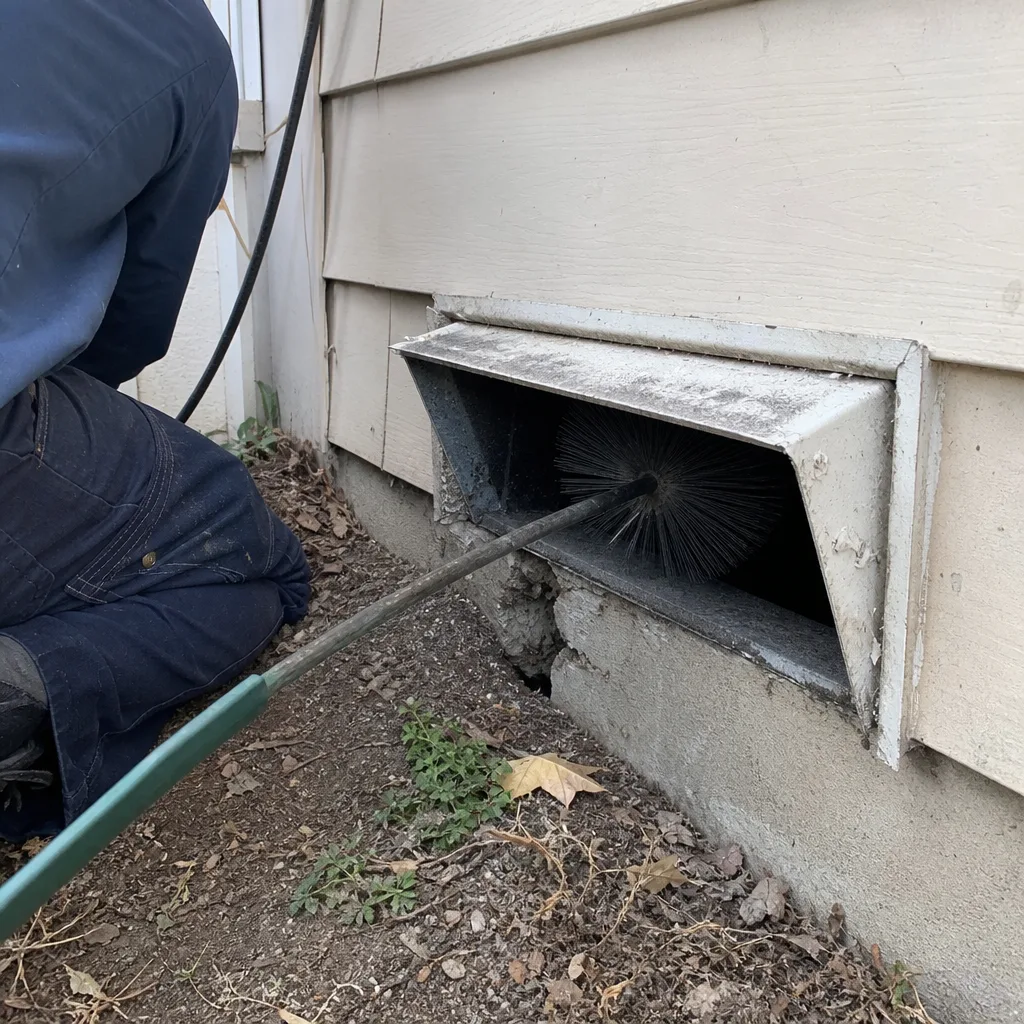 Before
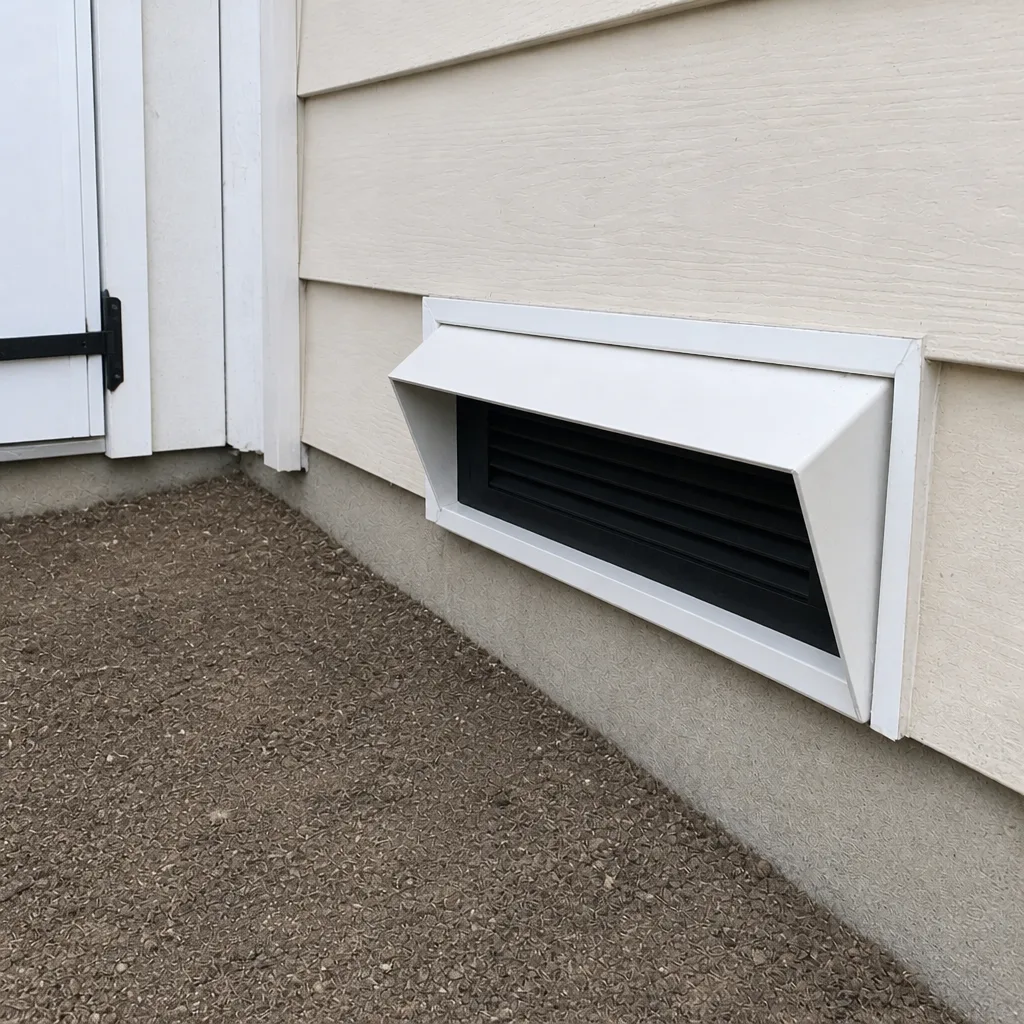 After
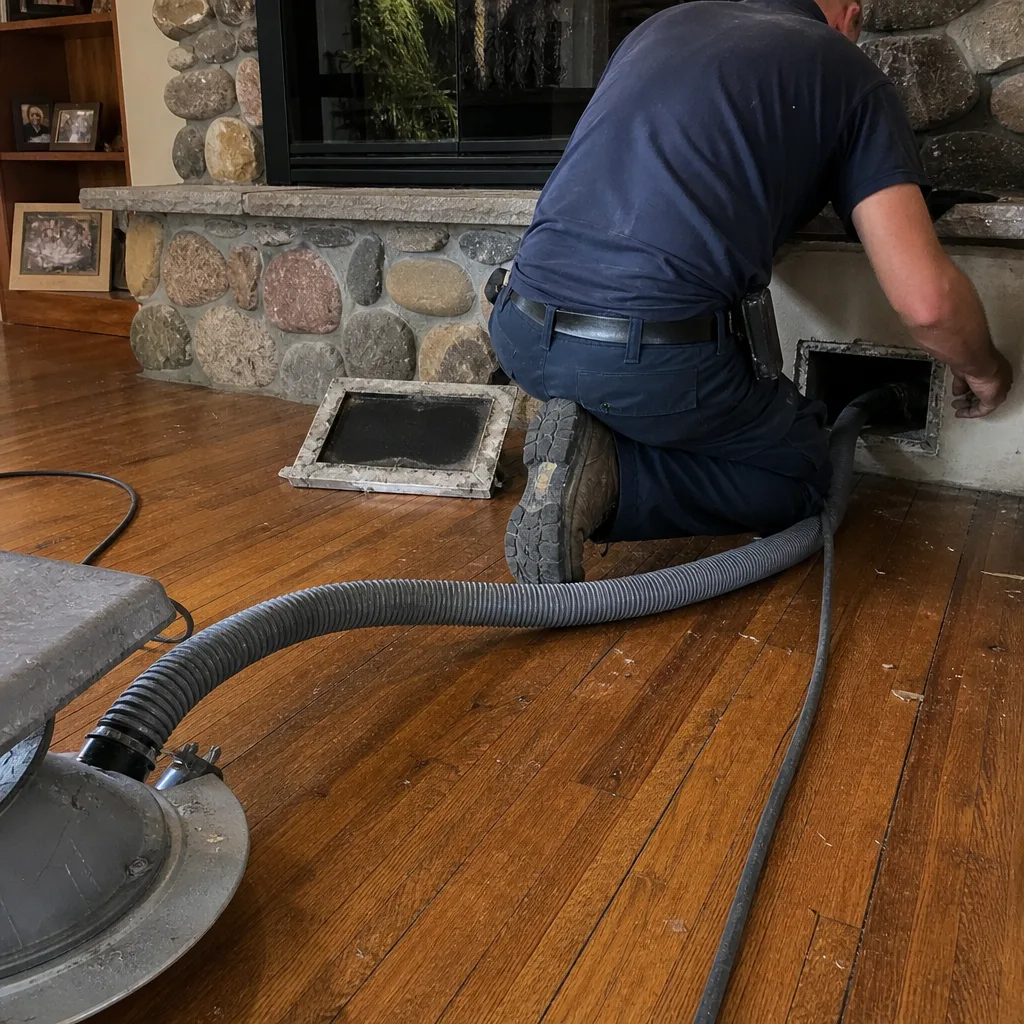 Before
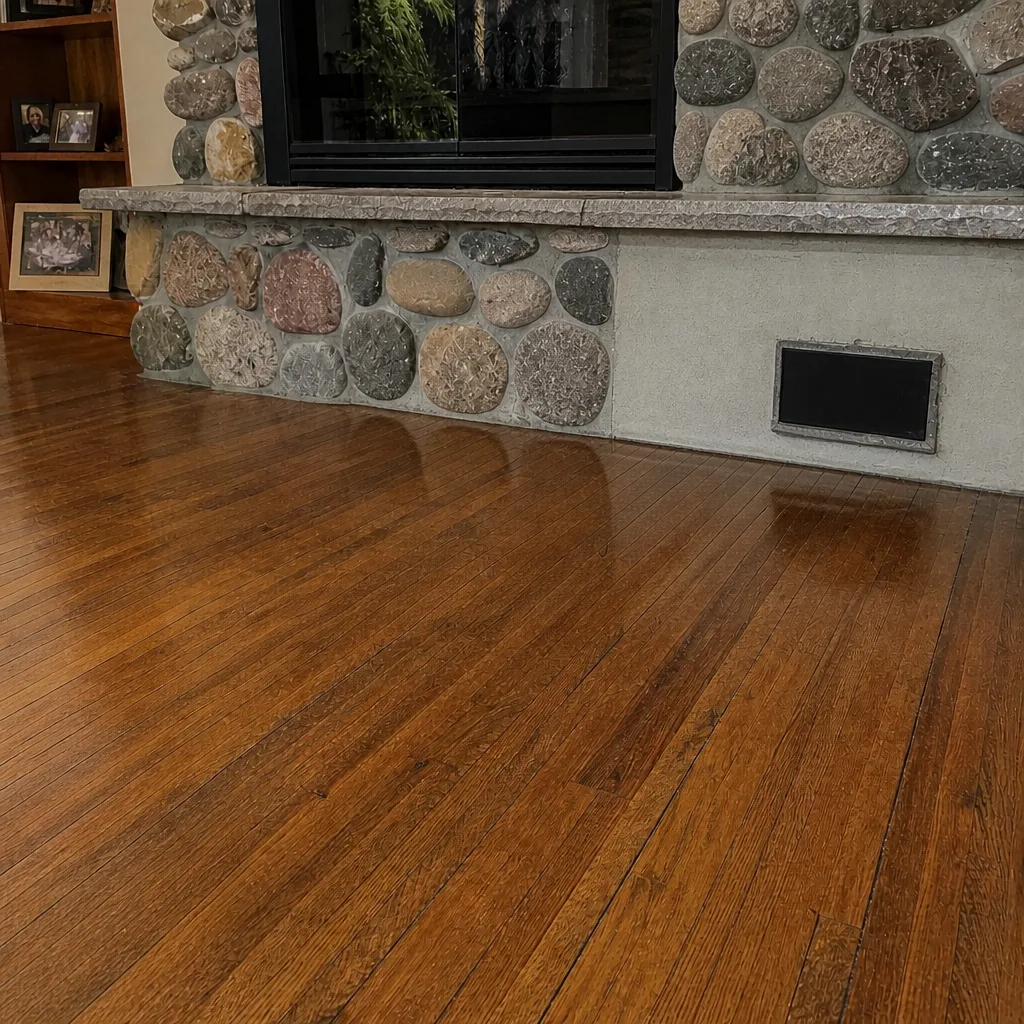 After
When to Call a Professional
Some signs a duct system needs professional attention are obvious. If vents blow visible dust when the system kicks on, or if there’s a musty smell from the registers, that’s contamination. If a recent renovation left drywall dust behind, or if the home has pets and the air has a persistent odor, a full cleaning is the answer. If you’re a new homeowner who inherited an unknown system, having it inspected and cleaned is the right way to start. If someone in the house has respiratory sensitivity, a HEPA-containment cleaning is a meaningful upgrade over a shop-vac approach.
Duct Cleaning Boise City offers free estimates in Boise City – call (866) 552-6419. We answer 24/7. Fast dispatch from 7am to 7pm, Sunday through Friday. Our technicians have up to 8 years of experience, and the equipment they bring is the same gear we’ve described here.
Frequently Asked Questions
The best company is the one that owns and maintains professional-grade equipment, carries recognized IAQ product lines like Honeywell and Aprilaire, and can explain their process without vague claims. Ask for the specific equipment model, the filtration rating, and whether they carry both agitation and extraction systems. A contractor who answers those questions plainly is showing technical depth. Duct Cleaning Boise City uses Rotobrush and Nikro systems, and offers filter-based IAQ products from Honeywell and Aprilaire. Call (866) 552-6419 for a free estimate.
Yes, and significantly. Rotobrush and Nikro are engineered for different jobs: Rotobrush for mechanical agitation and source removal, Nikro for HEPA-rated negative-pressure extraction. A company that carries both can pick the right tool for your duct geometry and contamination level. A company that carries only one makes compromises. Consumer-grade shop vacuums aren’t in the same class. If a contractor can’t name their equipment or explain why it matters, that’s your sign to keep looking.
Abatement Technologies makes containment and filtration equipment for serious remediation scenarios – negative-air machines, HEPA scrubbers, and containment systems. It appears almost exclusively in certified remediation contexts. When a duct cleaner carries Abatement gear, it signals training for elevated-contamination situations and an understanding of negative-air containment. It doesn’t mean they perform standalone mold remediation, which is a separate discipline. It means they recognize when a job has crossed beyond routine dust removal.
Neither is universally better. Honeywell is strong across media and electronic air cleaners and humidification controls, with a broad product line that fits most standard return-air configurations. Aprilaire is particularly strong in whole-home humidification and dehumidification, plus high-efficiency media filters, which often suit homes where humidity control is the priority. In Boise City’s dry high-desert climate, humidification is a real consideration. The right choice depends on your existing system, so a contractor should recommend based on compatibility, not on a single brand’s margin. Call (866) 552-6419 – estimates are free.
Cheap quotes typically mean cheaper equipment – consumer-grade vacuums, rented gear, or a simpler process without HEPA containment. That can stir up dust instead of removing it, and it doesn’t address bonded contamination. A serious operation uses professional systems, carries the right filters, and provides before-and-after documentation. Ask for a written estimate that spells out what’s included, and expect one flat price per system agreed before work starts. If a quote looks too good, ask what equipment they’ll bring and which model. Call (866) 552-6419 for an exact quote – estimates are free.
Most homes in Boise City benefit from cleaning every few years, but the right interval depends on your home. Homes with pets, recent renovations, or heavy dust intrusion need attention more often. Homes with well-sealed systems and minimal dust loading can go longer. Rather than picking a number up front, have a contractor inspect and tell you what they find. Trigger events – a renovation, a new-to-you home, or a musty smell from the vents – are reliable prompts to book a visit. We offer air duct repair as part of the same visit if cleaning uncovers a disconnected or cracked run. Call (866) 552-6419 for a free estimate.
The Bottom Line
The brand names a duct cleaning company carries tell you more about their capability than a review count or a slogan ever could. Rotobrush and Nikro mean professional agitation and HEPA-rated extraction. Honeywell and Aprilaire mean legitimate whole-home filtration and humidification, chosen for compatibility rather than margin. Abatement Technologies means containment capability and training for elevated-contamination scenarios. When a contractor carries all of them and can explain why, you’re not talking to a generalist with a shop vac and a coupon. You’re talking to someone who can diagnose your system, clean it properly, and fix what they find. In Boise City, that’s the difference between a duct cleaner and a duct specialist. Call (866) 552-6419 for a free estimate. We answer 24/7. Fast dispatch from 7am to 7pm, Sunday through Friday. Our technicians have up to 8 years of experience, and every visit ends with before-and-after photos so you know the work was done.
Written by the team at Duct Cleaning Boise City.