
Last updated November 16, 2026
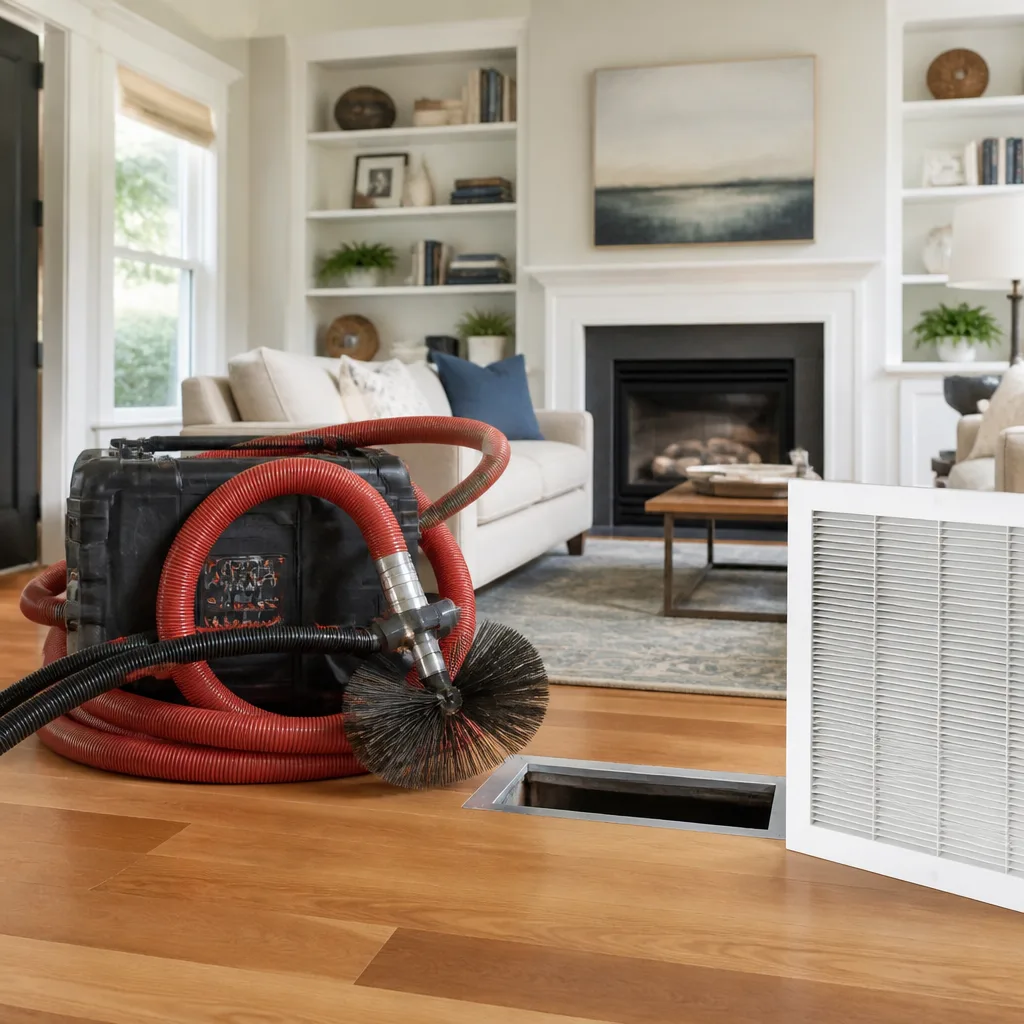 Whole-home duct cleaning
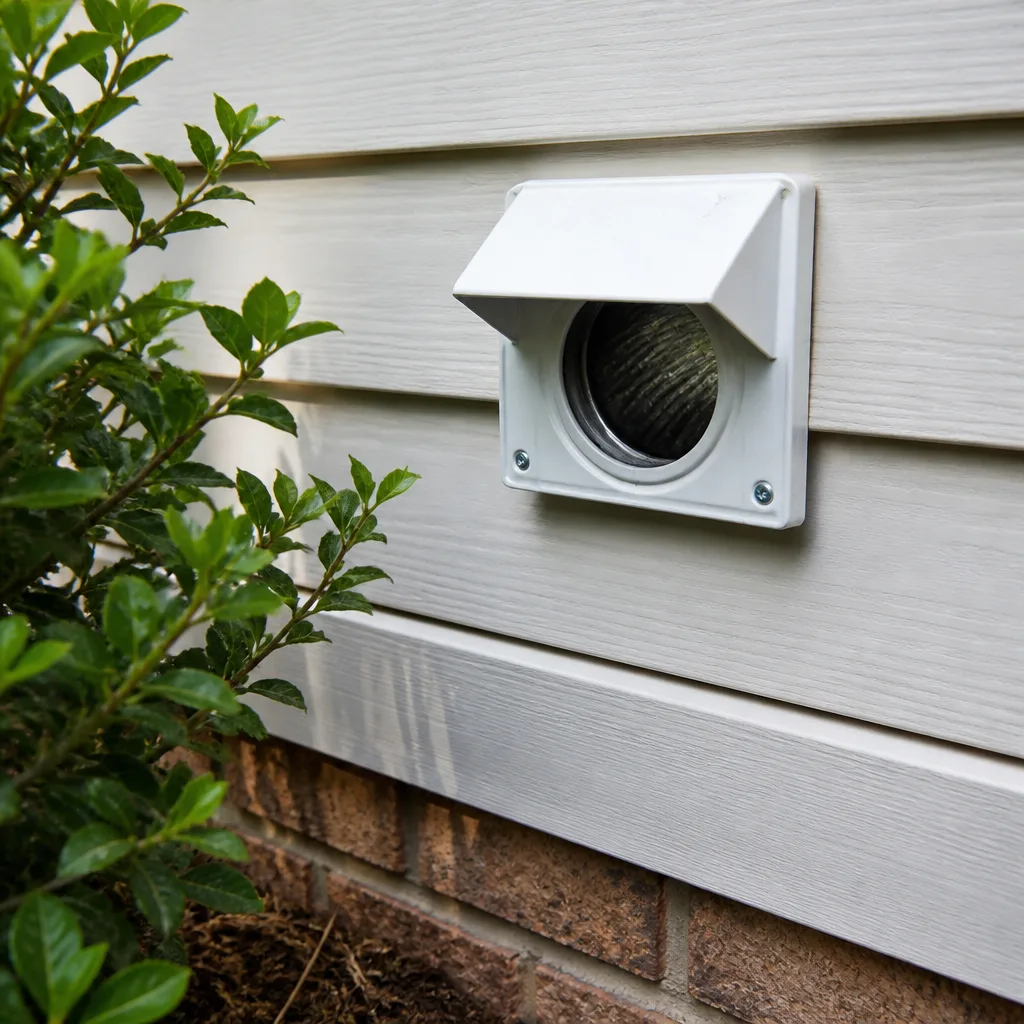 Dryer vent cleaning
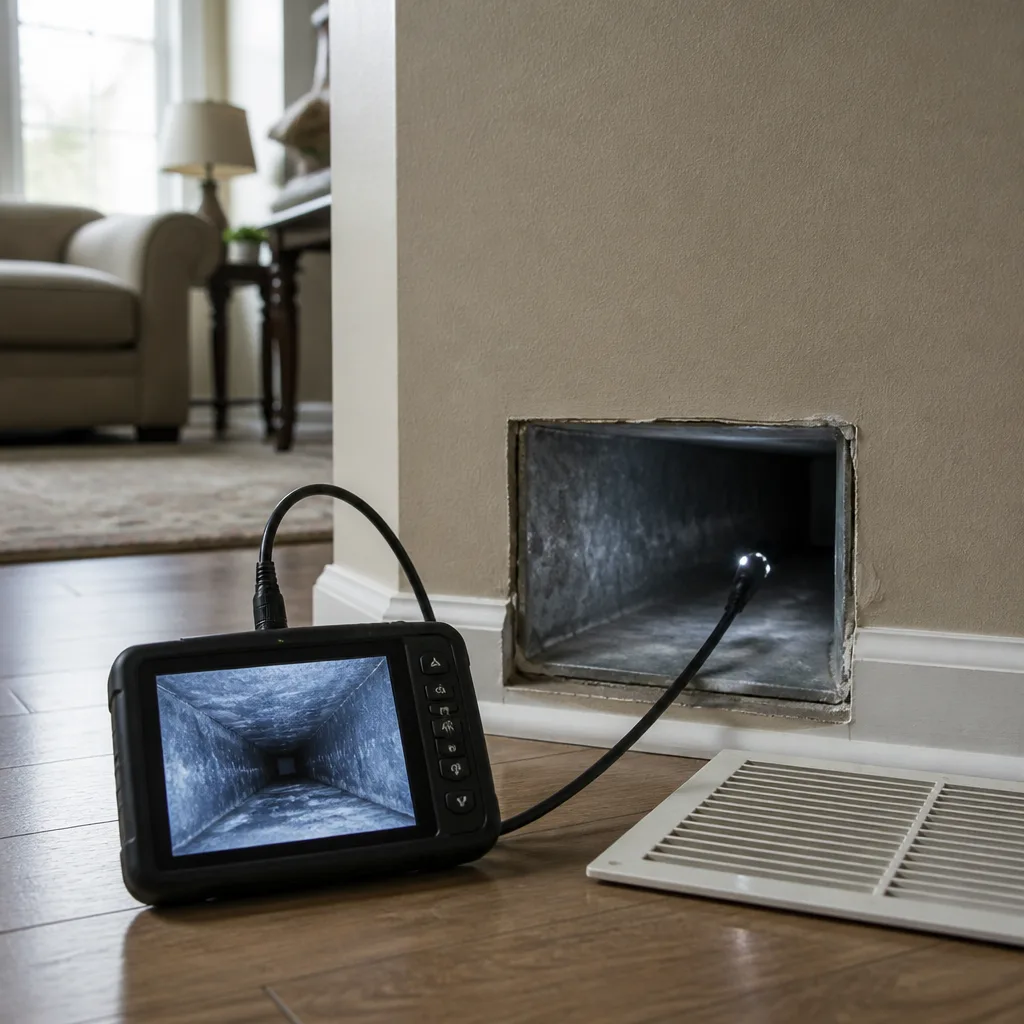 Camera inspection
 Sanitizing & deodorizing
Whole-system duct and dryer vent check with before-and-after photos - you see exactly what came out of your vents
That "$99 whole-house special" is a bait ad - the real number appears once they are in your hallway, or the "clean" is a shop-vac at the register. We photograph the inside of your ducts before and after instead.
DIY vs Professional Air Duct Cleaning: The Boise City Homeowner’s Decision Guide
A homeowner with a $30 dryer vent brush can clean a straight 10-foot dryer duct run effectively. That same homeowner with a $200 duct cleaning kit from Home Depot will aerosolize settled debris in their return system without capturing any of it. The difference isn’t effort or skill. It’s whether the tool captures what it loosens or just moves it around. That single distinction decides which duct tasks belong in your hands and which belong with a professional. In this guide, we draw the line precisely for Boise City homes: what you can safely do yourself, what you genuinely can’t, and how the cost math works out either way.
Quick Answer
DIY works for register and grille cleaning, dryer vent maintenance, return filter replacement, and reconnecting visible flex duct that has come loose. Professional cleaning is required for air handler coil cleaning, main trunk agitation, and any job needing HEPA extraction or containment. If your ducts haven’t been cleaned in years, if anyone in the house has allergies or asthma, or if you’ve just finished a renovation, book professional cleaning. If your system is already clean and you want to keep it that way between visits, do the light maintenance yourself.
Styles & brands we work with
- Whole-home duct cleaning
- Dryer vent cleaning
- Camera inspection
- Sanitizing & deodorizing
Table of Contents
- The Physics Problem With Consumer Duct Cleaning Kits
- What Boise City Homeowners Can Legitimately DIY
- Tasks That Require Professional Equipment
- Reading Your Boise City Home’s Duct Layout
- The Cost Math: DIY Maintenance vs. DIY Damage
- How to Evaluate a Professional Quote
- Common Mistakes to Avoid
- When to Call a Professional
The Physics Problem With Consumer Duct Cleaning Kits
Duct contamination is settled, not airborne. Dust, dander, and debris accumulate on the interior surfaces of the duct, held in place by a thin layer of moisture and static. The moment you disturb that layer with a brush or shop vac attachment, it re-enters the airstream. If you aren’t pulling air out of the system at high cubic feet per minute (CFM) at the same time you’re agitating, the debris doesn’t leave. It relocates. Some of it settles in a different stretch of duct. Some of it goes into the return plenum and coats the blower. Some of it comes out your supply registers and lands on furniture in Boise City living rooms.
That’s why professional duct cleaning equipment pairs agitation with simultaneous high-CFM extraction. Rotobrush systems combine a rotating brush head with a vacuum generating enough pull to capture what the brush loosens, moving through the duct as one continuous process. Nikro HEPA extraction systems capture what’s released and hold it in a filter rated to stop particles too small for a shop vac to catch. The tool isn’t doing the cleaning alone. The tool is doing the cleaning and the capture at the same time. That’s the idea.
Consumer kits sold at big-box stores are usually one of two things: a brush on a flexible rod that agitates but doesn’t extract, or a shop vac attachment that extracts but doesn’t agitate the dust stuck to duct walls. Neither one solves the physics problem. A shop vac rated for wet/dry pickup doesn’t produce enough CFM through a long hose to pull dirt off the far end of a trunk line, and its filter isn’t rated for the fine particulate that gets released. When a homeowner uses one on a contaminated return system, the particles go into the indoor air. In our experience, that’s actually worse than leaving the duct alone.
The exception is a non-porous, rigid, short duct run with light dust. A grille and the space behind it, a straight dryer vent with a clean screen, a short return just above the filter slot. These are low-volume surfaces where a handheld brush and vacuum work fine. The moment the run exceeds that scope – a main trunk that crosses the house, a return system with debris in the plenum, a long flex run under a crawlspace – you’re past the point where consumer tools help.
What Boise City Homeowners Can Legitimately DIY
There are four tasks almost any homeowner can do well with basic tools. None of them replace professional service, but each one meaningfully extends the interval between professional cleanings and keeps a system in better condition between visits.
- Register and grille cleaning. Pop each supply register and return grille off, wash or vacuum the surface, and dry it before replacing. This clears the visible layer of dust where the duct meets the room, which is the surface most likely to shed particles into the air. It takes about ten minutes per register and doesn’t require special equipment. Do it two or three times a year in high-use rooms.
- Dryer vent maintenance. Disconnect the dryer, pull the vent hose off the back, and clear lint you can reach with a brush on a flexible rod. Clean the outside termination screen too. This is the single highest-value DIY task in the house because dryer vent lint is a documented fire hazard cited by the U.S. Fire Administration. What a homeowner can’t easily do is clean the full length of the run if it’s long or has bends, or check for crushed flex duct behind the wall. That’s a professional job with a rotating brush and camera.
- Return filter replacement. Change the filter at the return grille or air handler on the schedule the filter manufacturer recommends, and match the filter MERV rating to what your system is rated for. A filter that’s too restrictive chokes airflow across the coil and is worse than a filter that’s too thin. Look up your furnace or air handler model to confirm the maximum MERV before you upgrade.
- Visible flex duct reconnection. If a flex duct has come loose from a takeoff in the attic or crawlspace and you can see it, you can reconnect it with the same foil tape or mastic the installer used. This is a small, clearly visible repair. Any duct you can’t see, or any connection on a trunk line or plenum, gets a technician.
Each of these DIY tasks makes the next professional cleaning easier and less expensive, because there’s less surface contamination and less mechanical work to sort out. Our air duct cleaning service includes the full system, but the maintenance between visits is genuinely yours to own.
Tasks That Require Professional Equipment
Some duct cleaning tasks can’t be done safely or effectively without professional-grade tools, no matter how careful the homeowner. These are the ones where the equipment is doing most of the work.
- Air handler coil cleaning. The evaporator coil sits inside the air handler behind a service panel. Cleaning it requires removing that panel, cleaning between the fins without bending them, and reinstalling the panel to code. On top of the physical risk, coil cleaning done wrong can release refrigerant or damage the fin pack. This is the single most common source of “my ducts still smell” complaints, because it’s the location where biological growth actually lives in most systems.
- Main trunk and plenum agitation. The trunk line and the plenum above the air handler are large-diameter surfaces that no consumer tool reaches. Rotobrush passes on the interior duct lining clean the full circumference of the duct. A shop vac at a supply register can’t reach them at all.
- HEPA extraction and containment. When contamination is elevated – visible mold growth, post-remediation cleanup, rodent activity, water damage – the cleaning has to happen inside negative-air containment so particles never leave the work zone. Abatement Technologies equipment is one of the systems we carry for exactly this scenario. Consumer tools have no equivalent, and running a shop vac on a contaminated system without containment redistributes contamination into the room.
- Return and supply system volume handling. Cleaning a return system with a shop vac means agitating debris into an airstream that dumps back into the living space. Rotobrush and Nikro systems are built to handle the volume of a full residential system, with the CFM and filtration to actually pull the debris out.
- Dryer vent runs with bends or inaccessible sections. The straight, accessible ten feet is DIY-able. The forty-foot run behind drywall with two 90-degree elbows is not. Professional dryer vent cleaning reaches it with a rotating brush and confirms the run with a camera.
None of these are about skill. A careful homeowner can learn the mechanics of coil cleaning from a video. The blocker is equipment and risk. Professional-grade extraction, negative-air containment, and the correct agitation tools are the difference between cleaning a system and contaminating the room. Our broader Duct Cleaning Boise City service exists because these are the same tasks every Boise City home eventually needs.
Reading Your Boise City Home’s Duct Layout
How your ducts are run determines what’s accessible, what cleaning method works, and whether DIY is even in the conversation. Boise City homes fall into three common layouts, and each has different implications.
Slab-on-grade with ducts in the slab
The most common residential layout in newer Boise City subdivisions. Supply and return ducts are formed into the concrete slab, which means the ductwork is rigid, difficult to access, and prone to the occasional condensation problem because the slab stays cool through the swing seasons. Clearing a slab duct system requires professional equipment because there’s no way to pull a brush through from a single access point. On the plus side, slab ducts are relatively protected from debris intrusion – you don’t get the rodent or dust entry you see in open crawlspaces. What they do collect is settled construction dust from the original build, which is why new-construction homes benefit from a cleaning in the first two years.
Homes with a crawlspace
Many Boise City homes in older neighborhoods run supply trunks through the crawlspace, with boot takeoffs coming up through the floor. Crawlspace ductwork is accessible, which is good for cleaning, but vulnerable. It’s where flex duct connections come loose, where rodents can find their way into the insulation, and where condensation from cool metal surfaces meeting warm humid air forms the film that holds dust. If your home has a crawlspace, the most common professional repair we’re called for is reconnecting or replacing crushed flex duct under the floor. That’s the same repair a homeowner can do in an attic, but crawling a damp crawlspace to do it is a different proposition.
Attic trunk runs
Homes with attic-mounted air handlers or trunks are typical of many Boise City neighborhoods. Attic ductwork experiences real temperature swings – often over 100 degrees of variation between summer afternoon and winter night. That temperature cycling expands and contracts flex duct, loosens tape and mastic joints over time, and pulls apart connections at the plenum. Attic ducts are more likely to leak and more likely to be infiltrated by debris through those leaks. The accessibility is good; the vulnerability is real. A professional cleaning with camera inspection identifies which connections have failed before the homeowner sees them as a comfort problem.
Most Boise City homes are some mix of these layouts. Take a walk around your house: look at your foundation type, look at your attic access, look at your crawlspace access. That tells you roughly where your ducts live and what cleaning approach applies. If you’re unsure, the fastest way to learn is to have someone look. A professional evaluation is part of the estimate and doesn’t require you to guess.
The Cost Math: DIY Maintenance vs. DIY Damage
The economic question isn’t “does DIY save money.” It’s “which DIY saves money, and which DIY costs more than it saves.” Those are two different questions, and the answer depends on the task.
DIY that genuinely saves money. Register and grille cleaning, filter changes, dryer vent screen clearing, and visible flex reconnection all save real money compared to paying a service to do them. Done consistently, they can extend the interval between professional cleanings, and in our experience a homeowner who does these four things well may go noticeably longer than a typical three-to-five-year cycle between full cleanings (depending on pets, allergies, and whether they’ve been through a renovation).
DIY that costs money. Shop vac cleaning of a contaminated return system doesn’t clean the system. It redistributes debris into the supply air, which means the same contamination is now coming out of every supply register in the house. A homeowner who does this ends up needing a professional cleaning sooner than they would have, plus possibly an additional visit to address the contaminated air handler. A better-spent dollar than the shop vac and filter kit.
Realistic cost expectations. A full professional air duct cleaning on a typical Boise City house includes dryer vent cleaning as a separate service. The written estimate – not a teaser coupon – is the price. See our dryer vent cleaning page for how the dryer vent portion is scoped separately from the duct portion. When you combine them, the total job is larger than a duct-only service but avoids paying for two separate visits.
When DIY maintenance has the highest return. Households with pets, allergy sufferers, or anyone in the home with asthma will benefit the most from light DIY maintenance between professional cleanings. Fully cleaning and reconfirming a system every few years plus light maintenance in between keeps contamination from building to the level where a full professional visit is urgent. Households without those factors can stretch the interval further with DIY alone.
How to Evaluate a Professional Quote
This is where most of the value of this guide gets paid back. The biggest fear homeowners have with air duct cleaning – and the one that shows up in every conversation – is the bait-and-switch: a low coupon price that becomes a larger invoice once the technician is on site. Here is how to spot the difference before you book.
- Ask for a flat price per system, not a per-vent price. Per-vent pricing means the price is determined by a count the technician controls on the day of the visit. A flat price per system is set before the work starts. Ask directly: is this a per-system price or a per-vent price?
- Ask what equipment will be used on site. A technician who names their equipment – Rotobrush, Nikro, Abatement Technologies – is describing a toolset. One who says “professional-grade equipment” without naming anything is more likely using a shop vac and a brush. The specific brand matters less than whether the system combines agitation with simultaneous high-CFM extraction.
- Ask whether before-and-after photos of your own ducts are part of the job. This is the single best protection against the “was it actually done” question. Before-and-after photos of your own system, not stock photos, are the receipt. Any professional team should be able to provide them.
- Ask what happens if cleaning reveals a problem. Crushed flex duct, failed connections, mold growth on the coil. A team that only cleans will give you a list of problems and a referral. A team that also repairs – as Duct Cleaning Boise City does with our Air Duct Repair service – will give you a quote for the fix on the same visit, which saves a second service call.
- Ask whether the estimate is written and itemized. A written estimate that itemizes the scope is the price. A verbal estimate with “and we’ll see what else needs doing” is not. The written estimate should be what you pay.
None of these questions is designed to catch a competitor. They’re designed to let you compare two quotes fairly. A quote that answers all five clearly is a quote you can trust. A quote that hedges on two or three of them tells you what you need to know.
Common Mistakes to Avoid
- Using a shop vac on a contaminated return system without containment. A shop vac without HEPA filtration releases fine particulate back into the room, which is worse than leaving the duct alone. This is the single most common mistake we see from homeowners who tried to handle duct cleaning themselves.
- Running a brush through flex duct without a camera or careful pull. Consumer brush kits on flex duct can snag the liner, tear the reinforcement wire, or pull the duct off its takeoff. Once the liner tears, the duct is a debris trap and the fix is replacement, not cleaning.
- Skipping the outside dryer vent termination. Cleaning the interior run without clearing the outside screen leaves lint at the exhaust point and defeats most of the purpose. Lint at the termination is the fire hazard the U.S. Fire Administration cites. The exterior screen is part of the job.
- Ignoring a musty smell from one vent. A musty smell from a single register is a signal that moisture is present somewhere in the run, either from a disconnected duct, condensation, or a plumbing leak. Cleaning without finding the moisture source means the smell returns. In our experience, one musty vent is often an attic or crawlspace problem discovered by a professional look.
- Assuming a new-to-you home’s ducts are clean because they look clean. The visible grilles are not the duct system. New homeowners in Boise City inherit decades of unknown history: prior renovations, prior pets, prior water events. A cleaning is the fastest way to establish a baseline, and often the fastest way to find the small issues that cost more later.
- Calling a dryer vent a duct. They’re not the same system and they’re not the same service. Dryer vents are cleaned more often (annually if you dry a full load a day), and they carry a genuine fire risk the duct system doesn’t. Treat them as separate maintenance items.
- Booking on a coupon price without reading the fine print. Coupons typically define a base scope – one main trunk, a certain number of supplies – and add line items beyond it. Ask for the flat price per system before you book. The number on the door hanger is not the number on the invoice.
When to Call a Professional
Call a professional if any of the following applies. Your ducts haven’t been professionally cleaned in several years and you don’t have a reliable history of what’s inside them. You’ve just finished a renovation, which sends drywall dust into every return in the house. Anyone in the home has allergies, asthma, or another respiratory condition and notices symptoms clustering indoors. You smell something musty from a register. You see visible dust trails at a supply, which usually means a disconnected duct. You’re moving into a new home and want a baseline. Your dryer is taking noticeably longer to dry a load than it used to, which suggests a restricted dryer vent. Or you want to know – with before-and-after photos of your own ducts – what’s actually in the system.
Duct Cleaning Boise City offers free estimates in Boise City. Call (866) 552-6419. We answer 24/7. Fast dispatch from 7am to 7pm, Sunday through Friday. The written estimate sets the price, and our technicians have up to 8 years of experience.
See the difference
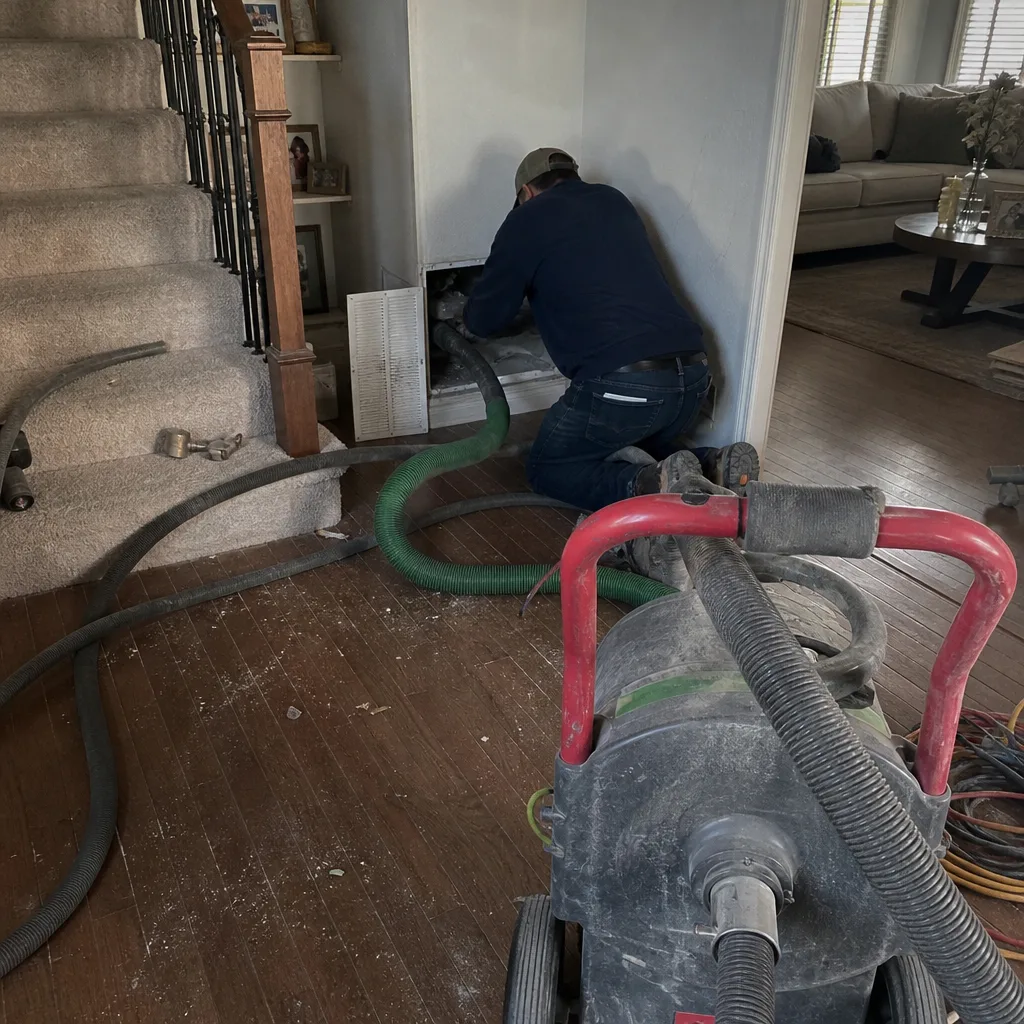 Before
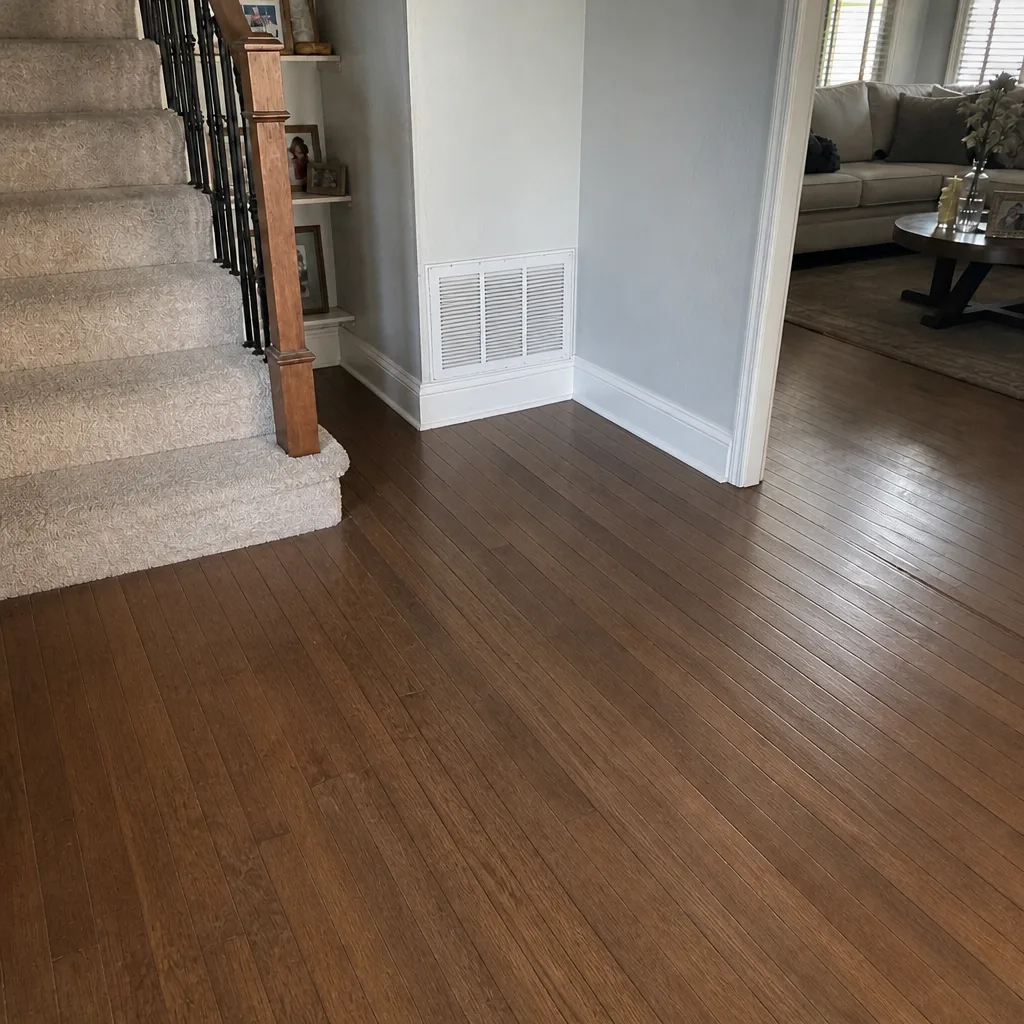 After
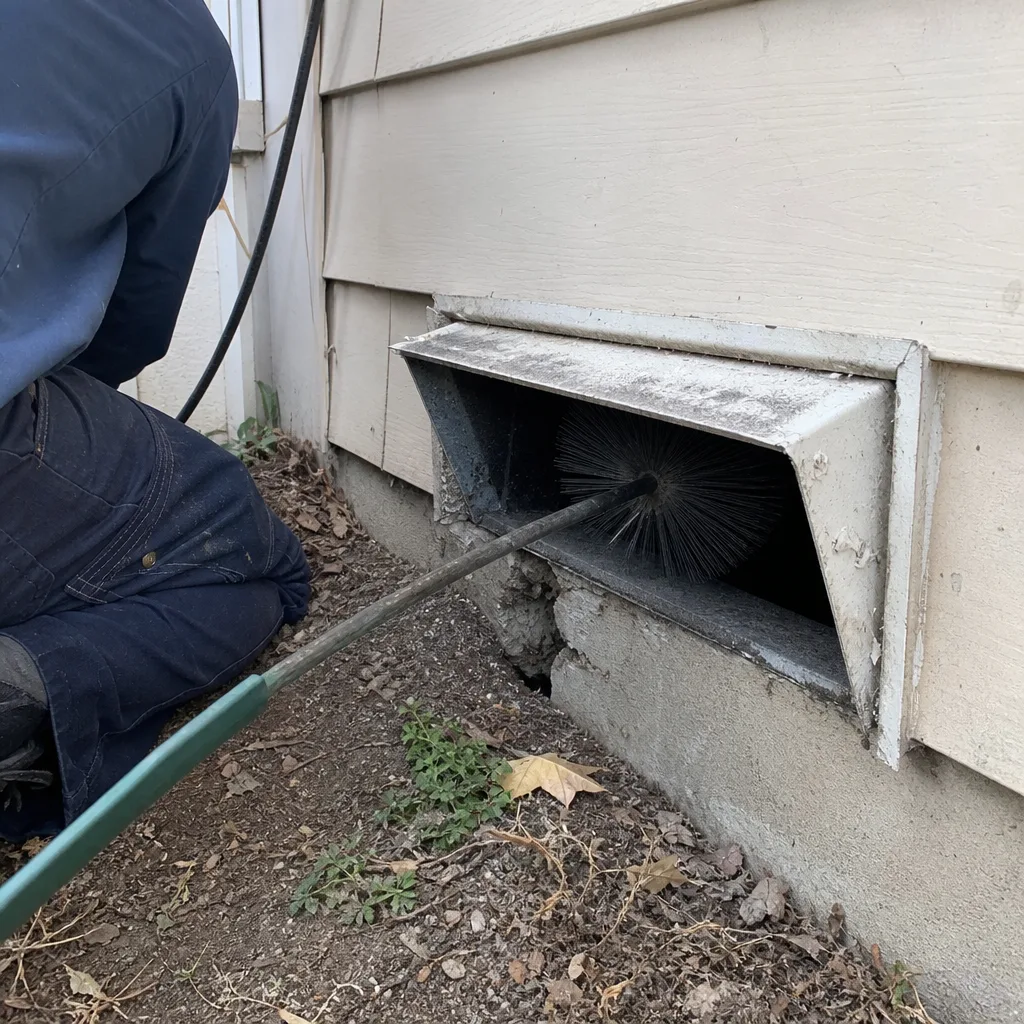 Before
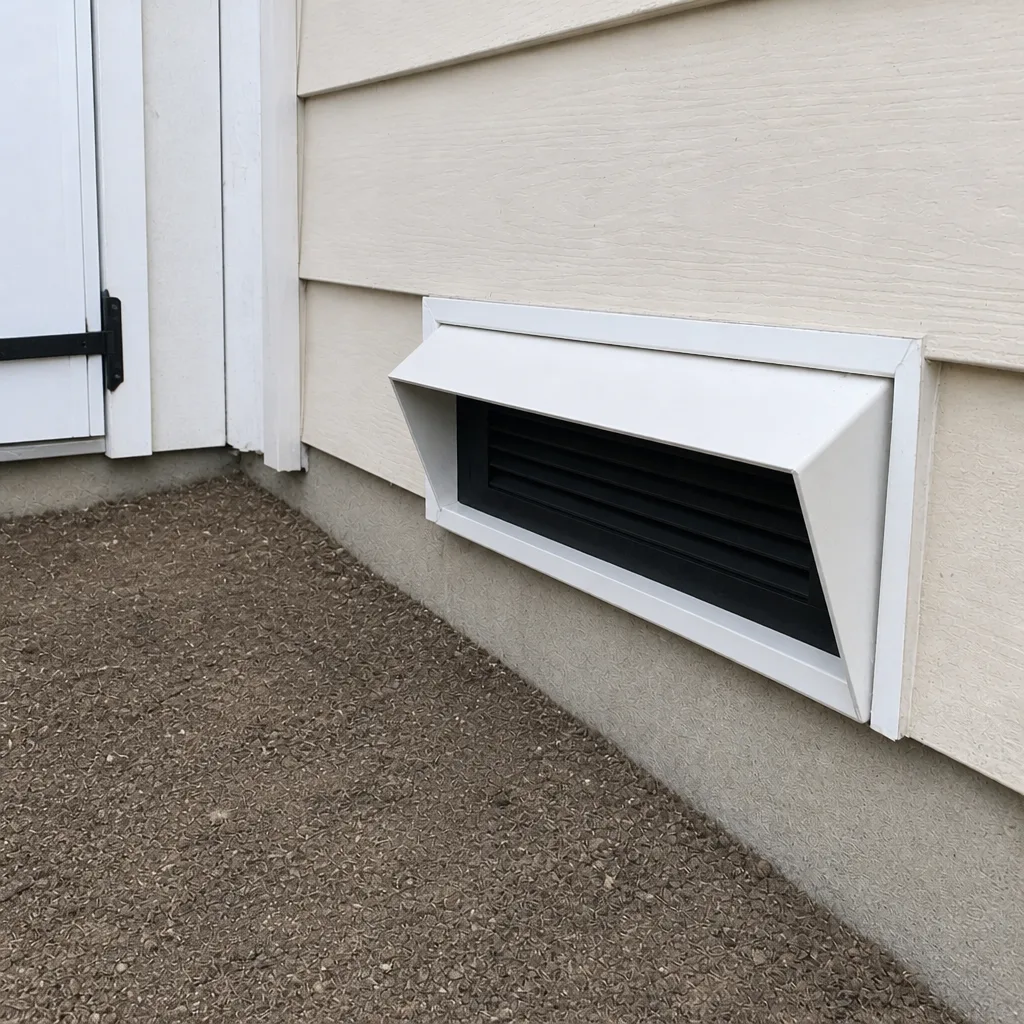 After
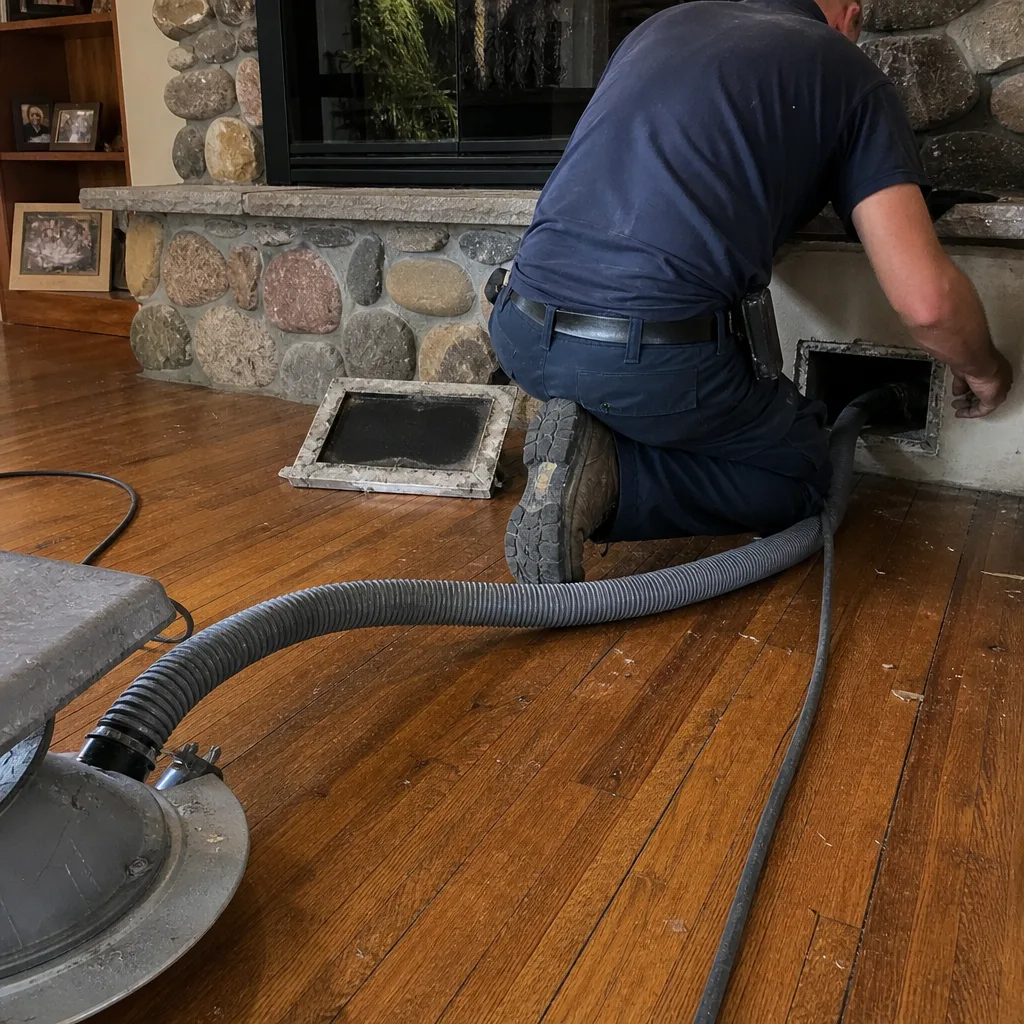 Before
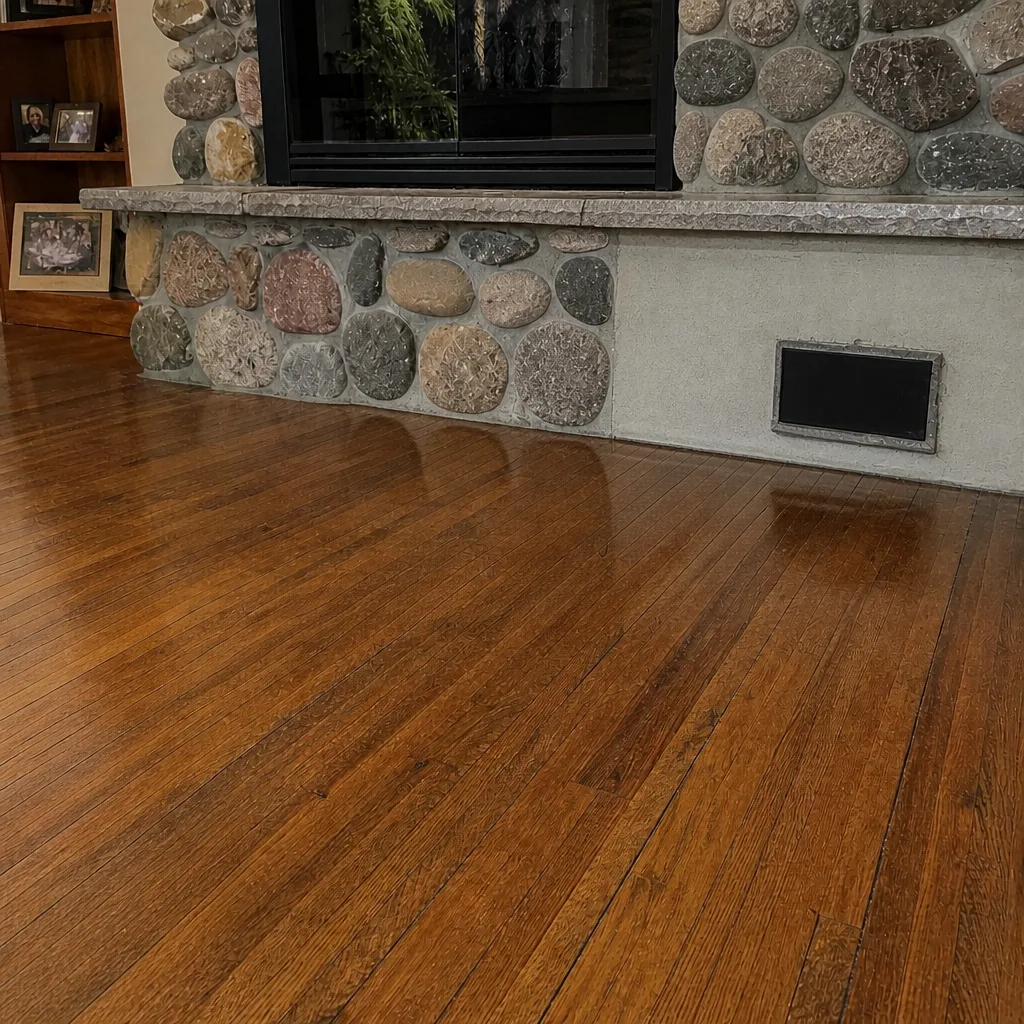 After
Frequently Asked Questions
Air duct cleaning in Boise City is priced per system, not per vent, and the written estimate sets the final price. The cleanest way to compare quotes is to ask for a flat price per system and confirm what’s included: the number of trunks, whether the dryer vent is part of the job, and whether before-and-after photos are provided. A per-vent price is a red flag because the total depends on a count the technician controls on the day. Call (866) 552-6419 for an exact quote – estimates are free.
Cheaper quotes usually mean a lower equipment tier or a narrower scope. A shop vac and a brush cost a few hundred dollars; a Rotobrush system and a Nikro HEPA extractor cost many thousands. When a company’s equipment investment is small, their price reflects that. Ask two questions on the phone: what equipment will be on site, and what the written estimate includes. If the estimate is itemized and the equipment is named, the price comparison is honest. If either is missing, the price is a teaser. Call (866) 552-6419 for an exact quote – estimates are free.
Before-and-after photos of your own ducts, not stock photos, are the receipt. Ask before you book whether photos are included, and look at the pictures when the job is finished. A professional team provides them because they’re the team’s own proof, not a marketing image. If a company can’t or won’t produce photos of your system specifically, that tells you what you need to know. Call (866) 552-6419 for an exact quote – estimates are free.
The honest answer is that there’s no universal interval. Households with pets, allergy sufferers, recent renovation, or a new-to-you home need cleaning more often. Households without those factors and with a well-sealed system can go longer, especially with regular DIY maintenance on the registers and filters. The signal to clean is not a calendar date – it’s what you smell, what you see at the registers, or a known history of dust-generating activity. Call (866) 552-6419 for an exact quote – estimates are free.
Yes, in specific cases. The most common one is a shop vac on a contaminated return system without HEPA filtration or containment – that redistributes settled debris into the supply air, which is worse than leaving the ducts alone. Consumer brush kits on flex duct can tear the liner, which creates a debris trap that requires replacement. Rigid duct and short runs are more forgiving. The line between safe DIY and harmful DIY is equipment capability, and most consumer kits don’t clear it.
Compare five things side by side: flat price per system vs. per-vent pricing, the equipment named on the estimate, whether before-and-after photos are included, whether the company repairs what it finds (so you don’t need a second visit), and whether the estimate is written and itemized. A quote that answers all five clearly is a quote you can trust to hold. For estimates, see our Boise City service area page or call (866) 552-6419. Our technicians have up to 8 years of experience, and we carry professional-grade Rotobrush and Nikro equipment, with Abatement Technologies available for elevated contamination scenarios.
The Bottom Line
DIY duct cleaning isn’t wrong – it’s wrong for specific tasks and right for others. The line runs through equipment capability, not homeowner skill. You can lightly maintain a system with register and filter work, dryer vent screen clearing, and simple flex reconnection. You can’t effectively or safely clean a contaminated return system, a coil, a main trunk, or a dryer vent run with elbows without professional-grade extraction and, when contamination is elevated, HEPA containment. Spending a few hundred dollars on consumer kits that agitate without extracting puts debris into the air you breathe. Spending the same money on a professional cleaning puts the system back to a clean baseline you can then maintain. If you’re not sure which category your home is in, we can look and tell you. Call Duct Cleaning Boise City at (866) 552-6419 for a free estimate. We answer 24/7. Fast dispatch from 7am to 7pm, Sunday through Friday.
Written by the team at Duct Cleaning Boise City.