
Last updated November 16, 2026
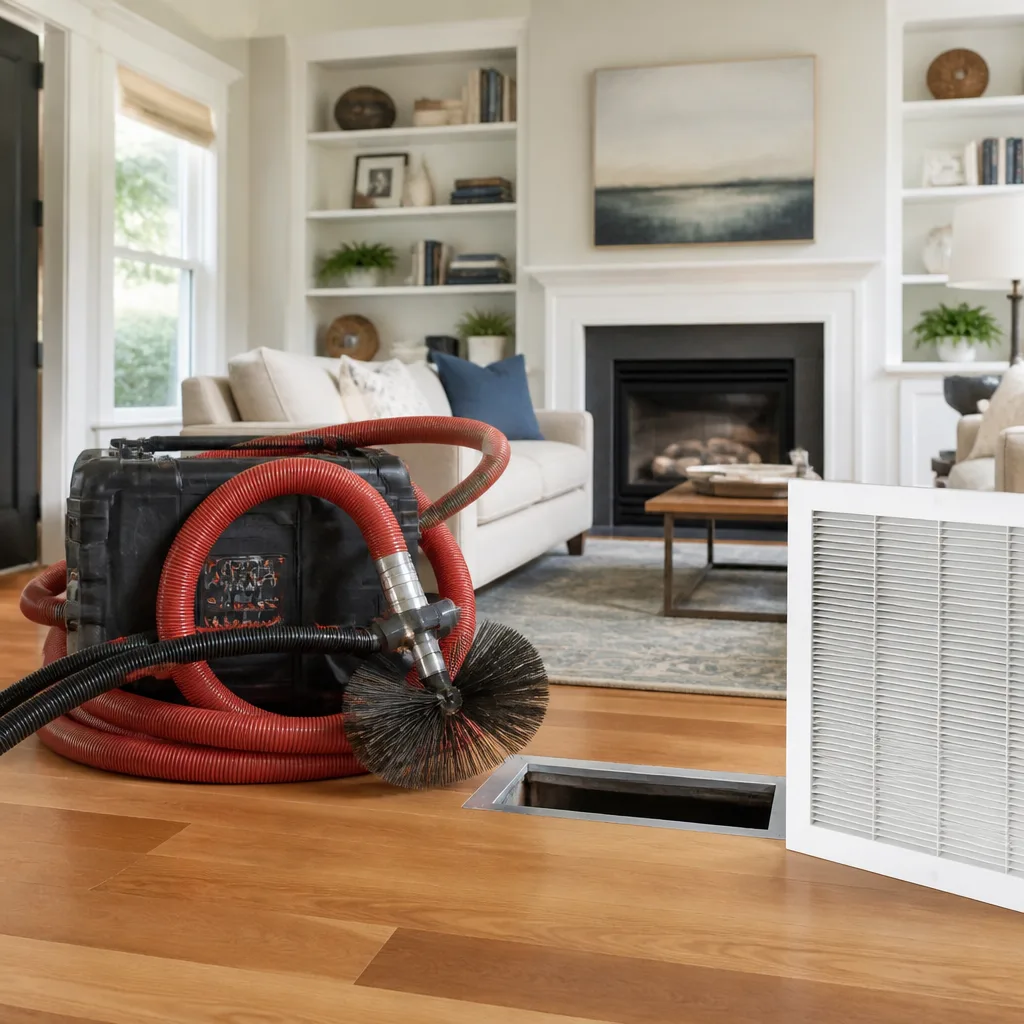 Whole-home duct cleaning
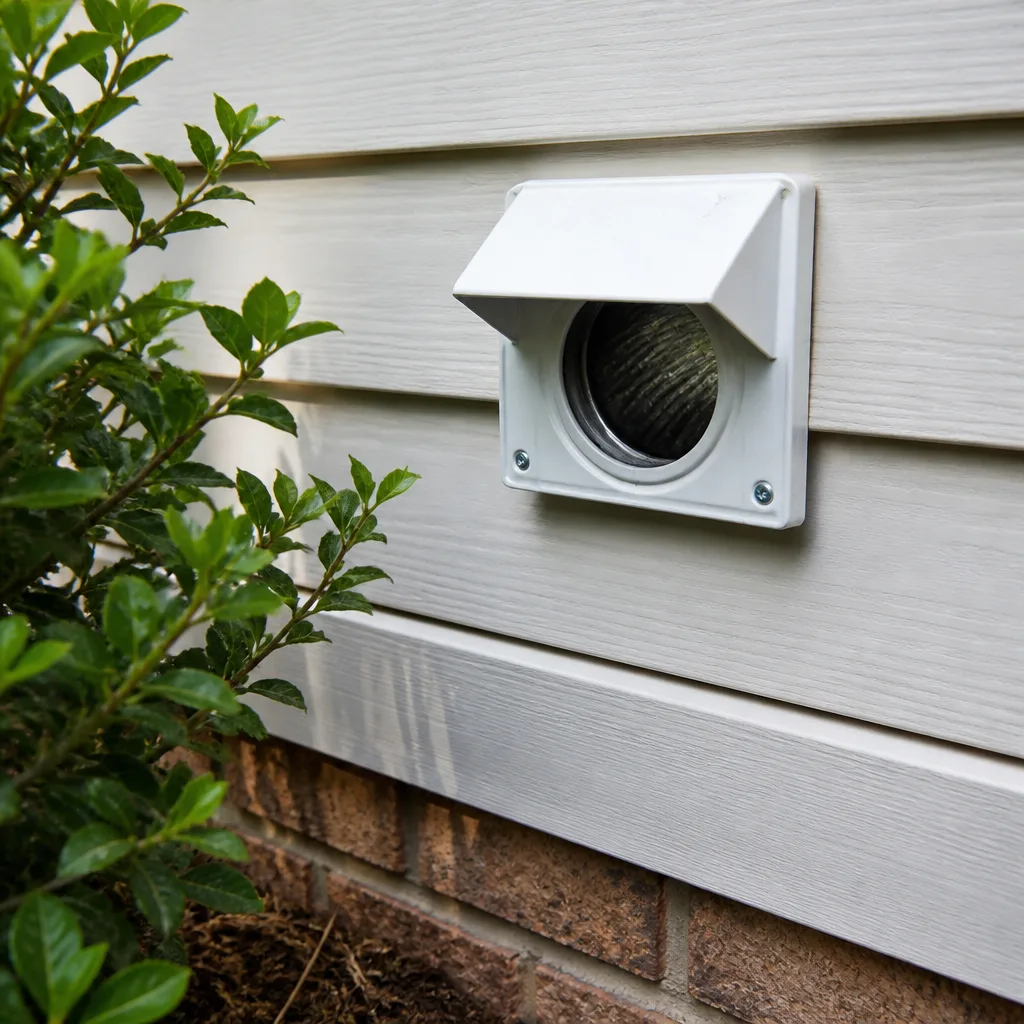 Dryer vent cleaning
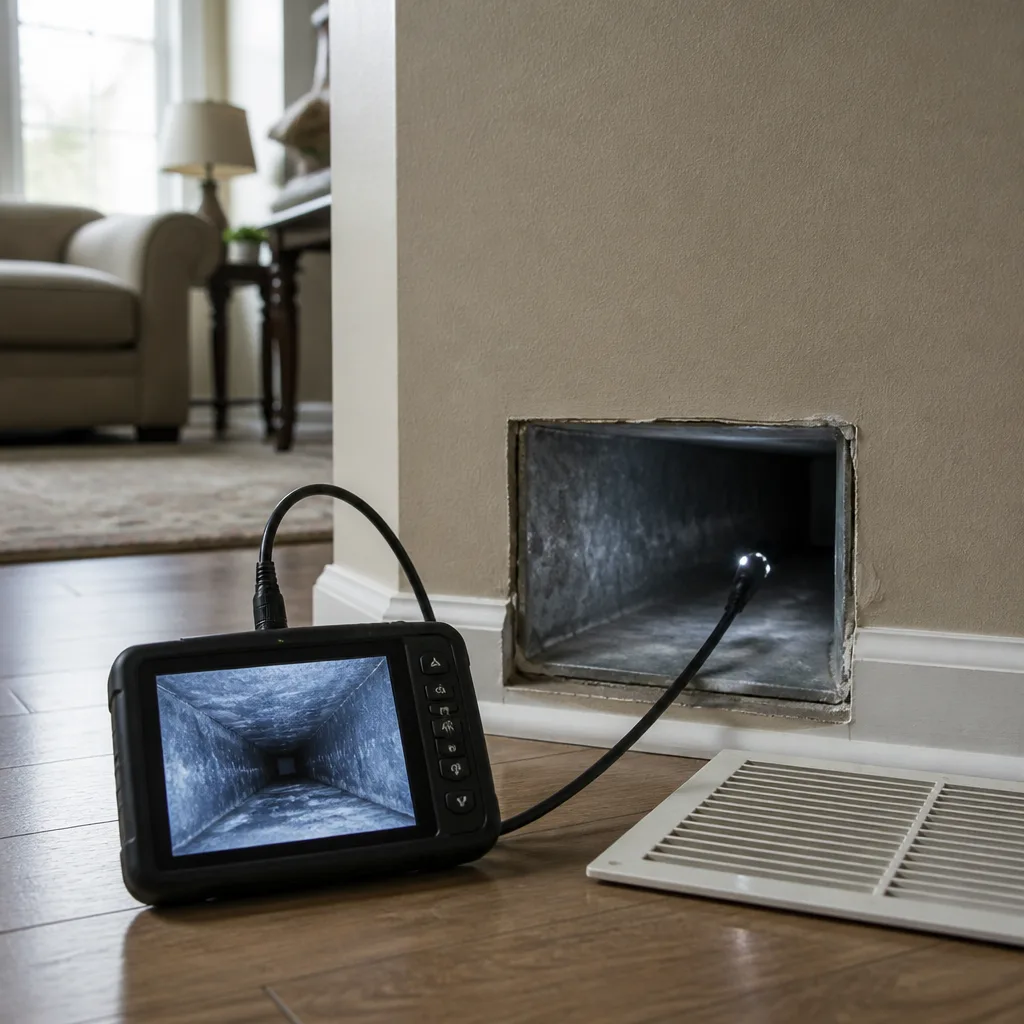 Camera inspection
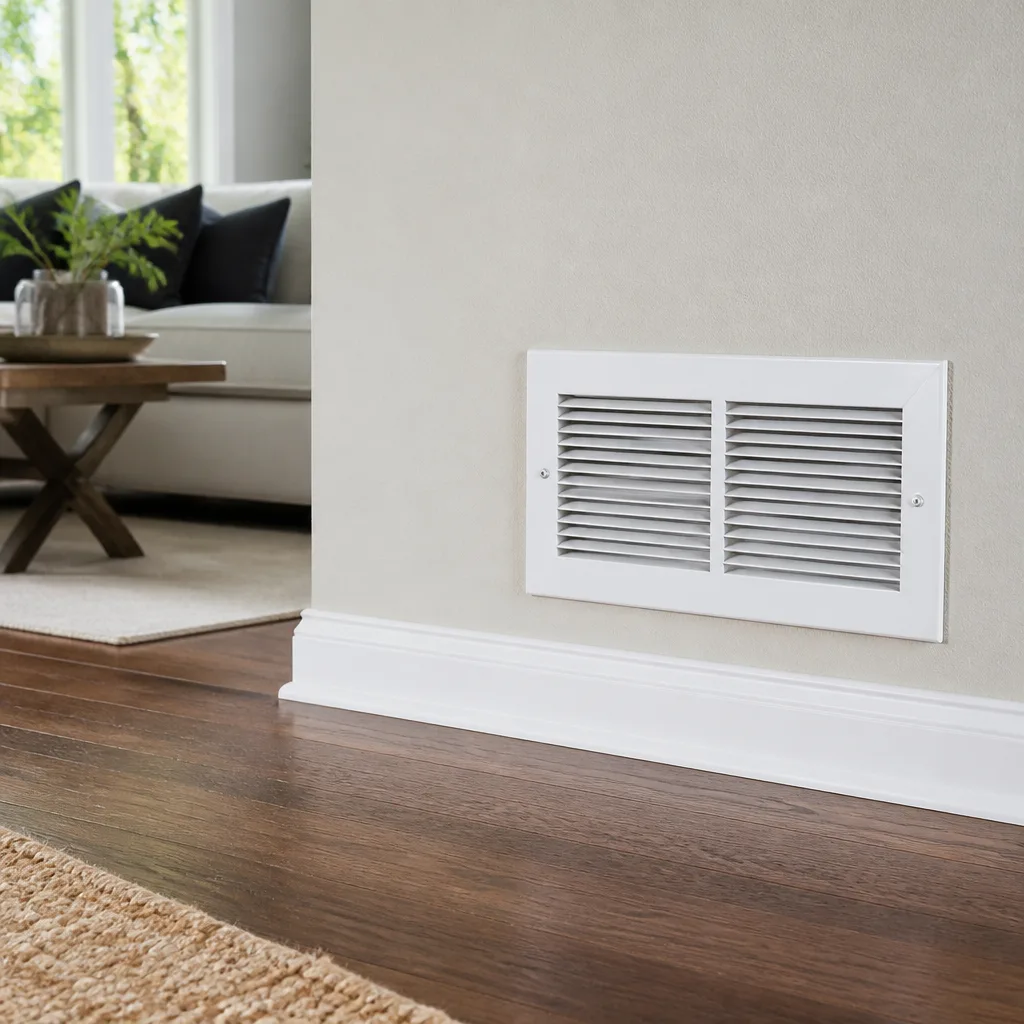 Sanitizing & deodorizing
Whole-system duct and dryer vent check with before-and-after photos - you see exactly what came out of your vents
That "$99 whole-house special" is a bait ad - the real number appears once they are in your hallway, or the "clean" is a shop-vac at the register. We photograph the inside of your ducts before and after instead.
The Complete Guide to Air Duct Cleaning in Boise City
A shop vac and a truck-mounted vacuum are not the same tool, yet both get advertised as “professional duct cleaning” online. The difference in airflow capacity is roughly 150 CFM versus 15,000 CFM. That gap explains why two homeowners can pay for the same service and get completely different results: one system gets genuinely scoured, the other gets lightly disturbed while dust settles back into the same runs a week later. This guide walks through what actually happens inside your ductwork before, during, and after a proper cleaning, so you can judge any contractor’s work on mechanical reality rather than marketing language. Boise City homes face specific conditions that make this worth understanding.
Quick Answer
Air duct cleaning in Boise City means removing accumulated dust, debris, and contaminants from the entire duct system, not just the visible supply registers. A proper job uses agitation tools combined with high-capacity negative-pressure extraction, covers supply runs, return runs, the air handler, and the evaporator coil, and finishes with photographic documentation showing what changed. Cleaning only the supply vents while skipping the return side and air handler leaves the largest dust reservoir untouched.
Styles & brands we work with
- Whole-home duct cleaning
- Dryer vent cleaning
- Camera inspection
- Sanitizing & deodorizing
Table of Contents
- Why Boise City’s High-Desert Climate Creates Specific Duct Problems
- What Actually Happens During a Professional Duct Cleaning
- Rotobrush, Nikro, and the Equipment Question
- Source Removal vs. Surface Coating: What the Standards Say
- Why Whole-System Cleaning Beats Supply-Only Cleaning
- How to Read a Post-Cleaning Inspection Report
- How Often Ducts Really Need Cleaning in Boise City
- Dryer Vents: The Separate Fire Risk in the Same House
Why Boise City’s High-Desert Climate Creates Specific Duct Problems
Boise City sits in a high-desert environment, and that geography shapes what ends up inside residential ductwork in ways coastal or humid-climate guides never address. The air here carries fine mineral dust and sagebrush pollen for much of the year, and the dry conditions mean that dust stays powdery and airborne longer instead of clumping and settling quickly. When that dust gets pulled into a return grille, it coats duct walls in a fine, even layer that builds up gradually and rarely announces itself until airflow drops or a musty smell appears at the registers.
Wildfire smoke season adds a second layer to the problem. Smoke doesn’t just pass through a filtration system and disappear; fine particulates and the oily residue that accompanies them can adhere to duct surfaces and to the evaporator coil, especially when a home runs its system with windows open during a smoke event or with a filter that’s already loaded. That residue is one reason a home can smell faintly of smoke weeks after the sky clears.
Several local patterns show up repeatedly in Boise City duct systems:
- Powdery mineral dust that settles in horizontal runs and accumulates fastest on the return side, where air velocity is lowest.
- Pollen loading in spring, when sagebrush and grass pollen coat return grilles and the first few feet of return duct.
- Smoke residue from wildfire season that clings to coil fins and duct walls and resists ordinary vacuuming.
- Renovation dust from the steady stream of remodels and new builds around the valley, which pushes drywall dust and sawdust into open ductwork if registers aren’t sealed during construction.
- Pet dander and hair that mat against return grilles and reduce airflow before it ever reaches the filter.
Newer subdivisions and older neighborhoods alike deal with these patterns. The housing stock varies widely, from mid-century homes with original galvanized ductwork to recent builds with flexible insulated runs, and each type collects contamination differently. Flex duct develops ridge-and-valley buildup along its ribs; rigid metal duct accumulates on the bottom and sidewalls. Knowing which you have matters when you’re evaluating a quote or watching a technician work.
What Actually Happens During a Professional Duct Cleaning
A legitimate duct cleaning follows a sequence, and you should be able to watch it happen or see it documented. The process starts with a system assessment, not a vacuum. A technician maps the duct layout, identifies the number and location of returns and supplies, checks the air handler and coil, and confirms the system’s condition before any equipment runs. Skipping this step is the first sign of a blow-and-go operation.
Here’s the sequence a proper cleaning follows:
- Inspection and access. The technician opens access points at the air handler, main trunk, and branch runs, and may cut additional access holes where ductwork has no existing openings. These get sealed afterward.
- Negative-pressure setup. A high-capacity vacuum or HEPA extraction unit connects to the main trunk, pulling the entire system into negative pressure so dislodged debris travels toward the collection point instead of into living space.
- Agitation. Mechanical brushes, air whips, or compressed-air tools travel through each run to break loose adhered dust from duct walls and ribs. This is the step that separates real cleaning from a light pass.
- Source removal. Loose material is extracted through the vacuum while agitation continues, run by run, until each section is cleared.
- Air handler and coil cleaning. The blower compartment and evaporator coil get cleaned separately, since they’re the largest contamination reservoirs in most systems.
- Verification and documentation. The technician photographs before and after conditions at each access point and provides a written summary.
- Sealing and final check. All access holes are sealed, the system is reassembled, and airflow is confirmed at the registers.
In our experience, the step homeowners most often miss when they’re comparing quotes is agitation. A negative-pressure-only method pulls loose dust out of a system but leaves adhered material on duct walls, which is the majority of the problem in a Boise City home after several dusty seasons. You’ll see this distinction covered in more detail on our air duct cleaning page.
Rotobrush, Nikro, and the Equipment Question
Equipment tells you more about a duct cleaning company than any advertisement does. Two tool families dominate professional work, and understanding what each does helps you ask better questions.
Rotobrush systems combine agitation and vacuum in one unit. A rotating brush head travels through the duct while a vacuum captures the material it loosens, which handles the ridge-and-valley buildup inside flex duct and the adhered layer on rigid metal walls. It’s the tool that makes source removal possible in residential systems with long branch runs and tight turns.
Nikro equipment adds HEPA-rated extraction and negative-air capability. HEPA filtration matters when contamination is heavy, when a household includes allergy sufferers, or when a home has been through renovation, water intrusion, or a smoke event. The HEPA stage captures fine particulates that ordinary vacuums exhaust back into the room.
What separates a specialist from a generalist here is the combination. A shop vac rated at roughly 150 CFM can’t move enough air to pull debris out of a 30-foot return run. A truck-mounted unit rated near 15,000 CFM can overwhelm a residential system if it isn’t paired with the right agitation and access. The right setup uses both agitation and high-capacity extraction together, which is why we run Rotobrush and Nikro as a pair.
For homes with elevated contamination, equipment like Abatement Technologies negative-air units allows containment during cleaning rather than letting disturbed particulate drift through the house. That capability matters after a renovation when drywall dust has settled into every run.
Source Removal vs. Surface Coating: What the Standards Say
Source removal and surface coating are not interchangeable, and one of them is rarely appropriate. Source removal means physically extracting the contaminants from the duct system: the dust, debris, and biological material get pulled out and disposed of. This is the approach the industry’s recognized standard describes, and it’s what a real cleaning consists of.
Surface coating means applying a sealant or encapsulant to duct interior walls. Some companies sell this as a premium add-on, sometimes at significant cost. In most residential situations it’s unnecessary and can even be counterproductive. A coating applied over contamination traps it in place rather than removing it. A coating applied to a clean system adds little beyond what a clean duct already provides, and some coatings can affect airflow or off-gas in ways that warrant caution. Building codes and product instructions vary, and any contractor proposing a coating should be able to explain exactly why it’s needed in that specific system and what product is being used.
A few situations genuinely call for more than standard cleaning:
- Water intrusion or suspected microbial growth inside ductwork, which may warrant containment and specialized treatment rather than a routine cleaning.
- Post-fire or heavy smoke residue that has bonded to duct surfaces and coils.
- Pest infestation where nesting material and droppings require both removal and disinfection evaluated by a qualified professional.
Even in those cases, the answer is usually more thorough removal, not sealing over the problem. If a quote leads with coating as a headline service and treats extraction as an afterthought, that’s worth questioning.
Why Whole-System Cleaning Beats Supply-Only Cleaning
Cleaning supply runs only is a partial job that produces partial results, because the dirtiest part of most duct systems is on the return side. Air returns carry unfiltered room air back to the air handler, which means returns collect dust, hair, and dander at a higher rate than supply runs. The filter catches some of it, but plenty settles on return duct walls and grilles before reaching the filter slot.
A whole-system cleaning covers four components together:
- Supply runs: the branch ducts that deliver conditioned air to each room.
- Return runs and grilles: the ducts pulling room air back to the air handler, typically the heaviest accumulation.
- The air handler and blower compartment: where dust coats the blower wheel and housing and quietly reduces airflow efficiency.
- The evaporator coil: where a matted layer of dust insulates the coil and degrades both cooling performance and air quality.
Clean the supply side and skip the return and coil, and the system keeps recirculating the same contamination into freshly cleaned ducts. The homeowner pays for a cleaning and gets a partial result. Cleaning the whole system changes what the blower actually moves through the house.
This is also why we offer air duct repair as part of the same visit. Cleaning frequently reveals crushed flex runs, disconnected joints, or torn insulation inside the duct system, and fixing those on the spot means the system performs the way it was designed to rather than leaking air into a crawlspace. Whole-system work is the only version that pays off in measurable indoor air quality.
How to Read a Post-Cleaning Inspection Report
A post-cleaning inspection report should show you physical evidence, not just an assurance that everything is fine. The report is the record of what changed inside your system, and it’s the piece homeowners most often glance at and file away without reading. Here’s what a credible report contains.
Photographic documentation should show before-and-after images of the same location. A before photo of a dirty return plenum and an after photo of the same plenum, from a comparable angle, is verifiable evidence. A generic photo of clean ductwork from some other job is not. Look for consistent framing: the same access point, the same lighting, the same section of duct. If the images are blurry, distant, or show no identifiable duct features, ask for better ones.
Coverage should match the quote. The report should list which runs were cleaned, how many access points were opened, and whether the air handler and coil were included. If the quote covered whole-system cleaning and the report only mentions supply vents, something is missing.
The report should note what was found. Crushed duct sections, disconnected joints, deteriorated insulation, heavy coil buildup, and areas of suspected moisture are all worth documenting. These notes tell you what needs repair or follow-up and demonstrate that someone actually inspected the system rather than just running a vacuum through it.
Sealing should be confirmed. Any access hole cut during cleaning needs to be sealed and the report should note it. An unsealed access hole becomes a leak that undermines the whole job.
Read the report while the technician is still there. It’s the right moment to ask questions about anything that doesn’t add up.
How Often Ducts Really Need Cleaning in Boise City
There’s no universal timer, despite what some marketing suggests. The honest answer depends on the household and the environment. In Boise City, the high-desert dust load and wildfire smoke seasons push many homes toward cleaning more often than a humid-climate home would need. A reasonable general window for this area is every three to five years, sooner in specific circumstances.
Several signals suggest it’s time:
- Visible dust puffing from registers when the system starts up, which usually means the ducts are loaded.
- A musty or smoky smell at the vents, particularly noticeable when the system first kicks on.
- Allergy symptoms that get worse indoors, especially during pollen and smoke seasons.
- Recent renovation where ductwork was open to construction dust, even briefly.
- A new home purchase where the previous owner’s maintenance history is unknown.
- Pet dander buildup in a household with shedding animals, which accelerates return-side accumulation.
- Unexplained airflow drop or rooms that stay warm or cool despite a working system.
A family with pets, allergy sufferers, or a home near a busy road may want cleaning closer to every three years. A low-occupancy home with a well-maintained filter system can stretch longer. Filter discipline makes a real difference: changing filters on schedule slows the accumulation rate considerably. Pairing a cleaning with a filtration upgrade from Honeywell or Aprilaire can reduce how quickly the system loads again, which is why we quote those alongside the cleaning when a system is clearly under-filtered.
Dryer Vents: The Separate Fire Risk in the Same House
A dryer vent isn’t part of the HVAC duct system, but it’s the duct run in a home most likely to cause a fire, and it’s frequently the one nobody has looked at. Lint accumulates in the exhaust run, and when airflow is restricted the dryer runs hotter. The U.S. Fire Administration identifies dryer vent lint as a leading contributor to residential house fires, and a clogged vent is the usual cause.
Warning signs that a dryer vent needs attention:
- The dryer takes longer than one cycle to dry a normal load.
- The top of the dryer or the laundry room feels unusually warm during operation.
- Lint accumulates around the exterior vent flap, or the flap doesn’t open fully.
- A burning or musty smell in the laundry area.
Cleaning the vent is a separate job from HVAC duct cleaning and requires its own access and tools. If your dryer vent hasn’t been cleared in several years, it’s worth scheduling on its own; our dryer vent cleaning service handles it directly. The same principle applies as with ducts: the right equipment and a documented before-and-after make the difference between a cleared vent and one that just looks touched.
Common Mistakes to Avoid
- Hiring on price alone. Quotes far below market almost always mean supply-only cleaning with a shop vac. You pay less and get a duct system that’s still loaded where it matters most.
- Accepting “we cleaned every vent” as a complete job. Vent cleaning isn’t duct cleaning. The return side, main trunk, air handler, and coil are where the majority of contamination sits, and a register pass leaves them untouched.
- Skipping agitation. A negative-pressure-only method pulls out loose debris but leaves the adhered layer. Look for a company that describes agitation tools, not just a big vacuum.
- Overlooking the coil. A matted coil degrades cooling performance and holds onto contamination. A cleaning quote that doesn’t address the coil is a partial scope.
- Ignoring dryer vent lint. It’s the duct run with the steepest fire risk. Treat it as a separate scheduled service and don’t assume the dryer is fine because it still runs.
- Not asking for photographic proof. Before-and-after photos of the same location are the difference between a claim and evidence. Ask before the appointment, not after.
- Leaving the access holes unsealed. Ductwork sealed with tape alone will leak. Confirm that openings get properly sealed after cleaning.
See the difference
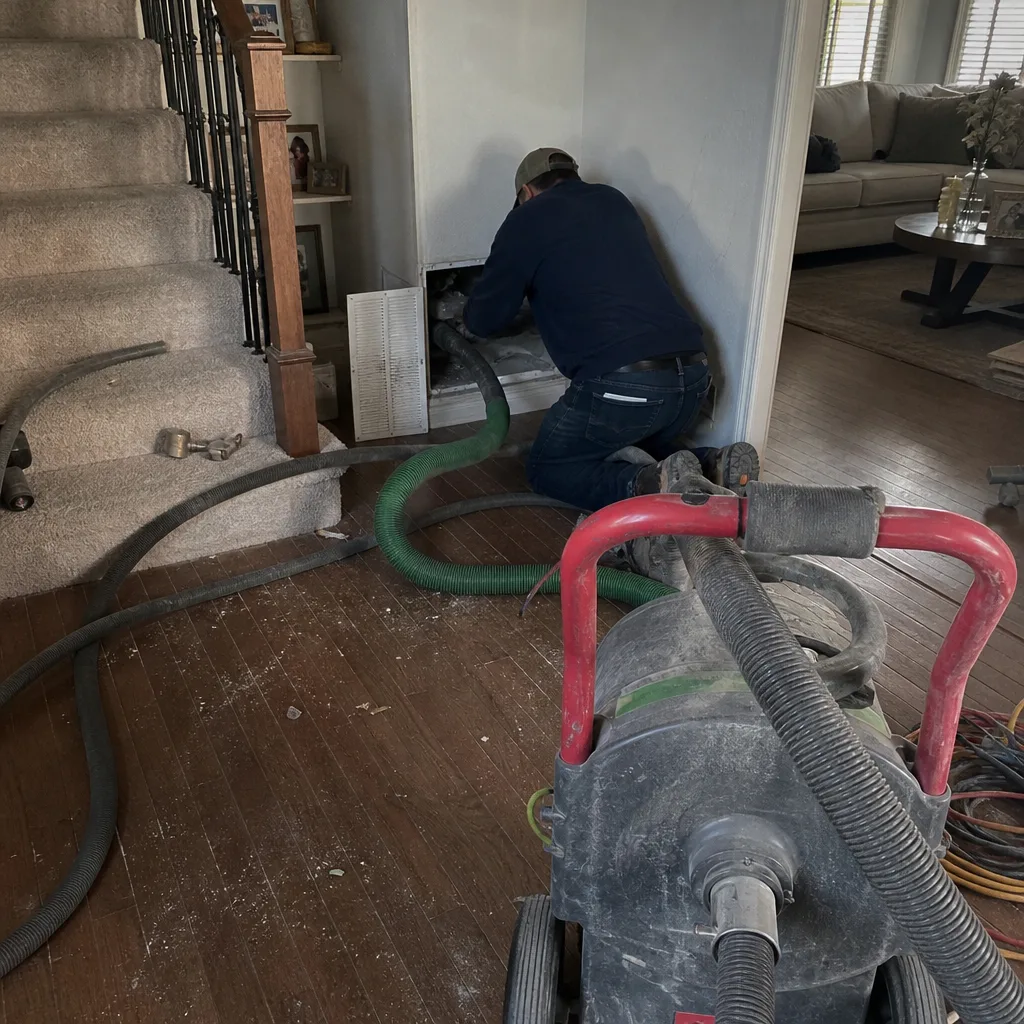 Before
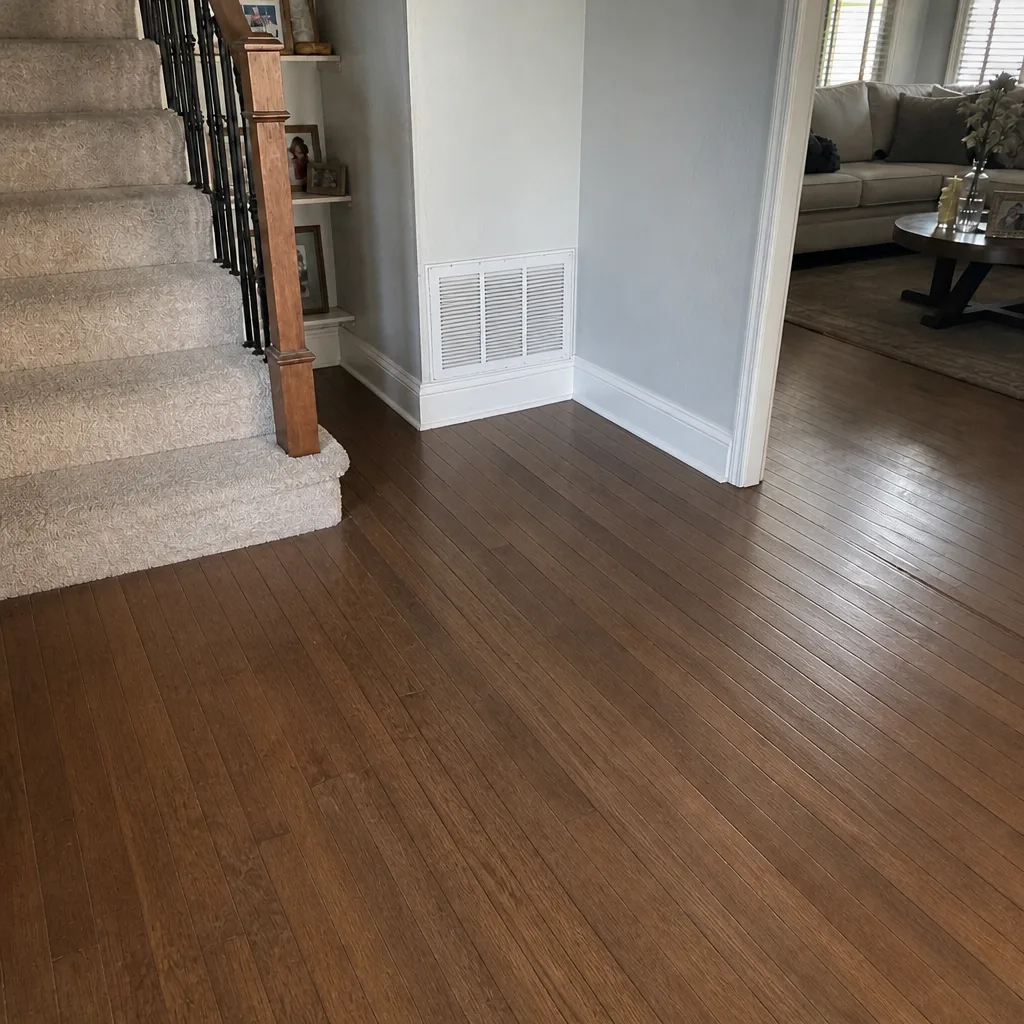 After
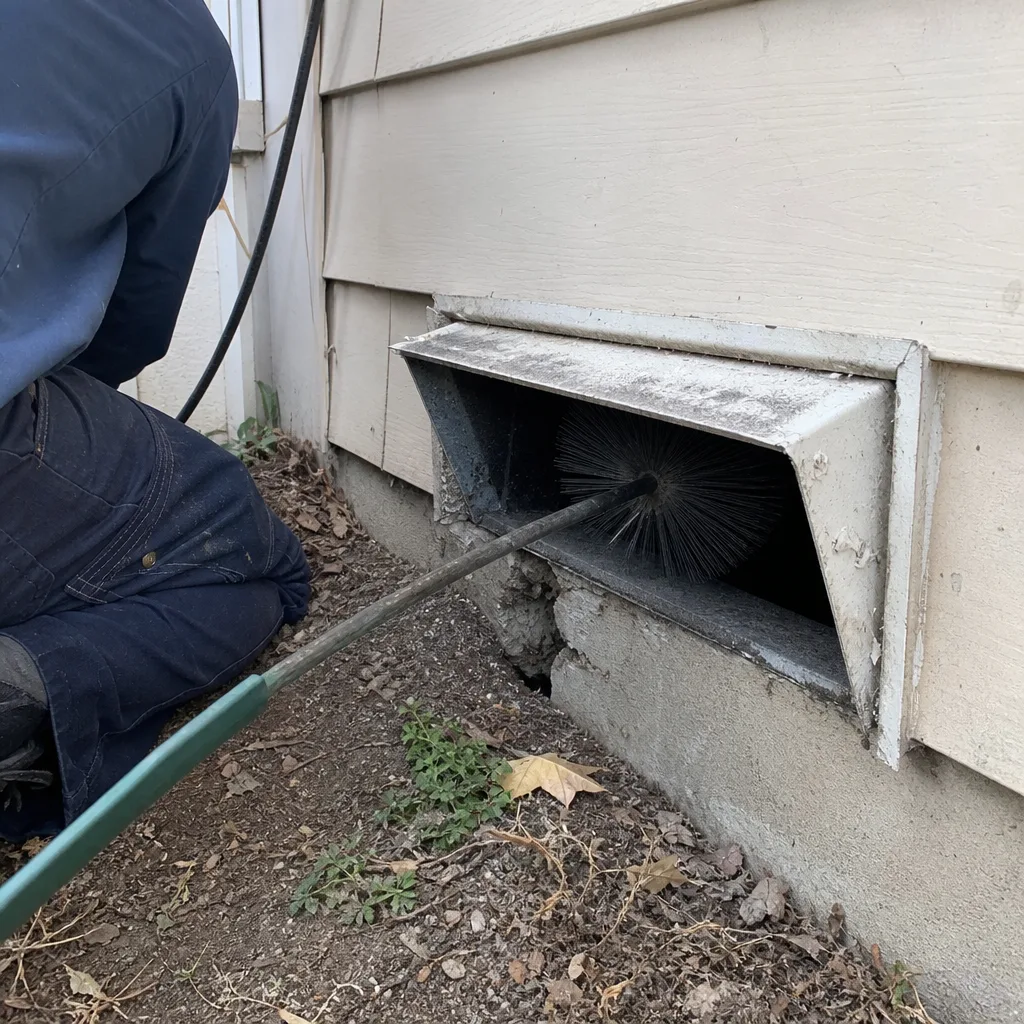 Before
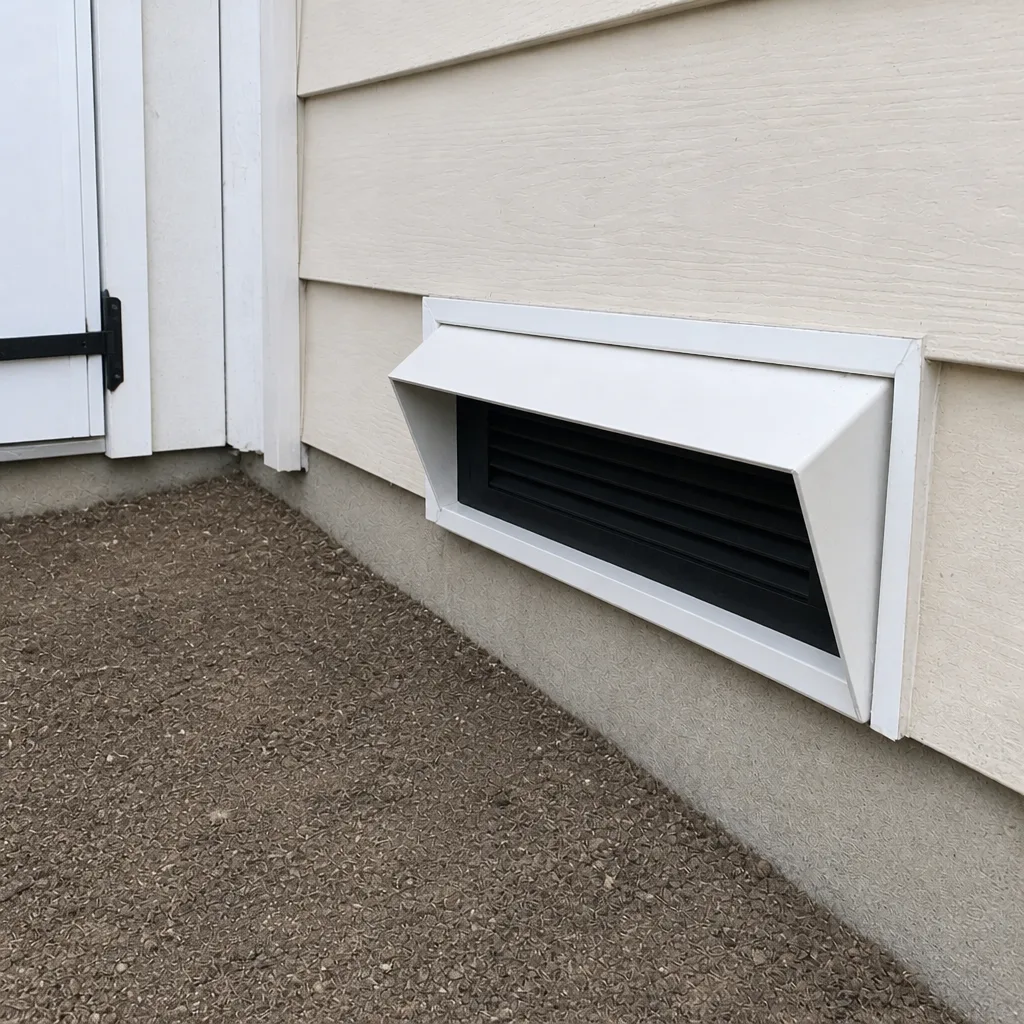 After
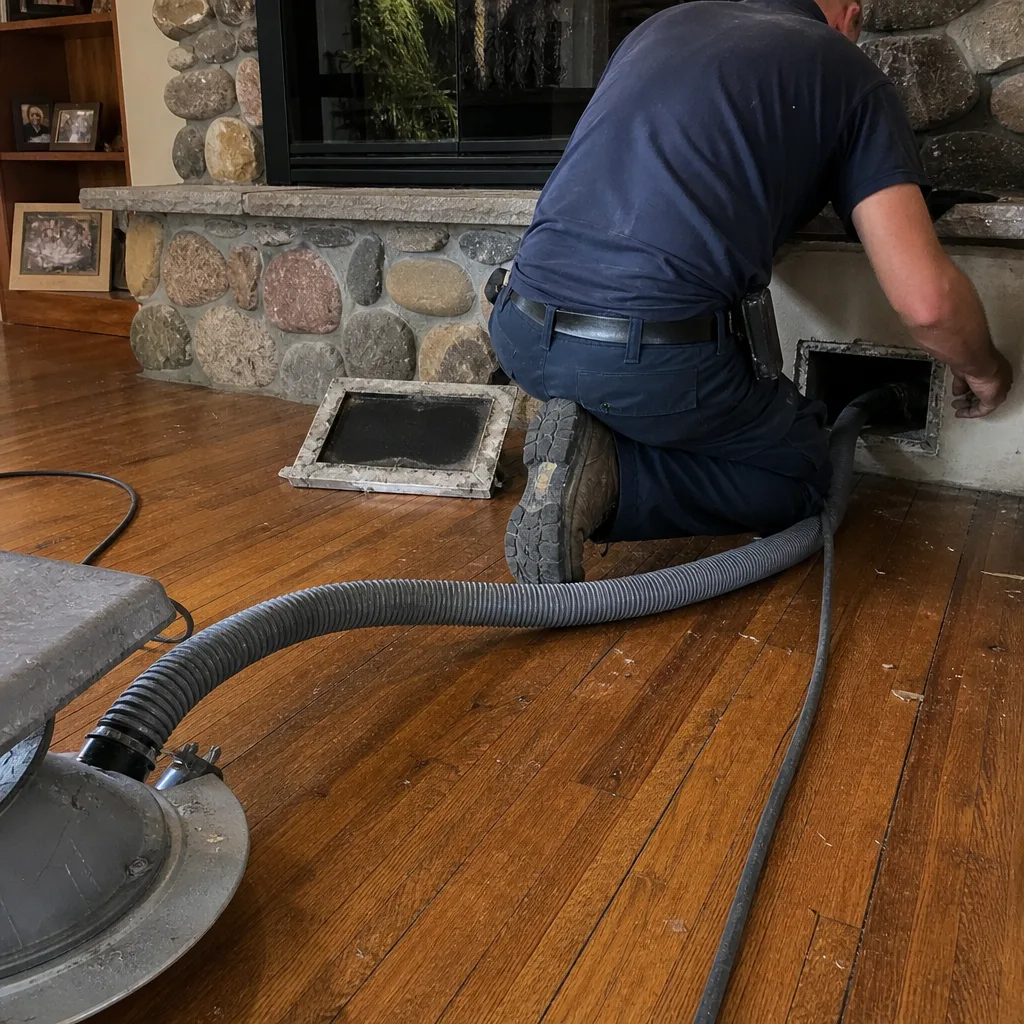 Before
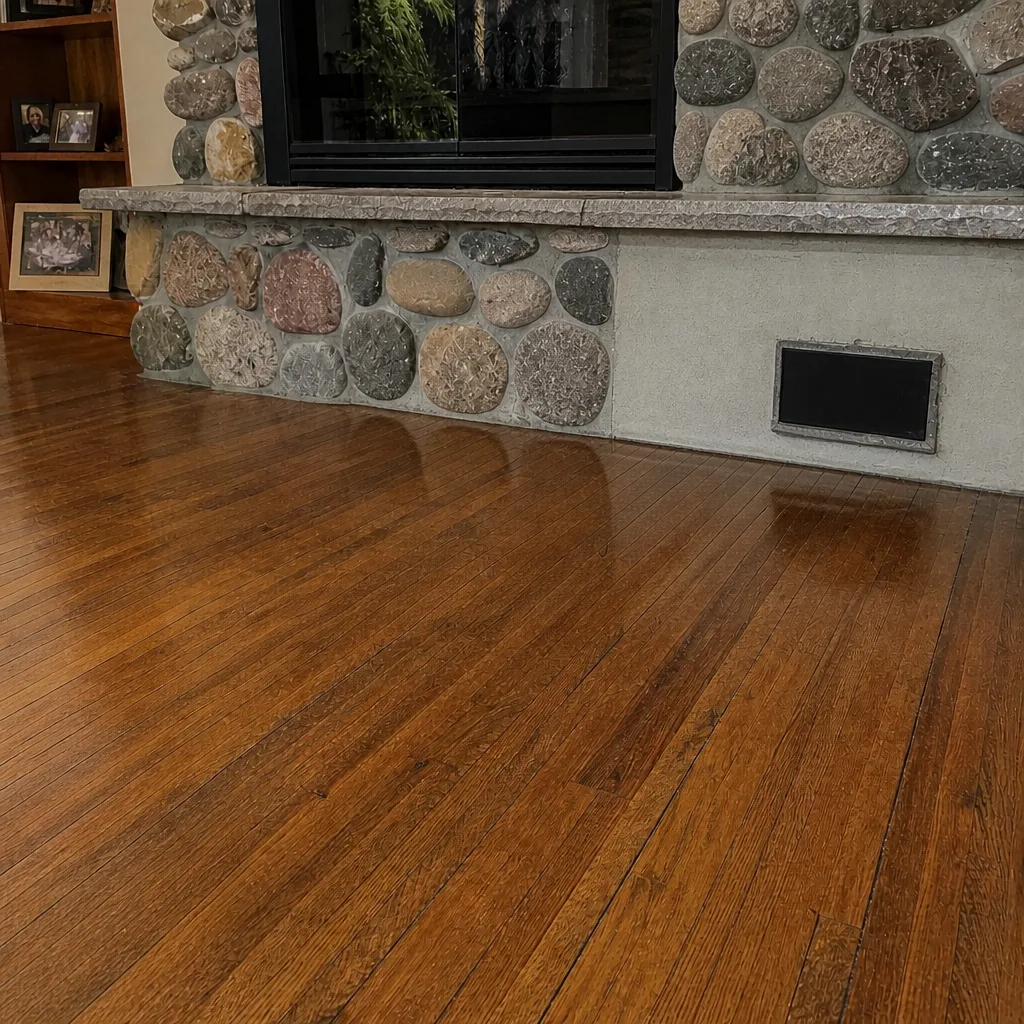 After
When to Call a Professional
Call a professional when you can see dust blowing from supply registers, when a musty smell appears at the vents at startup, when a recent renovation left dust in the system, or when a new home’s maintenance history is a mystery. Call sooner if anyone in the household has allergies or asthma that worsen indoors, or if you have pets and the return grilles are matting up with hair. If your dryer takes two cycles to dry a load or the laundry room heats up during operation, treat the dryer vent as a separate, immediate item. Duct cleaning Boise City offers free estimates; call (866) 552-6419 to schedule an assessment. We answer 24/7. Fast dispatch from 7am to 7pm, Sunday through Friday. A written estimate sets the price, and you get before-and-after photos of your own system.
Frequently Asked Questions
Cost depends on the size and layout of the system and whether the air handler and coil are included. Most ducts fall into a whole-system range rather than a per-vent price. Expect quotes that cover supply runs, return runs, air handler, and coil as one flat price agreed before work starts. Call (866) 552-6419 for an exact quote based on your system; estimates are free.
Cheap quotes usually mean a partial job. A provider with a shop vac does a surface pass on supply vents without agitation or high-capacity extraction, which leaves the return side and coil untouched. Ask what equipment is used and whether the quote covers the whole system including the air handler and coil. Call (866) 552-6419 for an estimate that spells out exactly what’s included.
Photographic documentation should show before-and-after images of the same duct sections from the same access points. A credible report also lists the runs cleaned, any problems found, and confirms that access holes were sealed. Ask for the photos before you book. Call (866) 552-6419 with questions about what your report should include.
Usually yes. Construction dust is fine and travels far, and if registers weren’t covered during work, drywall dust and sawdust settle into supply and return runs. Even short projects push enough debris into ductwork to justify a cleaning. Call (866) 552-6419 after your project wraps and we’ll assess the system.
It’s not mandatory, but the high-desert dust load and wildfire smoke seasons make interior duct contamination a real condition in most homes after several years. If you notice dust blowing from vents, a musty smell, or worsening indoor allergy symptoms, cleaning is warranted. In a newer home with unknown maintenance history, an assessment is the sensible starting point.
Yes. Crushed flex runs, disconnected joints, and deteriorated insulation are common finds during a cleaning, and we handle air duct repair so you don’t need a second provider to fix what the cleaning uncovers. Call (866) 552-6419 and we’ll quote the repair in the same written estimate.
The Bottom Line
A proper duct cleaning is a mechanical process, not a marketing claim. The right job uses agitation combined with high-capacity extraction, covers supply and return runs along with the air handler and coil, and finishes with photographic proof showing what changed at identifiable locations. In Boise City, high-desert dust, sagebrush pollen, and wildfire smoke seasons make interior duct contamination a real and recurring condition, which puts a premium on getting the equipment and the scope right. Treat dryer vent cleaning as a separate scheduled item given its fire risk. Judge any quote by what it covers and what equipment backs it up.
Duct Cleaning Boise City handles air duct cleaning, dryer vent cleaning, and air duct repair as a focused scope, with professional-grade Rotobrush and Nikro equipment and filtration options from Honeywell and Aprilaire. If you want an assessment of your system, Boise City residents can call (866) 552-6419 for a free estimate. We answer 24/7. Fast dispatch from 7am to 7pm, Sunday through Friday. A written estimate sets the price before work starts.
Written by the team at Duct Cleaning Boise City.