
Last updated November 16, 2026
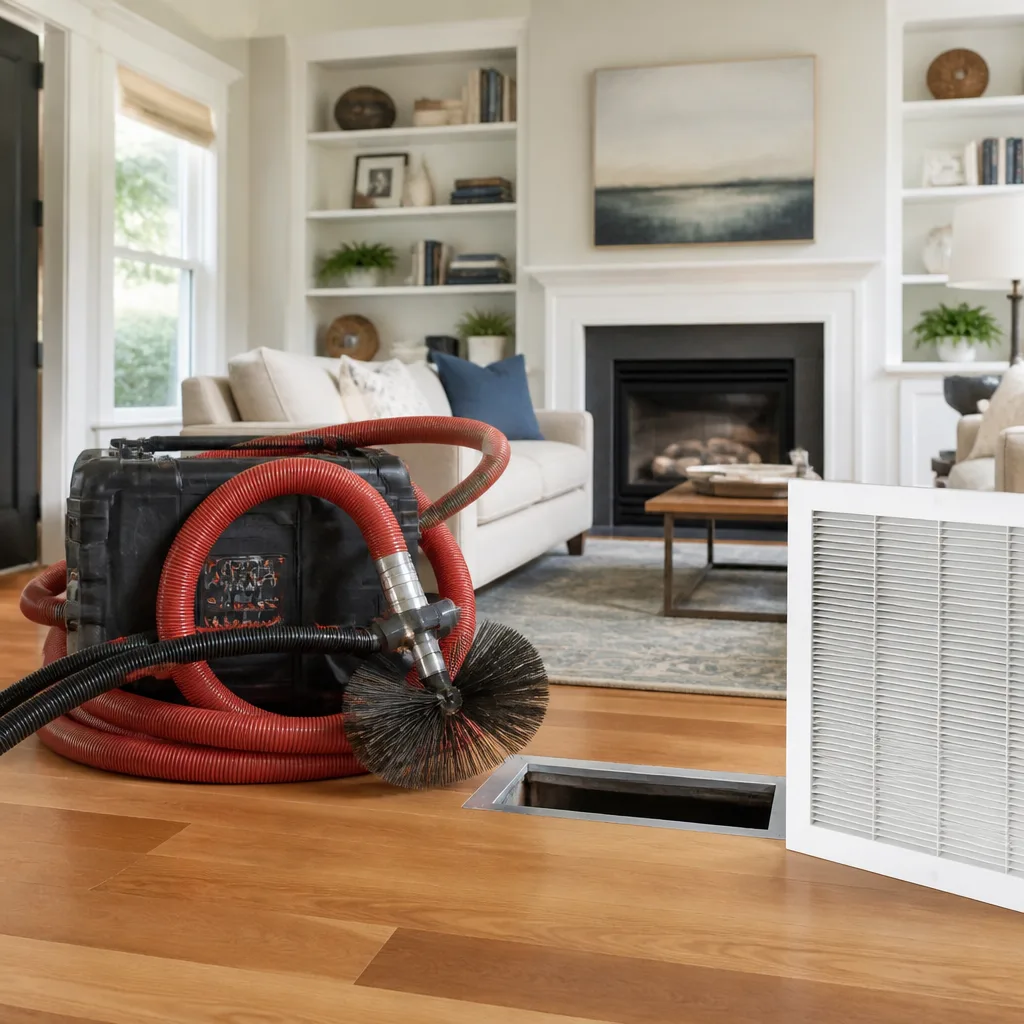 Whole-home duct cleaning
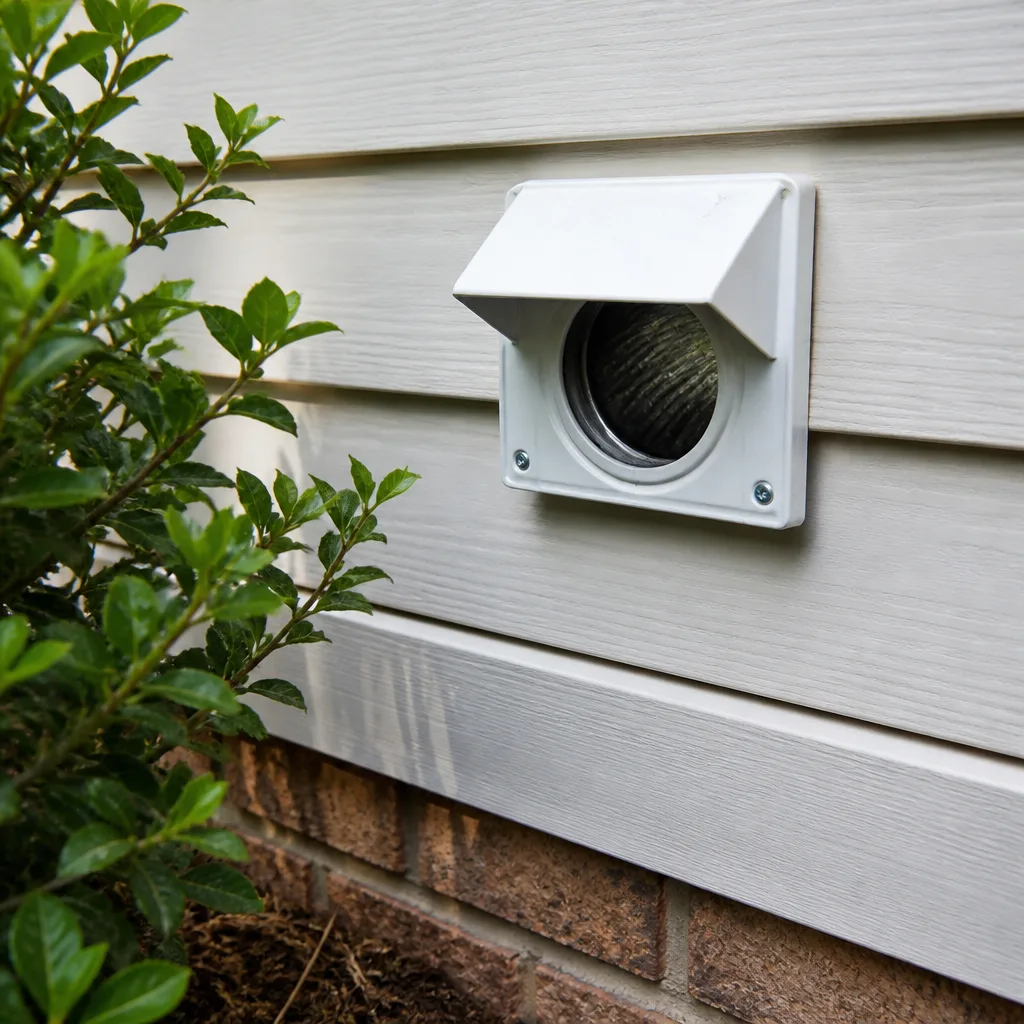 Dryer vent cleaning
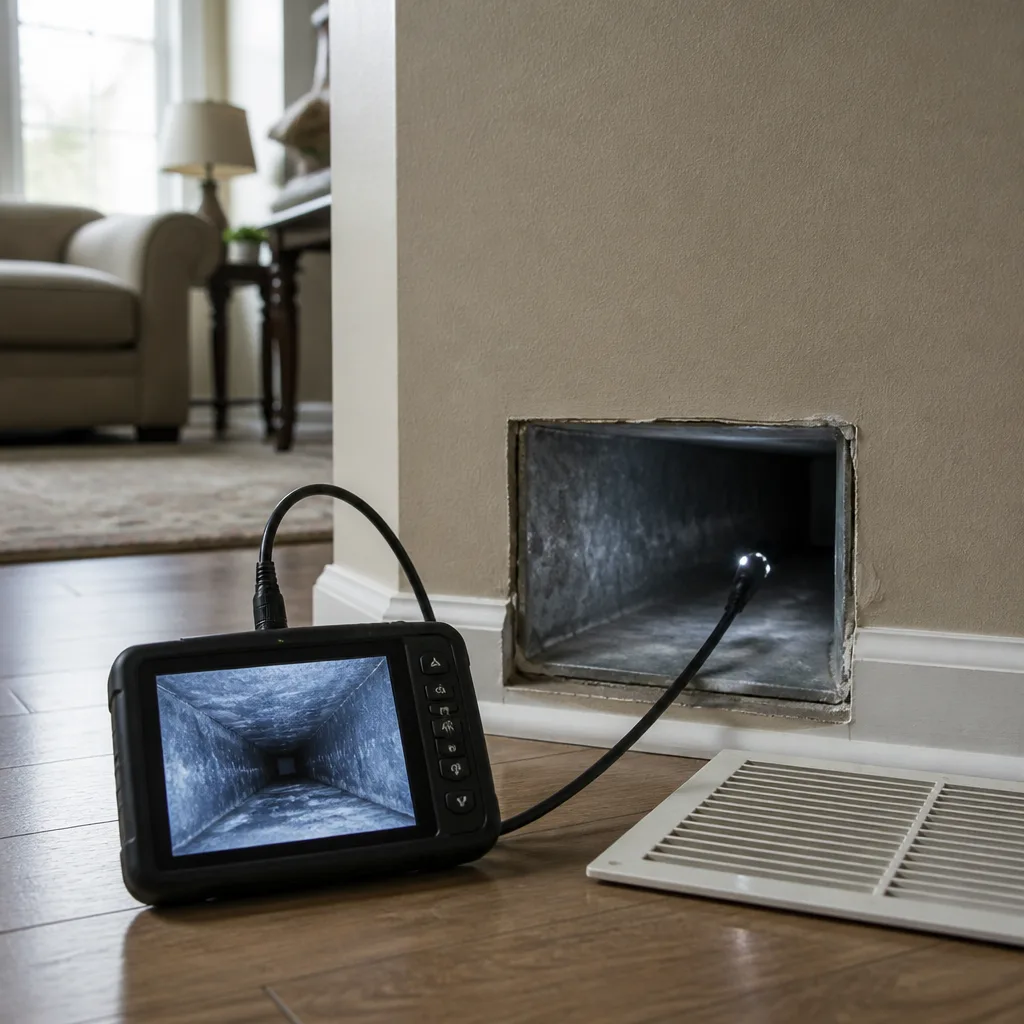 Camera inspection
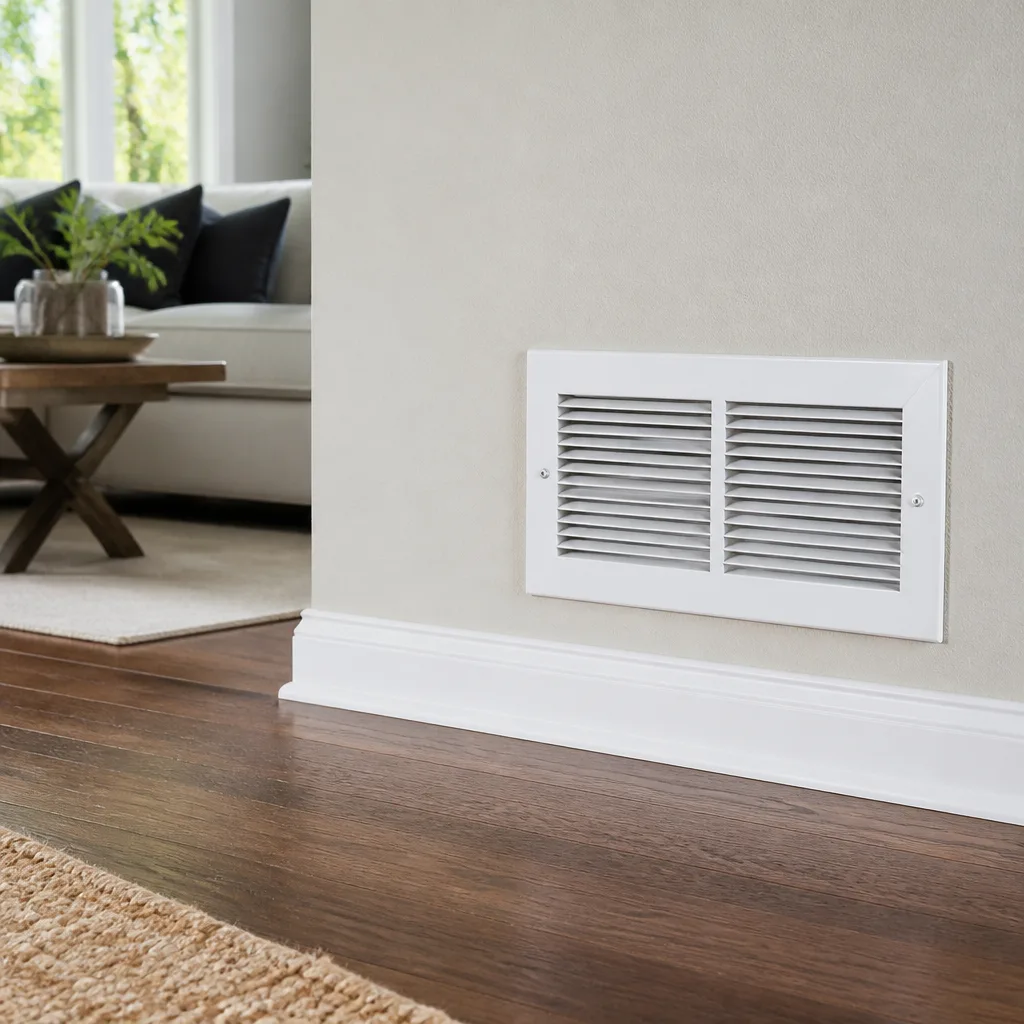 Sanitizing & deodorizing
Whole-system duct and dryer vent check with before-and-after photos - you see exactly what came out of your vents
That "$99 whole-house special" is a bait ad - the real number appears once they are in your hallway, or the "clean" is a shop-vac at the register. We photograph the inside of your ducts before and after instead.
Seasonal Air Duct Cleaning Care for Boise City: Year-Round Homeowner’s Guide
Most homeowners treat duct cleaning as a once-a-year checkbox. In Boise City, that schedule misses the point. Our climate doesn’t behave like one season repeated twelve times. It swings from wildfire smoke summers to agricultural dust falls to cold-snap heating winters, and each of those seasons loads your ductwork in a different way. A spring cleaning that removes heating-season soot won’t do anything about the fine smoke particulate that settles into return boots in August. And a post-smoke cleaning won’t catch the condensation issues that build up in flex duct runs near cold attic spaces in January. This guide walks through what each season actually does to your ducts in Boise City, what to inspect and when, and how to build a two-year cleaning cycle that matches how your system really gets dirty.
Quick Answer
Seasonal air duct cleaning in Boise City should follow the local climate calendar: inspect in spring after heating season, assess after major wildfire smoke events in summer, clean in fall before the heating system runs hard, and check flex duct sections in winter for condensation. A full cleaning is usually warranted every two years rather than every year, with seasonal inspections deciding when the cycle needs to come forward.
Styles & brands we work with
- Whole-home duct cleaning
- Dryer vent cleaning
- Camera inspection
- Sanitizing & deodorizing
Table of Contents
- Spring: Post-Heating-Season Inspection Priorities
- Summer and Wildfire Season: Minimizing Smoke Infiltration
- Fall: Construction Dust in New-Build Neighborhoods
- Winter: Condensation and Microbial Growth in Flex Duct
- Building a Two-Year Duct Cleaning Cycle
- What a Real Duct Assessment Includes Beyond a Visual Check
- Dryer Vents: The Year-Round Fire Risk
- Frequently Asked Questions
Spring: Post-Heating-Season Inspection Priorities
Spring in Boise City is the right time to look at what the heating season left behind. Once the furnace has been running hard for months, three things tend to show up in ductwork: soot migration from the heat exchanger, mineral scale from whole-house humidifiers, and evidence of rodent activity in duct runs that pass through crawlspaces. Each of these needs a different response, and none of them resolve on their own when the weather warms.
Soot migration is the one homeowners miss. A furnace that’s been running through cold snaps deposits fine carbon particulate on the supply side of the system, and that particulate doesn’t disappear when the heat shuts off. It collects on duct walls and recirculates through the return. A proper spring inspection should include a look at the supply plenum and the first several feet of trunk line, where soot deposits are most visible. We use HEPA-rated Nikro extraction because soot particles are fine enough to pass through a shop vac filter and end up back in the air.
Whole-house humidifiers leave mineral scale on the evaporator pad and on nearby duct surfaces. That scale is a dust magnet once it dries. If your humidifier ran through the winter, the duct sections downstream of it are worth checking in spring.
Rodent activity is the third spring priority. Duct runs that pass through sealed crawlspaces or unheated basements attract mice looking for warmth in winter, and the droppings they leave behind are a health concern once the system starts pushing air again in spring. If you smell a musty, ammonia-tinged odor from supply vents, that’s a sign to get the ducts looked at rather than aired out.
A spring inspection in Boise City isn’t a full cleaning. It’s a check to see whether cleaning is warranted and what the cleaning needs to address. Call (866) 552-6419 to book an inspection. We answer 24/7, and fast dispatch runs from 7am to 7pm, Sunday through Friday.
Summer and Wildfire Season: Minimizing Smoke Infiltration
Wildfire smoke is the biggest seasonal threat to indoor air quality in Boise City. During heavy smoke events, PM2.5 particulate works its way into return air streams and settles on duct surfaces, filter boxes, and evaporator coils. A single smoke event can load a return system with more fine particulate than a full year of ordinary dust. The problem is that most homeowners don’t think about their ducts until months later when the smell of smoke comes back on the first cool evening.
Minimizing smoke infiltration in real time comes down to three habits:
- Keep the system on low fan during smoke events. Running the fan continuously on low keeps air moving through the filter, which catches more particulate than cycling the system on and off.
- Upgrade to a higher-MERV filter for the smoke season. A MERV 11 to MERV 13 filter catches more fine particulate than the standard fiberglass panel most systems ship with. Honeywell and Aprilaire filtration products are designed for this, and they’re what we recommend for Boise City homeowners who want a step up during smoke season.
- Close fresh-air intakes and windows. If your system has an outside-air intake, close it during smoke events. If you have a fresh-air ventilation system, run it in recirculation mode rather than outdoor-air mode.
The trickier part is what comes after a smoke event. A post-smoke duct assessment should go beyond a visual check. Smoke particulate is fine enough to settle inside duct lining, on the evaporator coil, and in the return boots. A real assessment includes:
- Visual inspection with a camera of the return trunk and main supply runs
- A check of the filter box for accumulated soot and particulate
- Inspection of the evaporator coil for smoke film, which reduces efficiency and can hold odors
- Air sampling or odor assessment at supply registers to determine whether residual smoke is present
- A check of the flex duct runs for particulate accumulation in low spots
A visual check alone in Boise City will miss smoke damage because the particulate often settles where you can’t see it without a camera. If your home took in smoke for several days during a heavy wildfire season, it’s worth booking an assessment rather than waiting for the next heating season to find out.
Fall: Construction Dust in New-Build Neighborhoods on Boise’s Fringe
Fall is the season when new-construction dust becomes a duct problem. Boise City’s fringe neighborhoods, where new homes are going up in nearby parcels, put a lot of construction dust into the air. That dust is not the same as household dust. It’s silica-based from drywall sanding and concrete cutting, it’s heavier than typical dust, and it accumulates in return systems even in existing nearby homes that have been standing for years. A house three streets from an active build can pull construction dust into its return boots for months.
The dust travels through open windows, through fresh-air intakes, and through the gaps around doors and windows that most homes have. Once it reaches the return system, it settles. The return trunk and filter box are the first places to check, and in new-construction homes the supply runs are often the worst hit because drywall dust settles into the first several feet of each run during the building phase.
Fall is also the right time to clean before the heating season. Once the furnace comes on and the system starts running hard, that construction dust gets pushed through supply registers into every room in the house. Cleaning in fall catches it before the heating system distributes it. Call (866) 552-6419 for a free estimate before the heating season starts.
If you’re in a new-build home and you’ve had the interior painted or drywalled recently, the return system is where the dust collects. A full cleaning with agitation and HEPA extraction is typically enough to clear it. Our air duct cleaning service uses Rotobrush for agitation and Nikro for HEPA-rated extraction, which is the right combination for construction dust because it lifts dust off duct walls and traps it rather than blowing it back into the room.
Winter: Condensation and Microbial Growth in Flex Duct Near Unconditioned Attics
Winter in Boise City brings cold snaps that create a specific duct problem: condensation in flex duct sections that pass through or near unconditioned attic spaces. When warm air from the house hits a cold flex duct run in an attic, moisture condenses on the interior surface. Flex duct is the worst offender because its insulation is on the outside, which means the interior wall can stay close to the outdoor temperature. Over a cold snap, that condensation builds up, and where there’s moisture in a duct, there’s the potential for microbial growth.
The signs of condensation and microbial problems in flex duct are specific:
- A musty or damp smell from supply vents, most noticeable when the system first comes on
- Visible water stains on the outside of flex duct runs near attic penetrations
- Discoloration or dark spots on the flex duct interior, visible with a camera inspection
- Increased allergy symptoms in the household during cold snaps
- Moisture at the flex duct connection points where it meets rigid trunk line
If you’re seeing any of these, the assessment needs to include the attic flex runs specifically. In serious cases where microbial growth is present, the right response is containment with negative air pressure during the cleaning. That’s where Abatement Technologies equipment comes in. It’s the difference between a surface cleaning and a remediation-grade job, and it’s the reason we carry the equipment: a system that’s been wet needs more than a vacuum and a brush.
Winter is also a bad time to schedule a full cleaning if you’re in a cold snap. The cleaning itself is fine, but running the system afterward while the attic flex duct is still cold can reintroduce condensation. Better to inspect in winter and clean in early spring when the attic temperatures are rising. Call (866) 552-6419 to book a winter inspection. We answer 24/7.
Building a Two-Year Duct Cleaning Cycle for Boise City Homes
Most Boise City homeowners don’t need a full cleaning every year. A two-year cycle matches the local climate better because you get two seasons of heating and two of smoke and dust before a full cleaning is warranted, and the seasonal inspections tell you when the cycle needs to come forward. Here’s how to build the cycle:
- Spring year one: Book a spring inspection after heating season. If the inspection finds soot, rodent evidence, or heavy humidifier scale, move the cleaning up to fall year one. If not, wait.
- Summer year one: Note any major wildfire smoke events. If your home took in smoke for multiple days, book a post-smoke assessment rather than waiting for fall.
- Fall year one: Book a full cleaning before the heating season starts. This clears the construction dust and seasonal debris accumulated over the year, and it puts the system in good shape before the furnace runs hard again.
- Winter year one: Inspect flex duct runs in the attic for condensation. If you find moisture, book an assessment rather than waiting.
- Spring year two: Book a spring inspection. At this point the system has had one full cleaning and one heating season since. The inspection tells you whether the second cleaning is warranted this coming fall.
- Fall year two: Full cleaning again if warranted. Two seasons of accumulation is typically when a second cleaning pays off in Boise City.
- Repeat the cycle: Adjust the timeline if the inspection findings justify it. If you had a heavy smoke year, pull the cleaning forward. If not, push it back.
This cycle isn’t a rigid schedule. It’s a framework. The inspections are what decide when cleaning is warranted, and the two-year cycle is the default in Boise City because that’s the rhythm the local climate produces. A full annual cleaning is overkill for most homes. A six-year gap between cleanings means the system is carrying a lot of accumulated particulate that’s pushing against the filter and reducing indoor air quality.
Property managers with multiple rentals in Boise City often do better with a two-year cycle on each unit rather than trying to clean everything annually. The seasonal inspections can be batched to save on trips, and the cleaning cycle follows the actual conditions rather than the calendar.
What a Real Duct Assessment Includes Beyond a Visual Check
A visual check is almost useless on its own. It sees the supply registers and maybe the filter box, but it doesn’t see inside the trunk line, it can’t see the flex duct runs in the attic, and it can’t determine whether the coil has smoke film on it. A real assessment uses a camera and a process. Here’s what we look at:
- Camera inspection of the return trunk. The return carries the dirtiest air in the system, and it’s where the biggest accumulation is.
- Camera inspection of the first several feet of each supply run. This is where dust settles during a construction phase and where soot builds up on the supply side.
- Filter box and evaporator coil check. A dirty coil holds odors and reduces efficiency. It’s also a common source of musty smell after a smoke event.
- Flex duct connections in the attic. These are the condensation and microbial problem spots in winter.
- Rodent evidence check in crawlspace and basement duct runs. Droppings and nesting material are a health concern once the system starts pushing air.
- Airflow measurement at supply registers. A system with partial blockages will show low airflow at some registers and high at others.
Our experience with Boise City duct systems is that the biggest problems are usually in the return trunk and the flex runs in the attic. The return carries more dirt than the supply side because it pulls from the whole house, and the attic flex runs are where moisture and temperature swings cause trouble. Both are invisible without a camera inspection, which is why a proper assessment is worth doing even when nothing seems obviously wrong.
If you’re looking at a home you just bought, a camera-based inspection is worth doing before you move in. A new home in Boise City often comes with a duct system you know nothing about, and the inspection tells you whether you’re inheriting a clean system or a problem. Call (866) 552-6419 for a free estimate on an inspection.
Dryer Vents: The Year-Round Fire Risk That Gets Missed
Air duct cleaning and dryer vent cleaning are different jobs, but they share a common problem: both get ignored until something goes wrong. The U.S. Fire Administration cites dryer vents as a leading cause of residential house fires, and the accumulation that causes fires happens year-round in Boise City. Lint builds up in the vent line every time the dryer runs, and a clogged line traps heat that can ignite the lint. Winter doesn’t cause it, summer doesn’t cause it, but every season contributes.
The signs a dryer vent needs cleaning are specific: clothes take longer than they used to dry, the outside vent flap doesn’t open fully when the dryer is running, the dryer body feels hot to the touch, or there’s a burning smell when the dryer runs. Any of those is a reason to book dryer vent cleaning rather than wait for another cycle.
Our dryer vent cleaning is a standalone service because it doesn’t need to be bundled into an air duct cleaning to be worth doing. If your dryer has been running for several years without a vent cleaning, book it. It’s a small job that addresses a real hazard. Call (866) 552-6419 to schedule it alongside your seasonal inspection.
Common Mistakes to Avoid
- Cleaning annually without an inspection. A calendar-based cleaning schedule misses the smoke events and construction dust that make cleaning urgent in Boise City. Inspect first, clean when the inspection says so.
- Relying on a shop vac or consumer equipment. A shop vac filter doesn’t trap fine particulate, which means it blows the dust back into the room. Professional-grade equipment like Rotobrush and Nikro exists because the fine particulate is the problem.
- Skipping the return trunk on a cleaning. The return carries the dirtiest air in the system. A cleaning that only touches the supply side leaves the biggest accumulation in place.
- Ignoring attic flex duct in winter. Condensation in flex duct near unconditioned spaces is invisible until you smell it. A winter inspection catches it before microbial growth gets a foothold.
- Waiting until the smell is obvious. Musty smell from the vents usually means the system has been carrying moisture for a while. By the time it’s noticeable, the accumulation is significant.
- Not addressing dryer vents as a separate job. Lint accumulation is a fire risk that isn’t cleaned by an air duct cleaning. If your dryer hasn’t had a vent cleaning, book it as a standalone service.
- Assuming a new home has clean ducts. New construction in Boise City’s fringe neighborhoods comes with construction dust settled into the return system. A camera inspection will tell you whether the ducts need cleaning before you move in.
See the difference
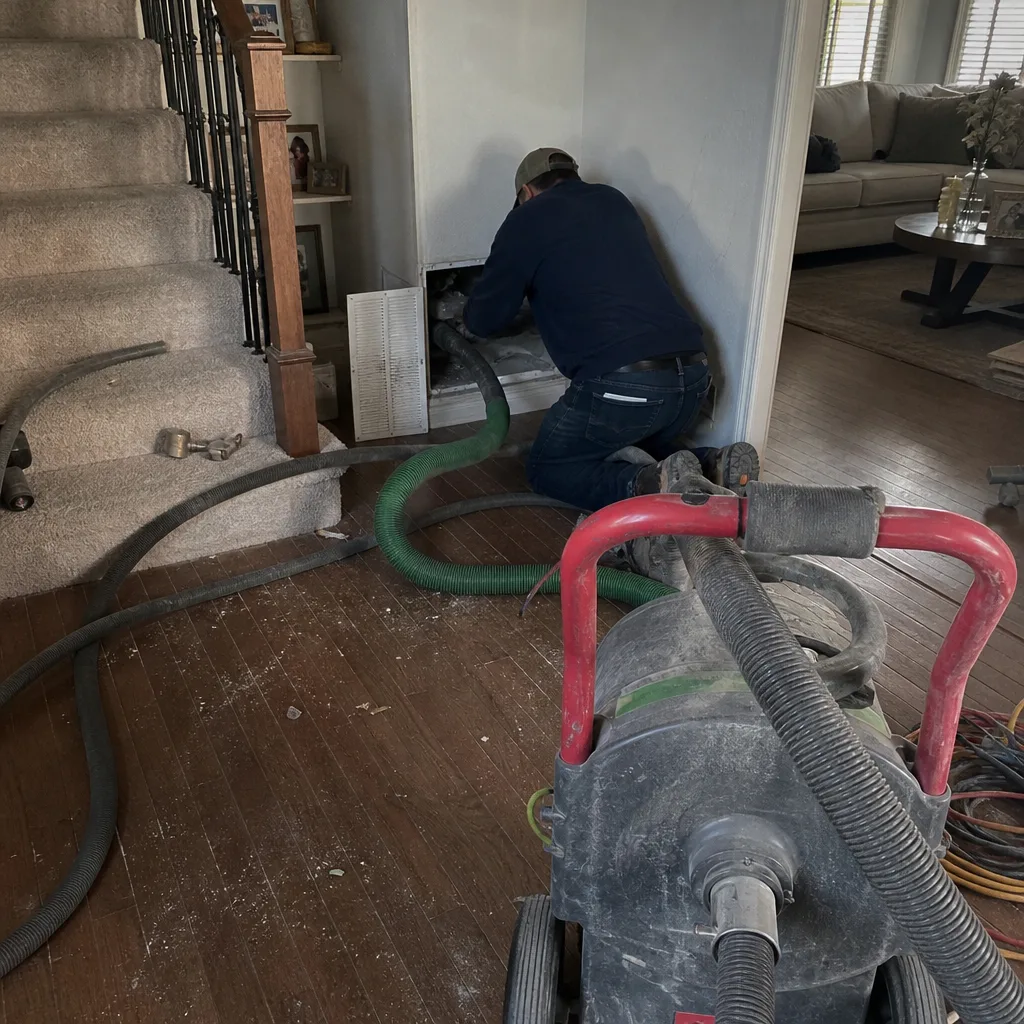 Before
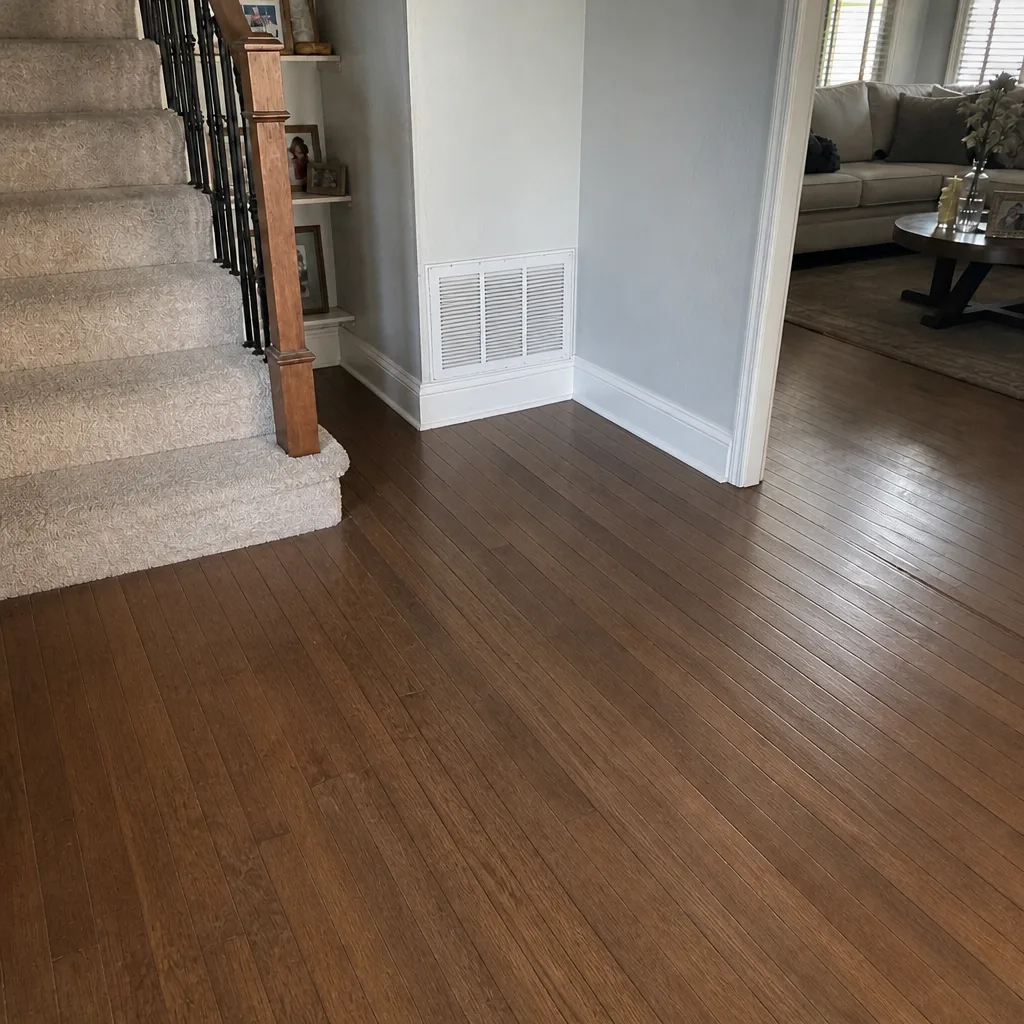 After
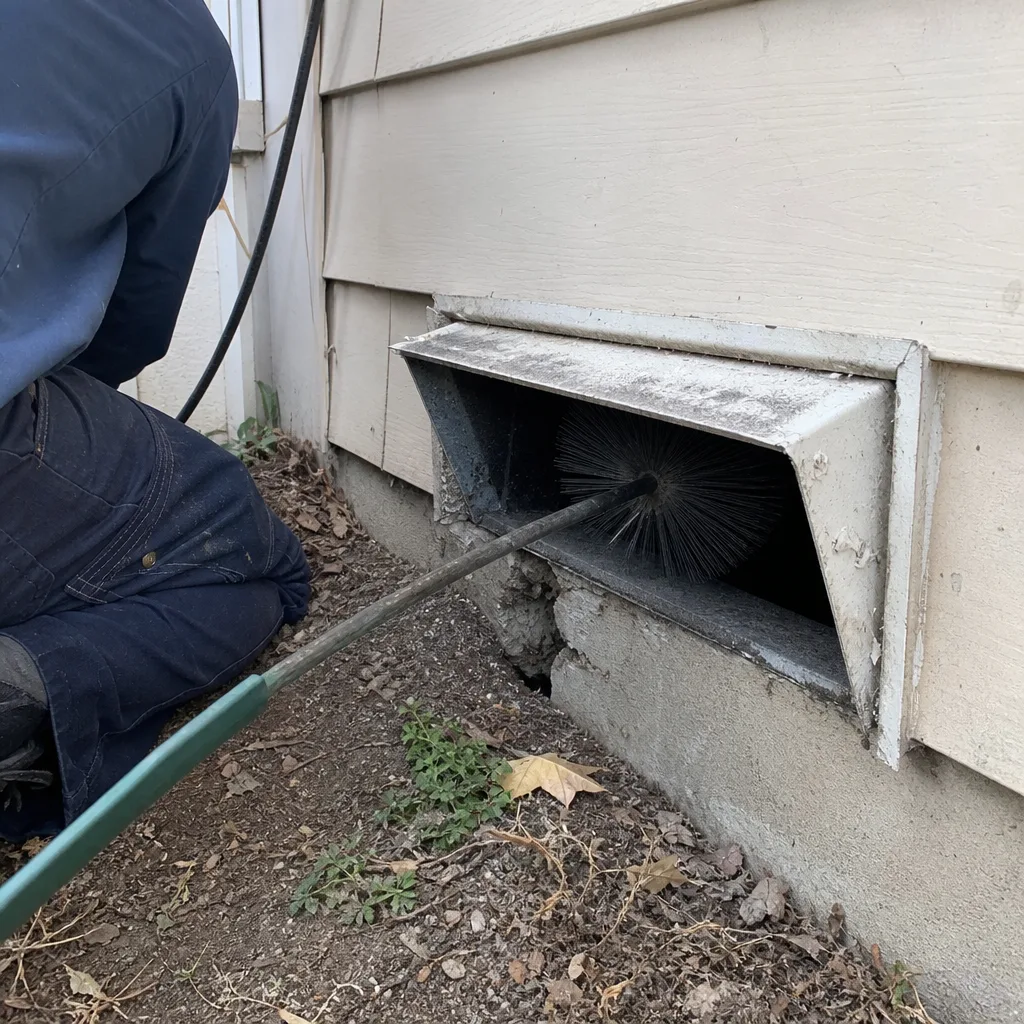 Before
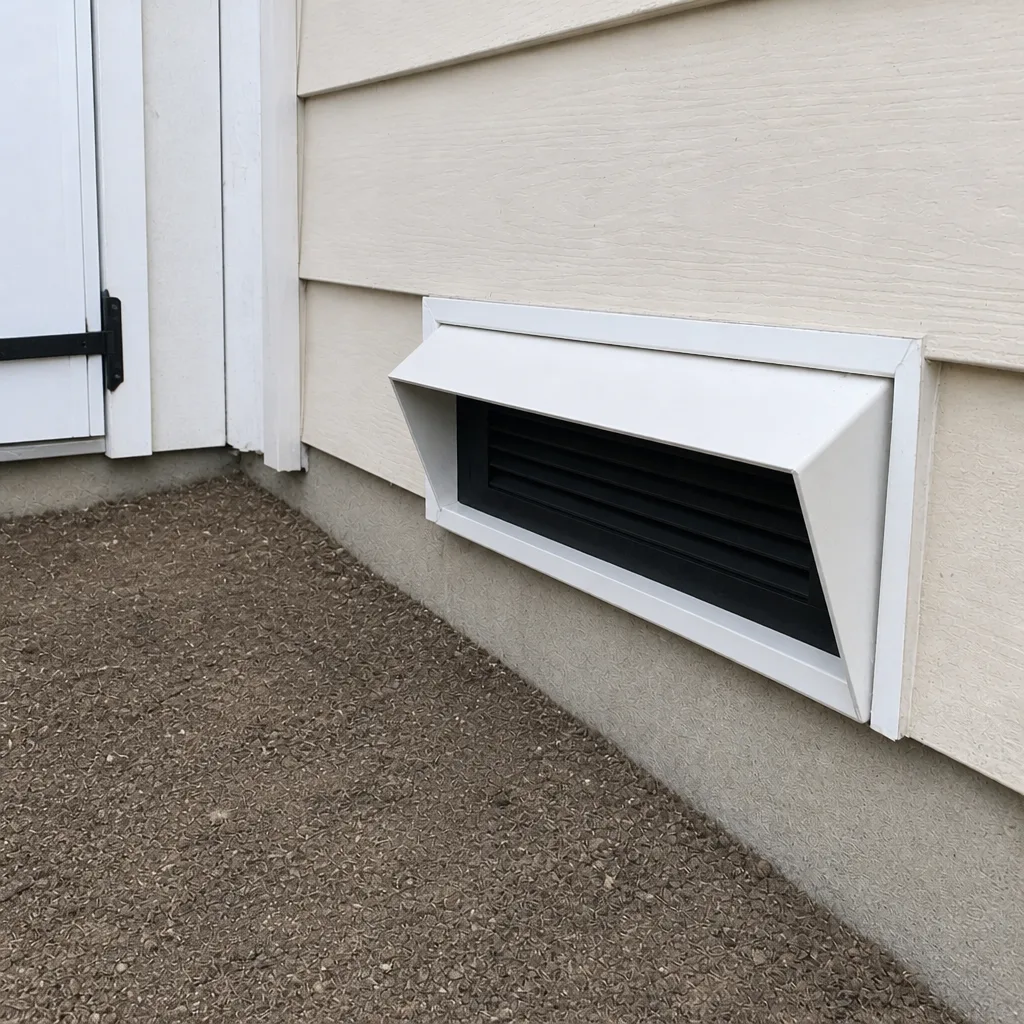 After
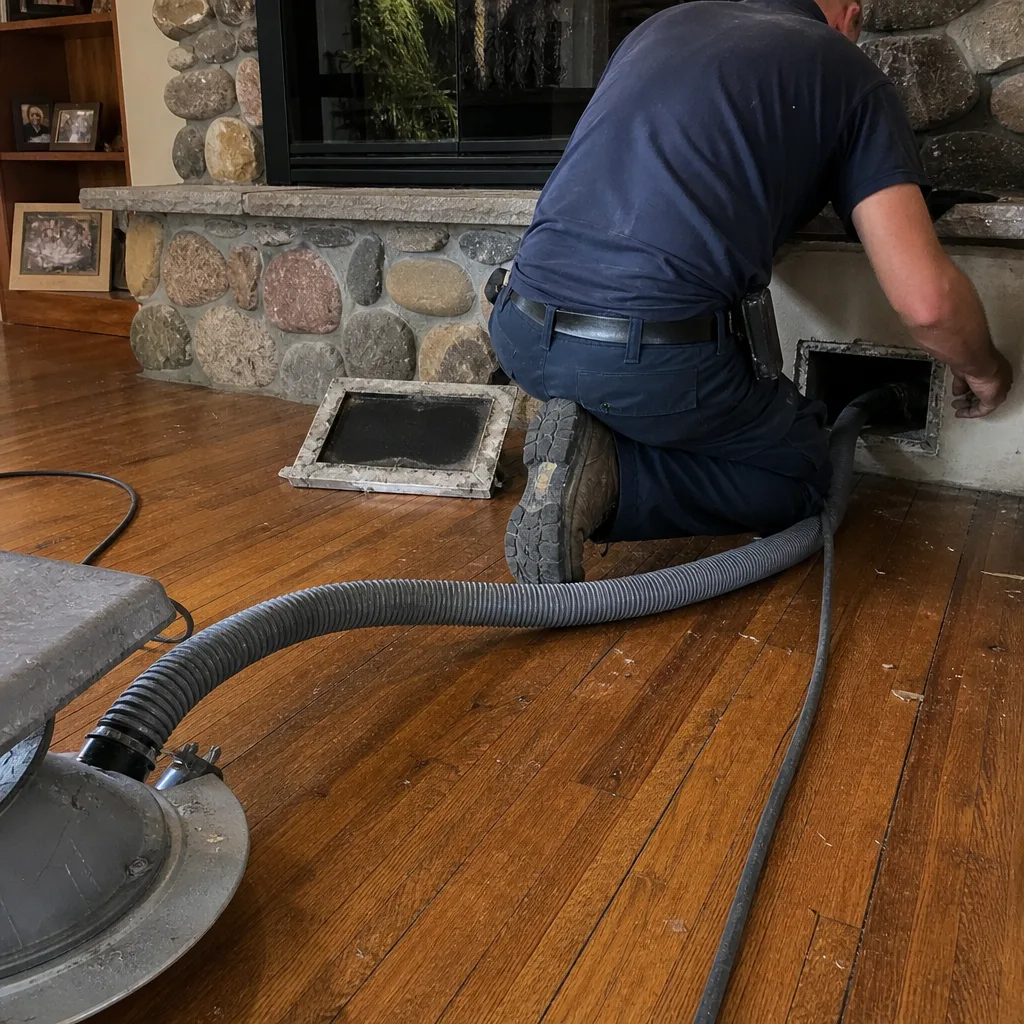 Before
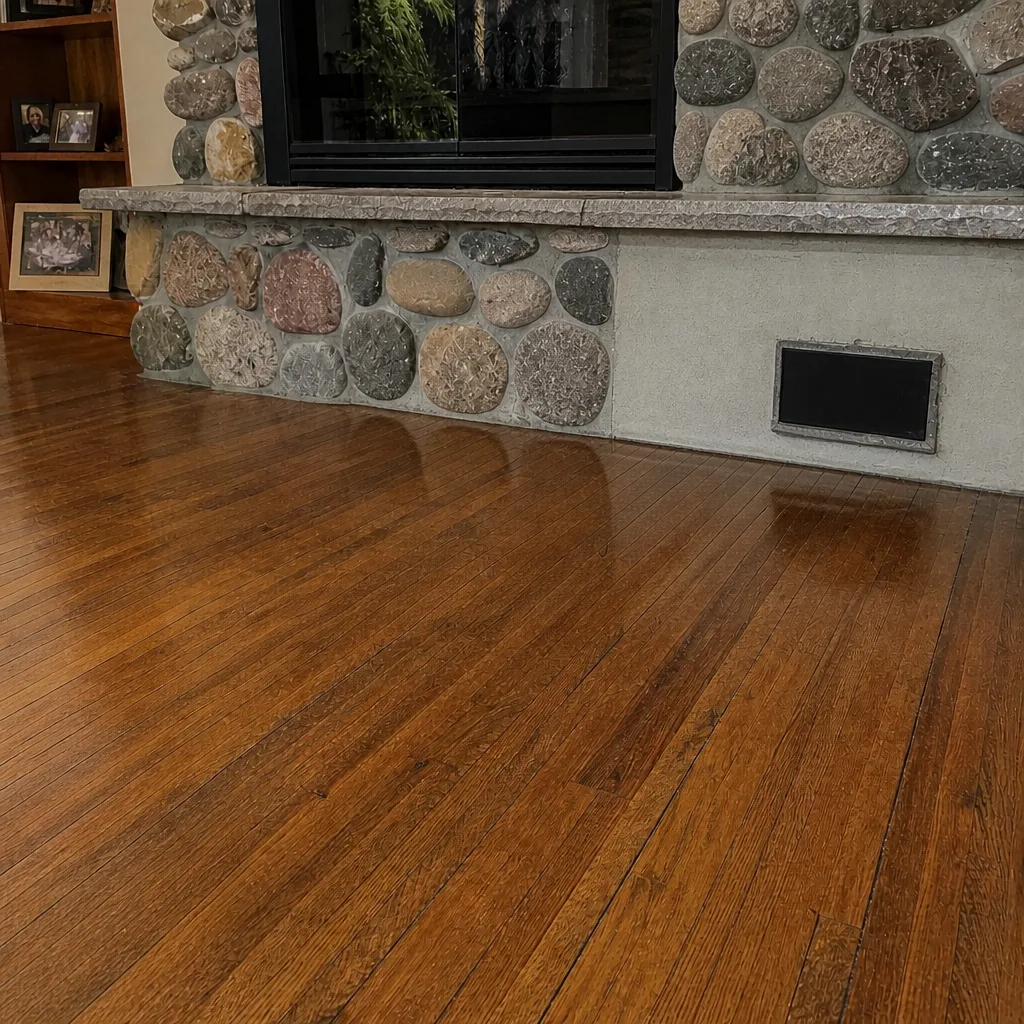 After
When to Call a Professional
Some duct conditions are fine to monitor. Others need a professional assessment rather than another season of waiting. Call a professional if you smell a musty or damp odor from supply vents, if your home took in smoke for multiple days during wildfire season, if you’ve found rodent evidence in crawlspace or basement duct runs, if flex duct in the attic shows condensation or dark spots, or if airflow from your registers has dropped noticeably. New homeowners in Boise City should book a camera-based inspection before moving in because it’s the only way to know what you’re inheriting.
Our technicians have up to 8 years of experience with duct systems, and we work with professional equipment including Rotobrush, Nikro, Abatement Technologies, Honeywell, and Aprilaire. Our service scope includes air duct cleaning, dryer vent cleaning, and air duct repair, which means when the cleaning uncovers a damaged flex duct section or a disconnected run, we can fix it in the same appointment rather than asking you to book a second company. We clean it, and we can fix it. Call (866) 552-6419 for a free estimate in Boise City. We answer 24/7, and fast dispatch runs from 7am to 7pm, Sunday through Friday.
Frequently Asked Questions
Most Boise City homes do best on a two-year cycle rather than an annual one, with seasonal inspections deciding when the cycle needs to come forward. Wildfire smoke years and construction dust from nearby builds can pull the schedule ahead, while a home with no kids, no pets, and a good filtration system can often stretch the cycle slightly. Inspect in spring and decide from there.
Air duct cleaning is priced per job by a written estimate after we’ve seen the system, because the cost depends on the number of runs, the level of contamination, and whether repair is needed. We don’t quote per-vent prices because that’s how the industry’s bait-and-switch reputation got started. Call (866) 552-6419 for a free estimate, and the written estimate sets the final price.
Cheap quotes often come from companies that run a shop vac through the supply registers without agitating the duct walls or sealing the returns, which means the dust goes back into the room. They also usually skip the return trunk and the attic flex runs. A legitimate cleaning uses professional-grade equipment like Rotobrush for agitation and Nikro for HEPA-rated extraction, and it covers the whole system. Ask what’s included before you book.
Ask for before-and-after photos of your own ducts, taken with a camera inside the system. A real cleaning produces visible differences in the return trunk and the supply runs, and a professional company should be able to show you those photos as part of the job. If a company can’t produce photos of your specific system, that’s a reason to look elsewhere.
Yes, because Boise City’s climate produces specific seasonal loads that an annual cleaning cycle misses. Wildfire smoke summers deposit fine particulate that needs HEPA extraction, construction dust in fringe neighborhoods loads return systems, and cold-snap winters cause condensation in attic flex duct. A cleaning schedule built for a stable coastal climate doesn’t match the local pattern. Call (866) 552-6419 to talk through what your system needs.
Post-smoke cleaning benefits from HEPA-rated extraction because PM2.5 particulate is fine enough to pass through a standard filter and end up back in the room. The same Nikro equipment used for a standard cleaning is what handles smoke particulate, and for serious contamination scenarios we bring in Abatement Technologies equipment for negative-air containment during the cleaning. That’s the difference between a surface cleaning and a real remediation-grade job.
The Bottom Line
Boise City’s climate doesn’t produce one duct-cleaning season. It produces four, and each one loads your system in a different way. Spring inspections catch post-heating soot and rodent evidence, summer smoke events require HEPA-grade post-smoke assessments, fall cleanings catch construction dust before the heating season pushes it through the house, and winter inspections catch condensation in attic flex duct before it becomes microbial growth. A two-year cleaning cycle with seasonal inspections between cleanings matches how your ducts actually get dirty better than an annual calendar. And dryer vents are a separate year-round fire risk that needs its own attention. Better air starts at the source, and the source is a duct system that gets cleaned at the right time with the right equipment.
Call (866) 552-6419 for a free estimate on seasonal air duct cleaning in Boise City. We answer 24/7, and fast dispatch runs from 7am to 7pm, Sunday through Friday. Clean ducts start with the right tools, and ours are professional-grade.
Written by the team at Duct Cleaning Boise City.