
Emergency Air Duct Cleaning Near Me: What Boise City Homeowners Should Do First
The worst thing you can do after a smoke event, a water leak, or finding a rodent nest is to walk over and turn the thermostat on. That single move can push smoke residue, mold spores, or rodent droppings through every supply register in the house in under an hour, and it turns a contained problem into a whole-system remediation. Emergency air duct cleaning in Boise City starts with triage: shut the system down, seal what you can, document everything, and only then call.
Why Turning the System Back On Is the First Mistake
A forced-air system is a distribution machine. The blower doesn’t care what’s in the return plenum; it moves air at several hundred cubic feet per minute and pushes whatever is suspended in that air out through every register. Smoke residue, mouse droppings, and moisture-borne spores all behave the same way once they get into the airstream. They go everywhere.
In our experience, the homeowners who end up with the smallest, cheapest remediation jobs are the ones who killed power to the air handler in the first five minutes and left it off. The ones who “just checked if it was still working” usually end up with contamination in bedrooms that had nothing to do with the original problem.
Boise City homes built over the last few decades often run flex duct through unconditioned attic and crawlspace space, which means contamination can enter the system without ever passing through the living area first. That’s exactly why turning the fan on to “see if it clears out” is the wrong instinct.
Here’s the triage order that matters: stop the system, contain the source, photograph everything, then call. If you’d rather not work through that yourself under stress, call (866) 552-6419. We answer 24/7. Fast dispatch from 7am to 7pm.
What to Do in the First 30 Minutes: Three Common Boise City Emergencies
The first 30 minutes of a duct emergency should follow a shutoff protocol before you call anyone. Different contamination sources call for slightly different steps, so here they are one at a time. Tape these to the inside of a cabinet door if you like – an air-quality plan works better when you don’t have to invent it during a crisis.
Wildfire Smoke Infiltration
- Set the thermostat to OFF, not “fan on.” A fan-only setting still moves air through dirty ductwork.
- Close all exterior windows and doors, and cover any open registers in rooms with a temporary plastic sheet if you have one handy.
- Photograph the register grilles and any visible soot or residue before wiping anything.
- Do not run a portable air purifier that pulls air through a dirty HVAC return; run a standalone unit in a single closed room instead.
- Change the HVAC filter only after the system is off and photographed. A used filter is evidence of the intrusion and relevant to any claim.
Water Intrusion Near Ductwork
- Kill power to the air handler at the breaker if water is anywhere near the unit or the duct runs.
- Stop the source: shut off the supply line, the water heater, or the appliance involved.
- Photograph standing water, wet insulation, and any stained duct wrap before removing anything.
- Do not run the system to “dry out” the ducts – moving wet air spreads moisture into every branch line.
- Call the same day. Wet duct lining and insulation in Boise City’s dry climate can look fine within hours while microbial growth is already starting underneath.
Discovered Rodent Nesting
- Do not vacuum anything yourself with a shop vac. Standard shop vacs exhaust fine particles straight back into the room.
- Kill power to the system, then close the door on the room with the affected register if you can.
- Photograph the nest, the droppings, and any gnawed duct insulation from a distance. Do not disturb the material.
- Wear an N95 or better if you’ll be within the same room, and wash up afterward.
- Leave the register grille and the duct interior alone until a technician with proper containment arrives. Rodent waste carries airborne pathogens, and this is one of the few times where doing nothing is the correct move.
None of those steps require tools. All of them lower the cost of the job once a technician walks in.
When Is It a Remediation Job vs. a Standard Cleaning?
A duct emergency requires remediation-grade containment – negative air pressure and HEPA filtration – when contamination is biological, smoke-derived, or airborne and ongoing. Standard air duct cleaning handles ordinary dust, pet dander, and the slow accumulation that every home deals with. The line between the two matters, and it’s the line most homeowners can’t see.
Use this as your threshold:
- Standard cleaning: dust visible on grilles, a musty smell that clears after the system runs a few minutes, or a renovation that left drywall dust behind.
- Remediation-class: fire or smoke residue inside the plenum or duct interior, visible mold on duct lining or inside the air handler, sewage-contaminated water reaching the ductwork, or rodent waste in the ducts.
That threshold has real consequences. A standard cleaning at a bargain price will not address microbial contamination, and it can’t protect the rest of the house from cross-contamination during the work. Remediation requires negative-air containment – the same approach used in Abatement Technologies equipment for mold and post-fire support. That equipment holds the contaminated zone under pressure so particles go out through a HEPA filter, not into your bedroom.
If you’re not sure which category your situation fits, describe it plainly when you call. A smoke event, a flooded crawlspace, or a nest in a return are all remediation triggers. A dusty grille is not.
What to Photograph Before Any Contractor Arrives
Document everything before a single technician or restoration contractor steps inside. Photographs taken before anyone touches the system are the difference between a claim that gets processed and one that gets argued over for months, and they cost nothing but a few minutes.
Photograph the following, in this order:
- Each supply and return grille, close enough to see residue clearly. Include a coin or a dollar bill in the frame for scale if you like.
- The HVAC filter in place, then out. Don’t change it until you’ve photographed it.
- Any soot streaks, water staining, or cracked and gnawed duct insulation, plus the source: the water line, the appliance, the wall penetration where a rodent got in.
- The air handler interior if you can open its service panel safely. Do not open it if there is any chance of live electricity.
- The outside of the outdoor unit and any return chase visible from the attic or crawlspace hatch.
- A wide shot of each affected room, so the register locations are obvious in the context of the home.
If you’re filing a homeowner’s claim, note the date of the event, the timeline of what you turned off when, and copies of the photos together. Insurers look for evidence that the homeowner acted reasonably to stop the spread, and shutting the system off is the clearest single piece of evidence you can create. Keep the photos on a cloud backup rather than a single phone – the last thing you want is to lose documentation to a dropped screen.
Why “Emergency Same-Day” Duct Cleaning Ads Rarely Deliver True Remediation
Most “emergency same-day” duct cleaning ads in Boise City are selling a scheduling window, not a service capability. Speed isn’t the hard part of remediation. Containment is, and containment barely fits inside a same-day promise.
The corners that get cut under time pressure are consistent:
- No negative-air machine, because setting one up takes longer than the job the price was quoted for.
- No HEPA-rated extraction. Consumer shop vacs and light-duty machines can’t hold particles at HEPA-grade filtration, and a few turbo-jet add-ons don’t change that.
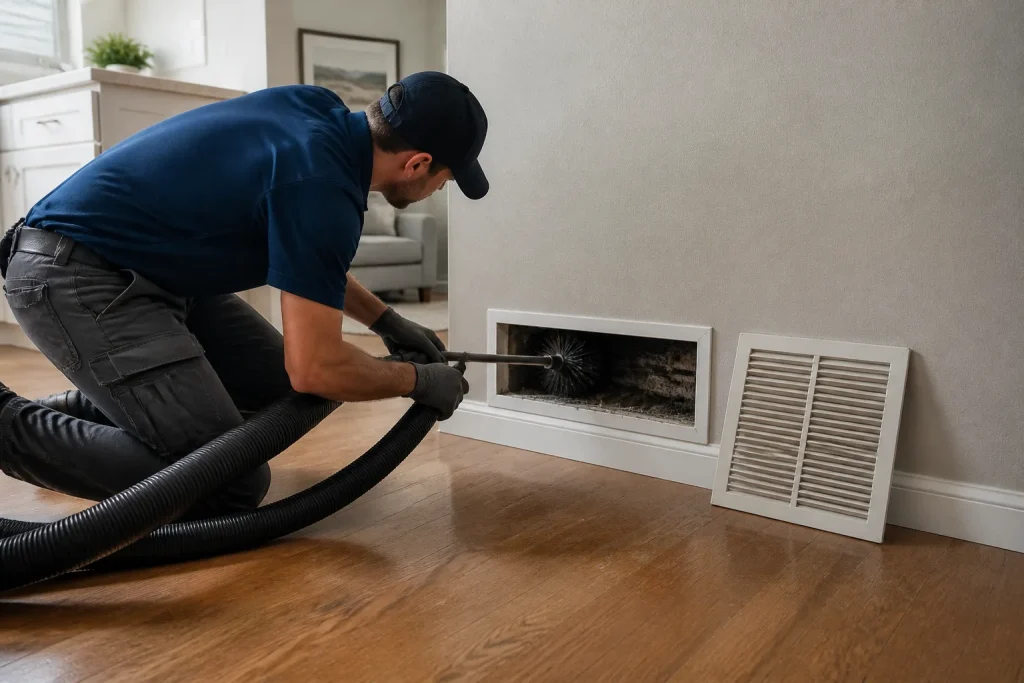
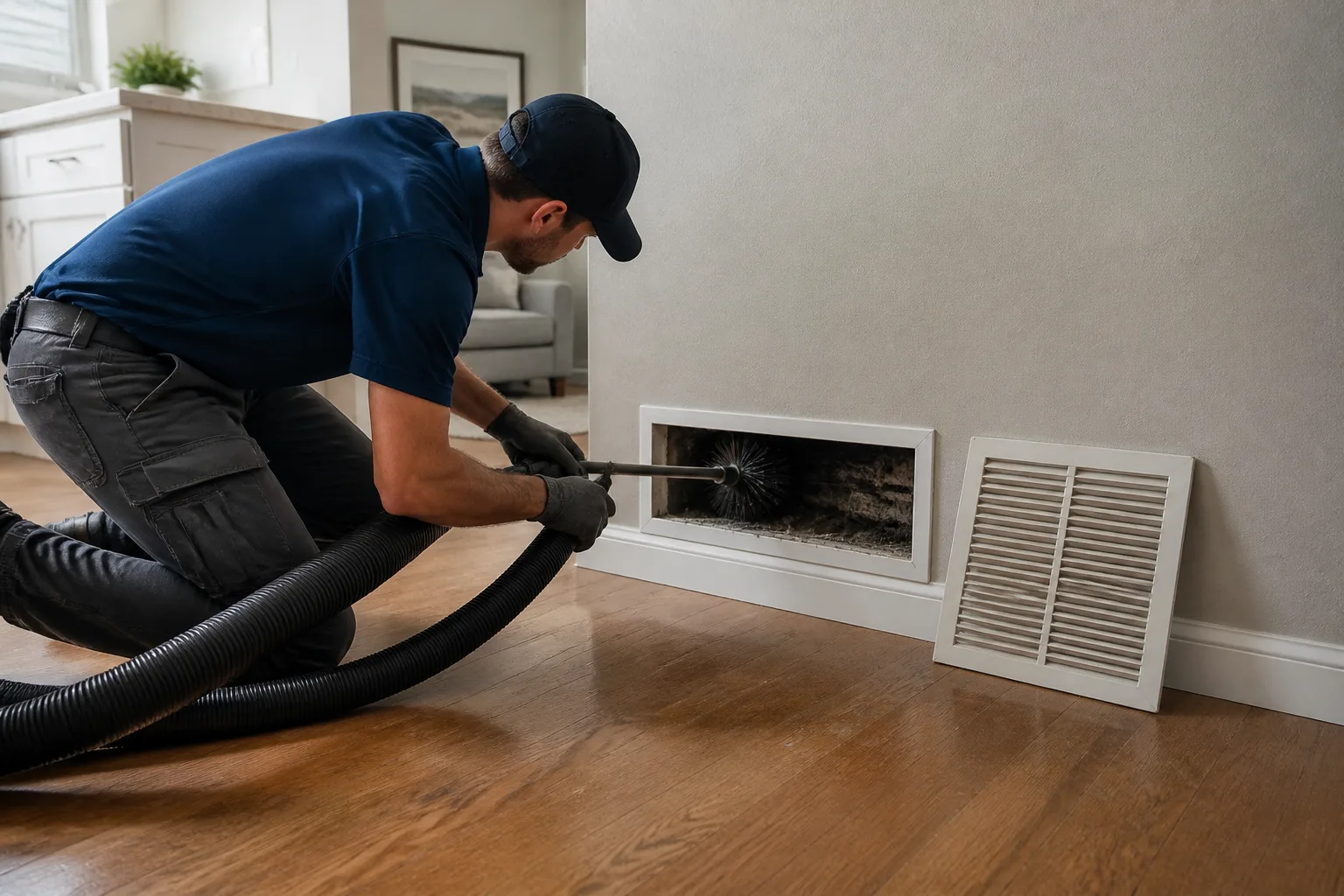
- No agitation tool. Rotary brushes and whips – the kind Rotobrush builds into its cleaning systems – are what actually loosen caked-on contaminants from duct walls. Vacuum alone doesn’t.
- No microbial protocol, no containment of the doorways, no post-clean verification of the plenum.
- A flat, cheap quote that covers dust removal on a house that needs remediation.
The right question isn’t “how fast can you get here.” It’s “what containment equipment are you bringing, and can you explain the microbial protocol you’d run if my ducts test positive?” A company that can answer those two questions quickly will also have a realistic scheduling window – and that’s worth more than an hour of saved time.
How to Verify the Right Contractor for a Real Duct Emergency
You can verify a duct contractor’s remediation capability with four questions, and honest ones answer all four without hesitating. This is a case where the vocabulary a contractor uses tells you the whole story. Specialists in air duct systems talk about containment and extraction. Generalists talk about coupons and “shop vacs on steroids.”
- What equipment do you bring? Look for professional-grade systems by name: Rotobrush for agitation and vacuum in one pass, Nikro for HEPA-rated extraction. Those are the tools IAQ contractors rely on, and they’re substantially different from a shop vac with a hose adapter.
- Do you hold negative air during remediation? Abatement Technologies is the label that matters here. If a contractor can’t describe negative-air setup for mold or post-fire scenarios, they’re set up for standard cleaning, not remediation.
- Can you recommend a filtration upgrade afterward? A visit should end with more than a cleaning. Honeywell and Aprilaire make media filters and filtration systems that actually fit household ductwork and reduce future load on the system. A specialist will recommend them by brand, not by “upgrade package.”
- Can you fix what you find? Damaged duct runs, disconnected joints, and crushed flex sections are common findings in a real emergency. Our services include Boise City air duct repair for exactly this reason – the technician who finds a broken joint should be the one who seals it.
While the system is shut down, it’s also worth checking the dryer vent. Lint accumulates in the same way duct dust does, and a dryer vent fire is not a hypothetical – the U.S. Fire Administration cites dryer vent issues as a leading cause of residential house fires. Our dryer vent cleaning service is a standalone visit and pairs naturally with a duct appointment when you’ve already got the system off.
The Bottom Line
Shut the system off. Photograph the source and every grille before you touch anything. Ask any contractor you call whether they bring negative-air containment and HEPA extraction, and whether they can recognize the difference between dust and contamination. If they can’t answer clearly, they’re not set up for an emergency.
We’re a specialist in air duct systems, not a general handyman service, and our technicians have up to 8 years of experience with professional-grade equipment. We’re licensed and insured, we clean what we find, and we can repair it in the same visit. If you’re in Boise City and need help, Duct Cleaning Boise City offers free estimates – call (866) 552-6419. We answer 24/7. Fast dispatch from 7am to 7pm, Sunday through Friday.
For a full picture of our scope, visit Duct Cleaning Boise City or call and ask.
Frequently Asked Questions
Whole-system pricing depends on the size of the home, the number of runs, and whether the job is standard cleaning or remediation. We don’t quote per vent, and we don’t put a coupon number on a page that won’t hold at the estimate. A written estimate, given free and set per job, decides the final price before any work starts. Call (866) 552-6419 for an exact quote – estimates are free.
No. If the source is smoke, water, or rodent waste, running the system spreads contamination into every room served by that air handler. Kill power to the air handler at the breaker and leave the fan off until a technician confirms the ductwork is safe to run. Call (866) 552-6419 if you aren’t sure which breaker controls the air handler – we can walk you through the typical panel layout.
Coverage depends on the cause of the loss and the specifics of your policy, so we won’t guess at your claim. What we can say is that photo documentation taken before any work begins – before anyone touches the registers, the filter, or the duct interior – makes the claim far easier to process. Insurers want evidence that you acted promptly to stop the spread. We can work with your insurer and share our photos of the work, but the decision is theirs.
Most homes go several years between cleanings; homes with pets, recent renovations, or allergy sufferers need attention sooner. An emergency event – smoke, water, rodents – shortens the timeline to “now.” There’s no fixed calendar interval that fits every house, and a company that tells you otherwise is guessing. Call (866) 552-6419 and we’ll help you judge based on what you’re seeing.
Written by the team at Duct Cleaning Boise City.
Need Air Duct Cleaning Help?
Call Duct Cleaning Boise City - licensed & insured, with free written estimates in Boise City.
(866) 552-6419